The Catholic Mother February 2026
For several years now I have compiled a monthly newsletter for our local Confraternity of Christian Mothers. It is a collection of vintage Catholic wisdom alongside links to books, video, and hands on activities to celebrate the liturgical year. Attached is the current month’s newsletter. God bless you.
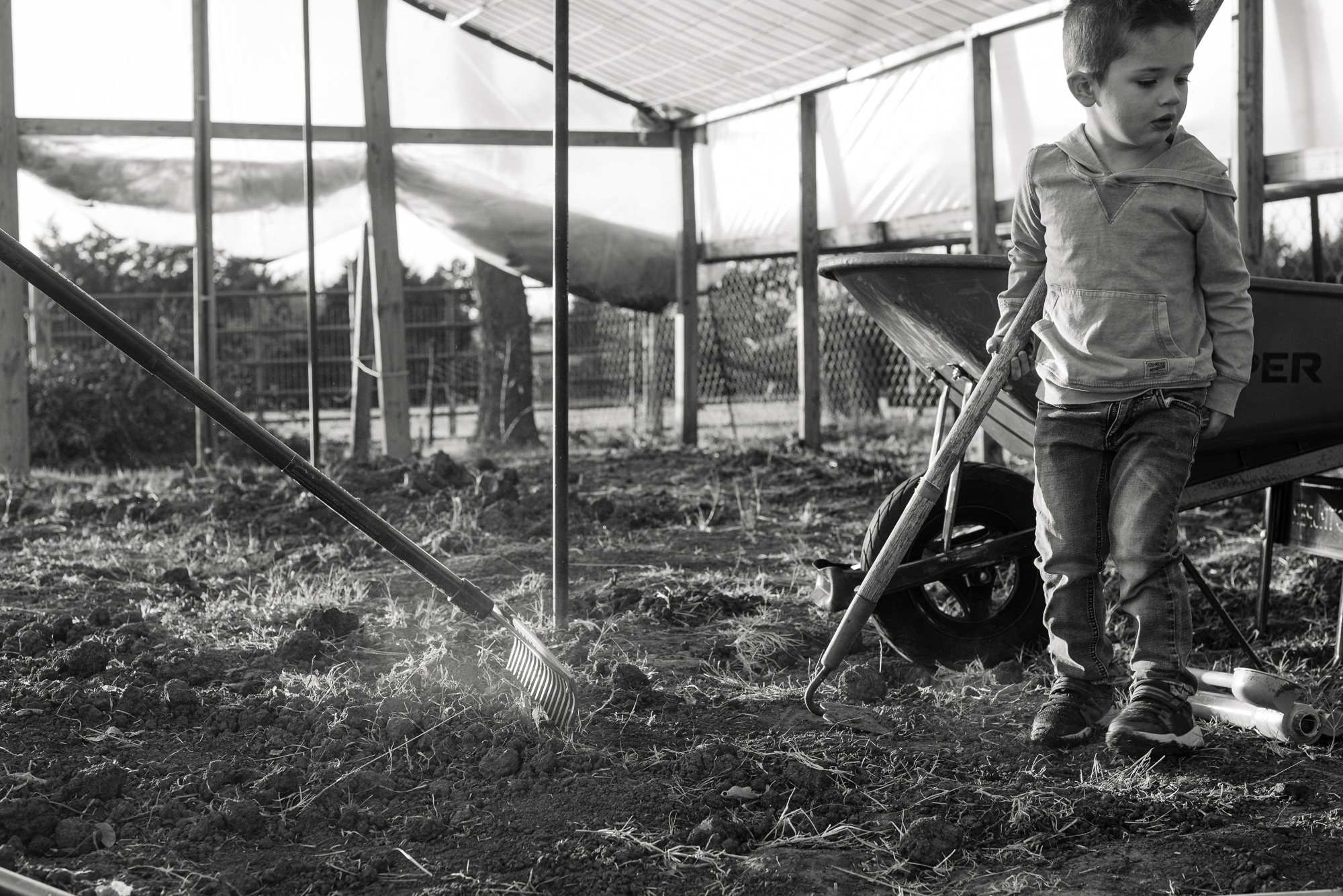
Math literacy – easy does it
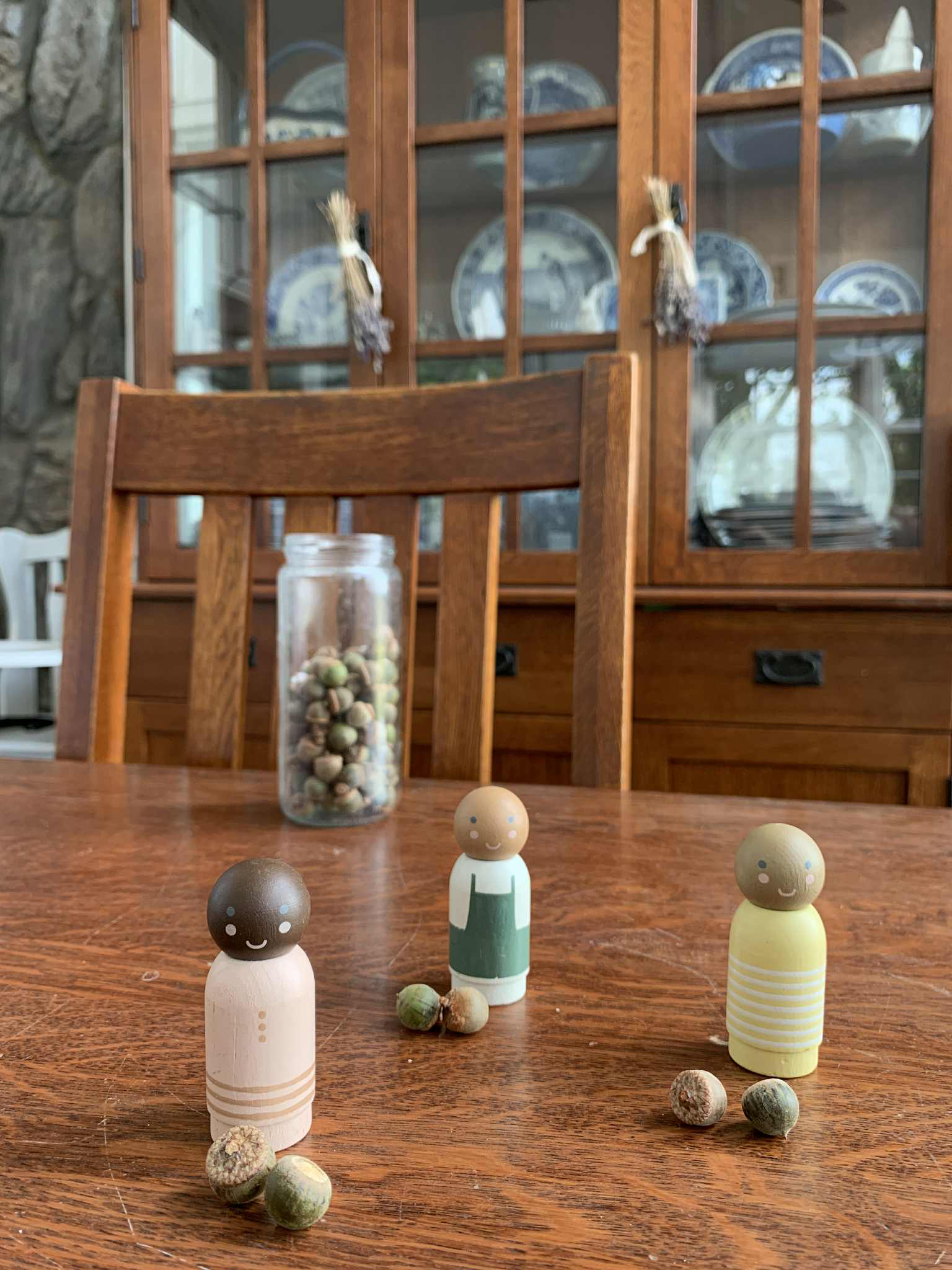
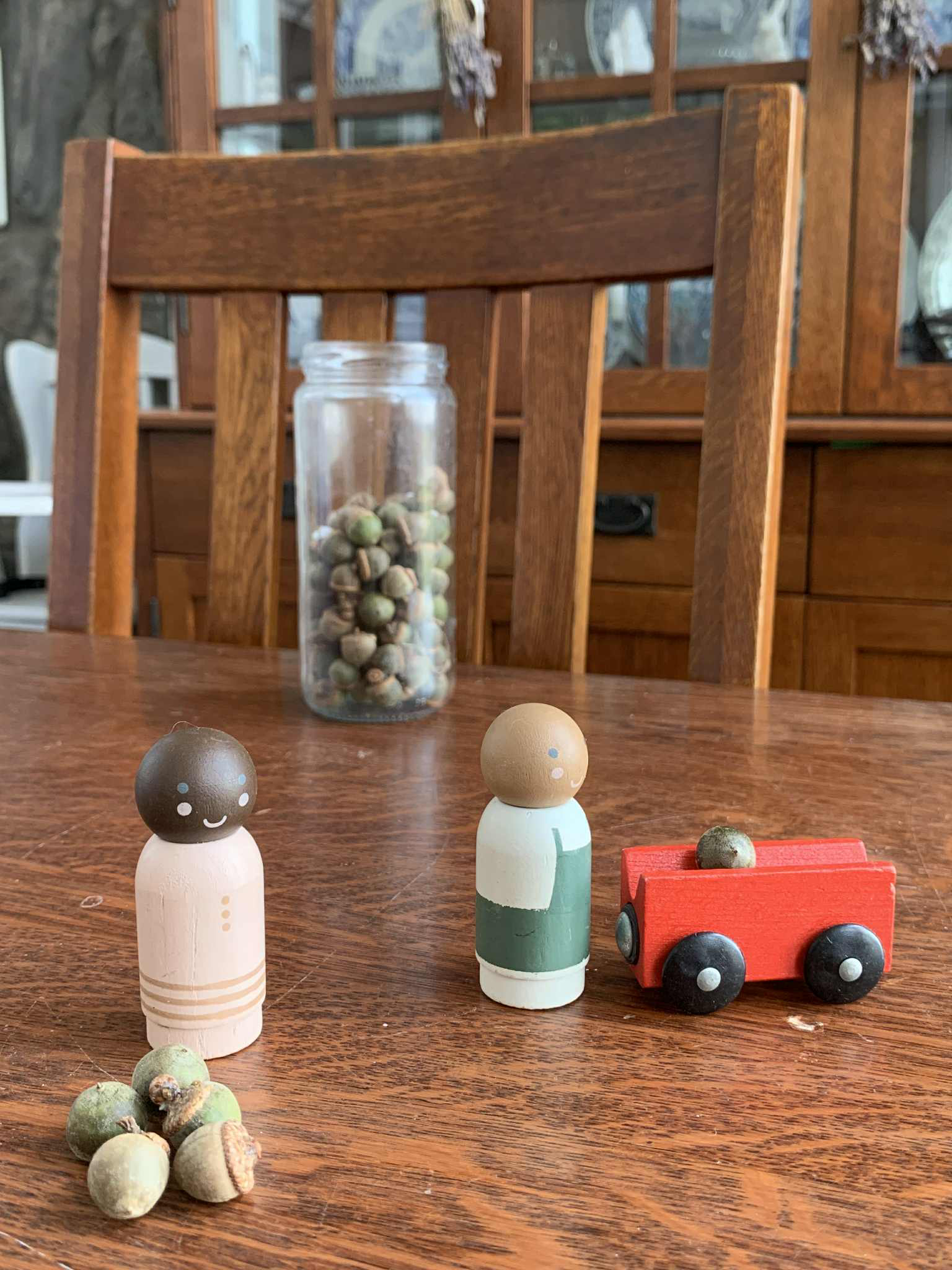
Pressure-free math chats during play:
“If the friends each bring two acorns to the party how many are there?”
“If a friend has six acorns and gives one to a buddy how many are left?”
“If the friends split their acorns fairly how many will they each get?”
“This friend worked so hard to pick all these acorns. How many did he collect?”
No work was ever done in the shade…
St John Bosco has long been my model for true Christian education. Gentle, empathetic, wise. I've read much about his work with boys, and even material about his mother who worked along with him. Somehow yesterday was the first I heard of St Mary Mazzerello, whom he was to train to do for girls the work he was doing among the boys. I found this wonderful story (there is also a booklet available) called Gold Without Alloy: A Brief Account of the Life of St. Mary Mazzarello by Paul Aronica, SDB online here.
"A hot Italian sun beat mercilessly on the handful of workers in the rocky field. Mopping the sweat off their well-tanned faces, they labored on, their hands burrowing into the soil, skillfully setting the delicate vines in place and tying them tenderly with wisps of straw onto thin sticks. But it was so hot in the glaring sun! Gradually, one by one, they began edging away toward the shade, till a single girl remained in the field, her sturdy, young body bent firmly over her task, her swift fingers deftly caressing the vines and sealing them into place. Now and then, as a lock of her black hair fell across her eyes, a quick movement of the hand pushed it back into place under a white kerchief – and then immediately back to work! "Mary," called a friend, "come on in out of the hot sun. It's much more comfortable here!"
Mary looked up. "But no work was ever done in the shade!" she laughed. "Since when have you all become afraid of the sun?"
"We're not afraid. We just prefer to wait till it sets lower in the sky!" retorted a young man.
"Cowards!" the girl in the field chided. "The sun is God's gift to us! You'll never have any wine this winter if you hide in the shade!"
A peasant woman laughed heartily. "Some girl, that Mary Mazzarello! She can beat anyone of us in the field, and that goes for the men too! No use calling her. She'll stay there till her line is done and then go on to ours!"
"Mary," teased a young fellow resting under a tree, "did you hear that? Is it true you can beat us working on the farm?"
"On the farm and anywhere!" came the decided answer.
"She's right," interrupted a young woman. "You've never done a day's work equal to hers."
"No use teasing her, lad," broke in Mr. Mazzarello, going out to join his daughter in the field. "Ever since she was just a tiny thing of a girl, she has never given in to anybody. Her mother and I know too well!"
But as Mary bent back to her work and the perspiration trickled freely down her cheeks, her thoughts were far from boasting, even far from the friends that called out to her from the shade. Her eyes were fixed on the tiny vines that seemed to look to her hands for assistance in their first moment of life. Those hands, roughened and cut by pebbles and briars, were meant to be helpful hands, to labor for others – hands of tender mercy to comfort and heal, to lift and strengthen. She was eighteen now, and, though most girls at eighteen think only of love and marriage and a warm hearth and children nestling in their arms, such thoughts seemed alien to her mind. Much as she loved her people, their priceless heritage of Faith and simplicity, much as she admired the sincere and well-intentioned approaches of the young men of Mornese whom her mother made her find every opportunity to meet, she could not think of herself as a housewife. She felt there was another call for her, other tasks than a housewife's reserved for her. What it might be, who could tell?
Father Pestarino, the pastor of Mornese, who had guided her in her spiritual life ever since her First Communion, would tell her in good time when prayer and meditation had revealed God's will to him. Till then, she would labor, as peasant among her people, yet not entirely one of them…"
read the rest here
More about St Mary:
Fragility in the life of St Mary Mazzarello
The Salesian Sisters have produced a film with English dubbing.
Look at it in this way…
February's read for me was Ida Elizabeth. I did not know if I was going to stick with it, much less enjoy it a great deal. I should have remembered that Undset pulls you along slowly, slowly dropping little nuggets to chew on. Then she finally ties up big ideas at the end. This was the case and I am glad for having persevered.
One such nugget came about when Ida was considering a friend's extreme frustration with what she considered repetitive drudge work. "The very fact that (it)was waiting to be done over again, as soon as she had finished a job of work." Her friend, "complained until she positively shrieked that housework was so monotonous: no sooner had she prepared a meal than it was eaten up, and then it was time to think of another, and when one had washed up and put things away, one knew that in a couple of hours' time one would have to take them out again."
Of course the same is true of the laundry, weeding the garden, making the beds, dusting the mantle, cleaning out the car/purse/bathroom. As soon as you complete these tasks disorder sets back in. There are few once-and-done tasks and this is true in the workplace as well. Ida reflects on this and comes to this conclusion.
“One might also look at it this way:
…that it was the good and happy moments when one had finished one’s work that recurred –
when she had finished the morning's work and put the rooms in order,
when for instance she had gotten the stove to burn nicely with the window still open so that she felt the fresh draught of air through the room,
or when supper was laid in the kitchen on a Saturday evening with something out of the ordinary and she could call the boys in
packing up a dress with tissue paper and pins ready to send,
or simply putting away a pair of shoes that she had polished and washing her fingers afterwards.”
The work returns. So does the satisfaction of work done well.

Lovingkindness
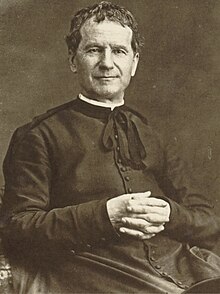
Every year my esteem for St John Bosco grows exponentially. I was not introduced to his teachings until the late 90s however there are many parallels in the Montessori method: respect, peace, observation of the child, alternating large muscle movement with periods of close concentration, and authentic faith practices that foster true comprehension.
This treatise remains my go-to best resource.
DON BOSCO – WRITINGS
THE PREVENTIVE SYSTEM IN THE EDUCATION OF THE YOUNG
CRITICAL EDITION: P. BRAIDO – TRANSLATION & NOTES: P. LAWS
TEXT
On a number of occasions I been have asked to express, verbally or in writing, a few thoughts concerning the so-called Preventive System which we are accustomed to use in our houses. Until now I have not been able to comply with this wish for lack of time, but since at the present moment we are preparing to print the regulations which now have been observed as it were by tradition, I have thought fit to give here an outline of it, which however will serve as a sketch for a small work which I am preparing, if God will give me life enough to be able to complete it. I do this solely to help in the difficult art of the education of the young. Therefore I will say: in what the Preventive System consists, and why it should be preferred; its practical application, and its advantages.
I: In what the Preventive System consists, and why it should be preferred.
Through the ages there have been two systems used in the education of the young: preventive and repressive. The repressive approach consists in making the law known to the students and then supervising them in order to detect transgressions, inflicting, wherever necessary, the merited punishment. Using this system the words and the appearance of the Superior must always be severe, and somewhat menacing, and he himself must avoid all friendly relationships with his dependants.
To give greater weight to his authority, the Director would need to be seen but rarely among his subjects, and generally speaking only when it was a question of punishing or threatening. This system is easy, less demanding and is especially useful in the army and among adult and sensible people who ought of themselves to know and remember what is according to the law and other regulations.
Quite otherwise, I would say its very opposite, is the preventive system. It consists in making known the rules and regulations of an Institute, and then supervising in such a way that the students are always under the vigilant eye of the Director and the assistants, who like loving fathers will converse with them, act as guides in every event, counsel them and lovingly correct them, which is as much as to say, will put the students into a situation where they cannot do wrong.
This system is all based on reason, religion and loving-kindness. Because of this it excludes every violent punishment, and tries to do without even mild punishments. It seems that this system is preferable for the following reasons:
1
Being forewarned, the pupil is not disheartened when he does something wrong, as happens
when such things are reported to the one in charge. Nor does he get angry from being corrected, or threatened with punishment, or even from actually being punished, because there has always been through the affair a friendly voice forewarning him, which reasons with him and generally manages to win his friendship, so that the pupil knows there must be a punishment, and almost wants it.
2
The basic reason (why young people get into trouble) is youthful fickleness which in a moment can forget the rules of discipline and the punishments they threaten. For this reason, a child often commits a fault and deserves punishment, to which he had not given a thought, which he did not remember at all in the act of committing the fault, and which he certainly would have avoided had a friendly voice warned him.
3
The Repressive system can stop a disorder, but only with difficulty can it improve offenders. One observes that young people do not forget the punishments they have suffered, and generally remain embittered, wanting to throw off the yolk, and even to take revenge. It seems at times they pay no heed, but anyone who follows them up in later life knows that the recollections of the young are dreadful, and that they forget the punishments inflicted by their parents, but with great difficultythose given by their teachers. Episodes are known of some who in their old age have exacted an ugly revenge for certain punishments justly inflicted during their school days. On the other hand, the Preventive system makes a friend of the student, who in the assistant sees a benefactor who gives him good advice, wants to make him good, to shield him from unpleasantness, from punishment, from dishonour.
4
The Preventive system offers the student previous warning, in a way that the educator can still speak to him in the language of the heart, whether during the time of his education, or later. The educator, having won the loving respect of his protege, will be able to greatly influence him, warn him, counsel him, and also correct him, even when he is employed, whether it be in the civil service, or in commerce. For these and many other reasons it seems that the preventive system should prevail over the repressive.
II: Application of the Preventive System
The practice of this system is all based on the words of St Paul, who says: Love is patient, love is kind … it bears all things … hopes all things, endures all things. ( 1 Cor. 13:4.7 passim) Love is kindly, and patient; it puts up with all things, but hopes all things and endures any disturbance. For this reason only a Christian can successfully apply the Preventive system. Reason and Religion are the means the educator should constantly make use of, teaching them, making use of them himself, if he wishes to be obeyed and to attain his goal.
1:
For this reason the Director should be dedicated to his pupils, nor should he ever assume tasks that would take him away from his duties; on the contrary, he should be among his pupils every time they are not taken up with other legitimate tasks, unless they are duly assisted by others.
2:
The teachers, the technical instructors, the assistants should all be of known moral rectitude.They should try to avoid like the plague every kind of (morbid) affection or exclusive friendshipwith the pupils, and they should realise that the wrongdoing of just one person can compromise an educational Institute. They should operate in a way that the students are never alone. As far aspossible the assistants should precede them to the place where they are required to assemble; theyshould remain with them until others come to assist them; they should never allow them to be idle.
3
Give them ample liberty to jump, run, make a din as much as they please. Gymnastics, music,declamation (of poems, etc), theatricals, hikes, are very effective methods for getting discipline;they favour good living and good health. One must only ensure that the plot, the characters and thedialogue are not unsuitable. That great friend of youth, St Phillip Neri used to say,
"Do whatever you wish; for me it is enough you do not sin".
4
Frequent Confession, frequent Communion, daily Mass are the pillars that ought to support an educational edifice, from which one would want to keep at bay threats and violence. Never require the youngsters to go to the Holy Sacraments, but just encourage them, and offer them everyopportunity to make good use of them. Then on the occasion of retreats, novenas, homilies, religious instructions, one should highlight the beauty, the greatness, the holiness of that Religion which proposes with such easy methods things as useful to civil society, to peace of heart, to thesalvation of one's soul, as are these holy sacraments. In this way the young people will becomeinvolved spontaneously in these religious practices, with pleasure and with fruit. (1)
___________________________________________
(1) Not long ago a minister of the Queen of England, visiting an Institute in Turin was taken to a large hall where about 500 boys were studying. He was not a little amazed at seeing so many children in perfect silence, with no supervision. His amazement grew even more when he came to know that perhaps in an entire year, one did not have to complain of a word being said out place, or so much as threaten a punishment, much less inflict one. "Tell me, how ever is it possible to obtain such silence and such discipline", he asked. And he added to his secretary, "Write down whatever he says". "Sir", replied the Director of the establishment, "the means we use is not available to you." "Why?" "Because they are secrets known only to Catholics". "What are they?" "Frequent Confession and Communion, and Daily Mass well heard." "You are absolutely right. We lack these powerful means of education." "If you do not make use of these religious means, you must turn to threats and the stick". "You are right! You are right! Religion or the rod, I want to recount this in London".
___________________________________________
5
Exercise the strictest vigilance to prevent there being allowed in the Institute friends, books or persons who carry on bad conversations. The appointment of a good doorkeeper constitutes a treasure for a house of education.
6
Every evening after the usual prayers, and before the students go to bed, the Director, or someone in his place should offer a few kind words in public, giving some good advice or counsel regarding things to be done or avoided, and let him try to glean these from events that have taken place that day in the Institute or outside. But his talk should never go on more than two or three minutes. This is the key to good behaviour, progress and educational success.
7
Avoid like the plague the opinion of any one who would want to postpone First Holy Communion to too old an age, when most times the devil has taken possession of the heart of a youngster with incalculable harm to his innocence. According to the discipline of the early Church it was customary to give to infants the consecrated Hosts left over from the Easter Communion. This helps us realise how much the Church loves to see children admitted to their First Communion in due time. Once a child can tell the difference between bread and bread, and shows himself to be sufficiently instructed, pay no attention to his age and let the Heavenly King come to reign in that happy soul.
8
Catechisms recommend frequent Communion. St Phillip Neri advised receiving once a week, or even more frequently. The Council of Trent states clearly that it greatly wishes every faithful Christian to also receive Communion each time he goes to Mass. But this communion should not only be spiritual but in fact sacramental, so that one may gain greater benefit from this august and divine sacrifice. (Council of Trent, session XXII, ch. VI)
III. Utility of the Preventive System
Someone might say that this system is difficult in practice. I reply that from the point of view of the students it turns out easier, more satisfying, more advantageous. In the case of the educator, it does include some difficult features, which however are diminished if the educator addresses the task with devotion. An educator is one devoted to the well-being of his students, and for this reason ought to be ready to face every inconvenience, every fatigue in order to achieve his goal, which is the civil, moral and intellectual education of his students.
Over and above the advantages set out above, I would also add:
1
The student will have the greatest respect for the educator and will go on recalling with pleasure the orientation he was given, always considering his teachers and the other Superiors as fathers and brothers. Wherever they go, these students are generally the consolation of their families, useful citizens and good Christians.
2
Whatever might be the character, the attitude, the moral state of a pupil at the time he is enrolled, his parents can be secure in the knowledge that their son will not deteriorate, and one may confidently assert that one will achieve some improvement. Indeed, certain youngsters who for a long time were the scourge of their parents, and were even refused entry into houses of correction, when cared-for according to these principles, changed their attitude, their character, they set themselves to live a decent life, and now fill honourable places in society, thus becoming the support of their families, and a credit to the area they live in.
3
Pupils having unfortunate habits who perchance should gain entry into an Institute will not be able to harm their fellows, nor will good boys be harmed by them, because there will be neither time, place, or opportunity, insofar as the assistant, whom we presume to be present, would rapidly put things right.
A Word on Punishments
What criteria should one observe when inflicting punishment? Where possible, one should not make use of punishments, but when necessity demands repression, one should bear in mind the following:
1
The educator at work amongst his pupils should make himself loved, if he wishes to be respected. In this case the omission of an act of goodwill is a punishment, but a punishment that acts as a challenge, encourages, and never disheartens.
2
With the young, what is used as a punishment becomes a punishment. One can observe that a less-than-loving look is for some worse than being struck. Praise when something is done well, blame when there is negligence, are already reward and punishment.
3
Except in very rare cases, corrections, punishments should never be given in public, but privately, apart from companions, and one should use the greatest prudence and patience to have the student understand his fault through reason and religion.
4
To strike one in any way, to make one kneel in a painful position, to pull any one's ears andsimilar punishments should be absolutely avoided, because they are forbidden by the law of the land, they greatly irritate the young, and they degrade the educator.
5
The Rector should make the rules well known, along with the rewards and punishments set down in the disciplinary policy, so that no pupil might be able to excuse himself by saying he did not know what was commanded or forbidden
If in our houses this system is put into practice I believe that we will be able to achieve excellent results without resorting either to corporal punishment, nor to other violent punishments. For these forty years during which I have dealt with the young, I do not remember ever having used any kind of punishment, and with the help of God I have always got not only what was necessary, but even had my wishes met, and that from those same young people for whom every hope of a good outcome seemed in vain.
Sac. John Bosco.
For love

“Why do farmers farm, given their economic adversities on top of the many frustrations and difficulties normal to farming?
And always the answer is:
"Love. They must do it for love."
Farmers farm for the love of farming.
They love to watch and nurture the growth of plants.
They love to live in the presence of animals.
They love to work outdoors.
They love the weather, maybe even when it is making them miserable.
They love to live where they work and to work where they live.
If the scale of their farming is small enough, they like to work in the company of their children and with the help of their children.
They love the measure of independence that farm life can still provide.
I have an idea that a lot of farmers have gone to a lot of trouble merely to be self-employed,
to live at least a part of their lives without a boss.”
Wendell Berry
I shared elsewhere an interview with Rory Feek which prompted questions by those who were not familiar with him. He truly embodies this quote and the values that figures like Berry and Joel Salatin and others espouse. The story of his family is told in the documentary To Joey With Love and his book This Life I Live where he writes about living with conscious awareness of the 'extraordinary ordinary" which is pretty much my entire life's theme. The story of a homestead built with love here.
“My life is very ordinary,” says Rory. “On the surface, it is not very special.
If you looked at it, day to day, it wouldn’t seem like much.
But when you look at it in a bigger context—as part of a larger story—you start to see the magic that is on the pages of the book that is my life.
And the more you look, the more you see.
Or, at least, I do.”
Against Rash Judgement

Having in vain exhorted a certain nobleman to forgive one with whom he was at variance, he invited him to his private chapel to assist at mass, and there desired him to recite with him the Lord's Prayer. The saint stopped at that petition,"Forgive us our trespasses as we forgive them that trespass against us." When the nobleman had recited it alone, John conjured him to reflect on what he had been saying to God in the hour of the tremendous mysteries, begging to be pardoned in the same manner as he forgave others. The other, deeply moved, fell at his feet, and from that moment was sincerely reconciled with his adversary. The saint often exhorted men against rash judgement, saying "Circumstances easily deceive us: magistrates are bound to examine and judge criminals but what have private persons to do with the delinquencies of their neighbors unless it be to vindicate them?"
– Butler's Lives of the Saints for January 23, St John the Almsgiver
Soldiers in Petticoats

To make history "matter" and come alive I try to weave in literature and film and music that fleshes out the eras we are covering. I have watched all of Call the Midwife twice and am going through a third time as my younger girls rewatch. We recently watched the suffragette episode featuring Annette Crosby and it's clear that I was not viewing closely enough prior to this sitting. The discussion about "forced feedings, humiliation, and psychological and physical torture" for instance.

It so happened that we had recently covered women's suffrage and WWI this past semester so we revisited this issue. Last night we found the Suffragette film. It was just a solid B movie but hopefully made the story a little more human than a list of names and dates in a text. Hopefully they have a different image in their minds than the delightful but ditzy Mrs. Banks of Mary Poppins fame, which honestly was the first thing that came to mind for me growing up. The way people and things are depicted so often is the most impactful aspect of how they are memorialized.
There is nothing black and white, neat and tidy about history or humans. As causes intersect and overlap (or not) it can be tempting to make a broad sweep of all activist movements. It is worth the time and discussion to consider the pros and cons of each issue, on its own, together with the merits and drawbacks of proposed next steps.
This post contains a host of links to related books and films.
He knows what He is about

"He has not created me for nothing.
I shall do good, I shall do his work, I shall be an angel of peace, a preacher of the truth in my own place– if I do but keep his commandments and serve him in my calling.
Therefore, I will trust Him.
Whatever, wherever I am, I can never be thrown away.
If I am in sickness, my sickness will serve him;
if I am in sorrow, my sorrow may serve him.
He does nothing in vain.
He knows what he is about.
He may take away my friends.
He may throw me among strangers.
He may make me feel desolate, make my spirits sink, hide my future from me-
still He knows what he is about-
and I trust Him."
John Henry Newman
I was searching for words for a friend last night and this popped up again after having copied it out many years ago. Admittedly, I could not imagine at the time all the ways He would take me up on the whole sickness-sorrow-strangers-spirits part.
And may yet.
He still knows what He is doing. Even if I don't.
 Starry Sky Journal