I followed this link from Amy’s blog and am so glad I did! Countless projects children can complete with help that are actually worth keeping/giving away.
We have a bucket of wheat berries so will try the wheat grass this week.
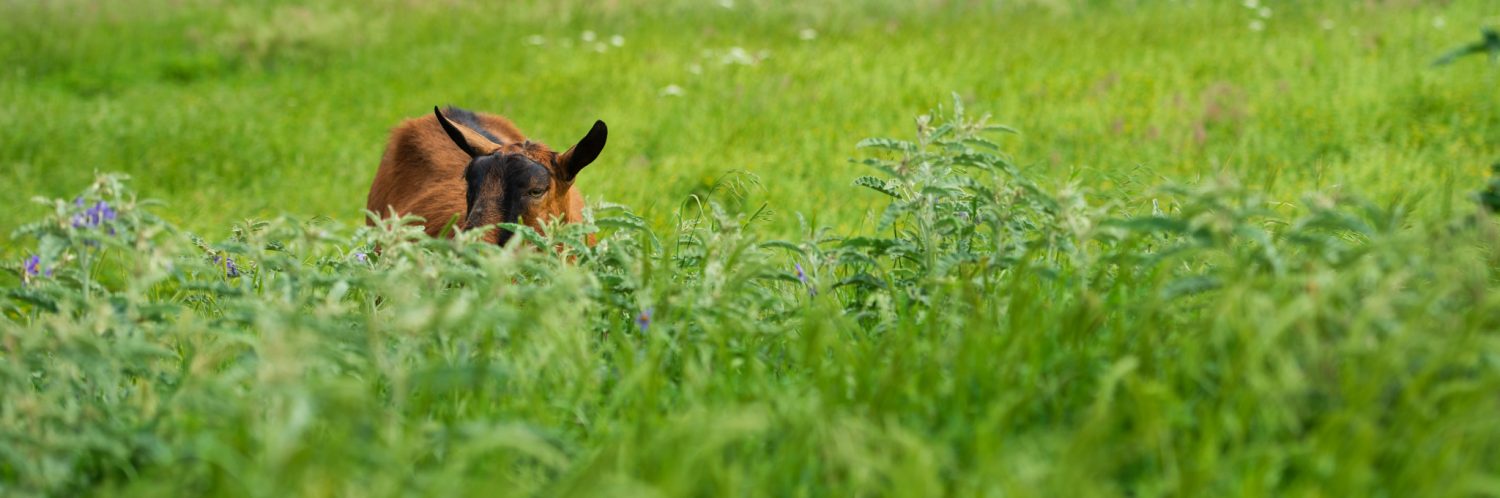
“If you ask a boy to read about the life cycle of a tadpole metamorphosing into a frog, but that boy has never touched a frog, never had the experience of jumping around in a stream in his bare feet chasing after a tadpole, he may not see the point.” – Boys Adrift


Hopefully this applies to toads and girls as well. In reverse anyway : )
I have had the pleasure of reading these past several weeks now – really diving into books. They are much more portable than this machine. The down side is that it takes me far longer these days to get through a volume than it once did. Our daily rhythm is steady and the long unspoken-for spans of time I thought I once had have long since been filled with chores, errands, potty training, and the like. Spaces that aren’t filled with those are usually snagged for showers and naps and a stolen phone call here and there. For that reason I figured I would just share snippets of what has particularly resonated with me lately.
The first is from Leonard Sax’ Boys Adrift. It was recommended on a local homeschool list and has proven to be every bit as thought-provoking as promised. I still have lots to get through but his research and anecdotes have rung true from page one. The purpose of the book was the growing phenomenon of failure to launch in young men today. He points to a virtual epidemic of apathy and prolonged adolescence which seems to cross cultural and demographic lines. The book articulates several reasons for this: changes in education, video games, adhd meds, and endocrine disrupters.
His discussion about changes in American schools echo much of what I have read elsewhere. First he addresses research that shows vast differences in growth rates of different areas of boys’ and girls’ brains. These differences indicate that what is appropriate developmentally for one gender at one age is not necessarily so for the other.
I was most intrigued however by his analysis of education in America versus in other areas of the world. Education in our country tends to be very didactic. We cram with facts. Data is revered. There is far less emphasis here on experiential knowledge than in other countries. Our poor ranking on international tests (number #25) suggest that this focus on head knowledge has had a counter-productive effect on long term learning outcomes.
Listen to his discussion about knowing:
In English the verb to know can have two very different meanings reflecting two different kinds of knowledge:
I know Sarah.
I know pediatrics.My knowledge of my daughter Sarah is very different from my knowledge of pediatrics. My knowledge of Sarah is experiential. I know that Sarah likes to be rocked side to side but not front to back. (he gives more examples)
Most European languages use two different words for these two kinds of knowledge. In German knowledge about a person or place you have actually experienced is Kenntnis, from kennen “to know by experience”; knowledge learned from books is Wissenschaft, from wissen, “to know about something”.
There is a fundamental belief running through all European pedagogy that both Wissenschaft and Kenntnis are valuable and that the two ways of knowing must be balanced.
He goes on to describe accompanying a Swiss third grade class high up into the mountains. Children were blindfolded and led to a tree to try to learn as much about it as possible without sight. “To see without the eyes,” the teacher explained. Then they were led away several paces and the blindfold removed. They then had to find their tree. He was skeptical of the value of this exercise until she blindfolded him and made him do the same. He found it “an unexpected and exhilarating experience.”
He shares decades of research that show the necessity of multisensory learning in developing young brains and goes so far as to say that
“a curriculum that emphasizes Wissenschaft at the expense of Kenntnis may produce a syndrome analogous to the neglected child.” (such as has been observed in studies of children raised in sterile orphanages)
This is relevant to our country because we have a generation or two now of children who have been largely raised indoors. As he says,
“You can easily find high school students in America who can tell you about the importance of the environment, the carbon cycle and the nitrogen cycle and so on, but they have never spent a night outdoors. they have plenty of Wissenschaft but not a trace of Kenntnis.”
Amen.
This seems to be the one recurrent theme in my school planning in recent years. My concern is less about facts and data and more about relationships. Formation versus information, Laura Berquist would say. I would say it is not an either/or proposition. Ideally you want them to form relationships with ideas. They can read and write until they are blue but unless the information is personally meaningful to them it is not likely to be planted very deeply. Or worse, they may swell with data and never realize how little they truly understand about it.
For the coming school year we are focusing once again on doing a few things well. Our emphasis is on learning to learn in a meaningful manner. That takes time. It takes courage on the teacher’s part to trust that slow beginnings make for a solid foundation, that giving a child the time and space to connect with ideas will lead to true knowledge in all senses of the word.
We tend to give lip service to the idea of lighting fires versus filling buckets. Then we turn around and start the faucets. I would encourage you to consider your plans for this year in that same light. Are you spending lots of time thinking about what data you plan to impart? How? When? Where? Maybe that time would be better spent this summer observing the child, arranging the environment, and setting peaceful rhythms that will all contribute to more meaningful learning in the long run. Your wallet will thank you too The materials will always be there. What is most beneficial is a keen eye, a prayerful heart, and a responsive attitude. Anyone can pass on wissenschaft. It takes a real giving of self, a release of control, and a good amount of faith to help balance that with kenntnis.
Speaking of which, I hear the sprinkler. A warm day beckons. I am going to join several dripping wet little people. : )
I want to thank all of you for your sweet comments. I think I have lost perspective this time around. I have gained a lot more than with most of my pregnancies. We seem to have an over-achiever baby again growth wise. We have moved up the dates already like happened with several of them. Between the pregnancy and the funky health stuff that has gone down over the past year I have been frustrated with my body in general. It double crossed me. Your comments have helped me regain my morale. God bless you!
…this weekend. Haven’t taken a single picture this pg. Now I remember why lol! Ah well. I know I am going to miss this when it’s over so I will document regardless. Thank you God. Truly.

I had a rare moment to catch up with Lady Lydia’s latest this wknd and had to smile when reading her advice for lifting one’s mood. I have been consciously working on that myself this month and much the same ways she describes. A blog is necessarily a small slice of life, versus a sum total of our experiences, usually the parts we most wish to remember. For every happy memory recorded there are others less so that we carry in our hearts. Sometimes it feels odd to record crafting or thrift store finds while going through other trials. Yet, these too are part of life and often they become the very things that bring balance and well-being to us. So they are included here.
The logistics of a very large family mean that someone you care about (or you, yourself) is experiencing some sort of difficulty pretty much at any given moment. It also means there are dishes to wash, children to bathe, and gifts to arrange. That is a blessing. We are prevented from obsessing as most of us have the tendency to do in those circumstances. Keeping busy is the best medicine. Keeping busy making lovely things for others is even better. It reminds us that all is not dismal and that there is still beauty in the world. It keeps our focus on what we CAN do and outside of ourselves. All good things.
Long before there was Valium there were needle and thread. This has been my pastime of choice in recent weeks for several reasons. I wanted to make some gifts for Christmas and realize now is the time to do it. I needed something that was repetitive and absorbing but not too demanding. Only problem is my oft-mentioned aversion to Kute with a K. Solution? I found this gorgeous pattern book at the library and began a project – a missal (or bible) cover. It is coming together quite quickly -including a short pause when I needed more floss – and I am diving into another, this time using the freebie at Holy Needle. (you will only be able to fit the center motif if you are making it into a cover) Shoot, if I stay stressed enough I might just knock out the entire Christmas list before the summer’s over. ; D
Seriously though, the entire book is stunning and I can’t say that about most cross-stitch resources. There was another I picked up and hope to work from soon. It is full of William Morris reproductions. They are a great fit with mission style decor, elegant but not fussy. Both books consist of very basic cross stitch technique and are geared towards Aida cloth versus linen. Again, a rare thing to find refined patterns in Aida count charts. (note- it seems if you wish to convert an evenweave pattern, then half the linen count to get the Aida count)


This is so beautiful and so appreciated today. I have long been suspicious of formulaic solutions to just about anything. Ironically I am just as fascinated by them. Maybe it is just a longing for it to be that simple. Because, you know I CAN work a formula, by golly. Give me a system and I will throw myself into working it. I am coming to realize though that it isn’t about working the formula, it is about surrender. Working is easier than surrender. Almost anything is easier than surrender. Nothing is more beautiful however.
God grant me the serenity
to accept the things I cannot change;
courage to change the things I can;
and wisdom to know the difference.
Living one day at a time;
Enjoying one moment at a time;
Accepting hardships as the pathway to peace;
Taking, as He did, this sinful world
as it is, not as I would have it;
Trusting that He will make all things right
if I surrender to His Will;
That I may be reasonably happy in this life
and supremely happy with Him
Forever in the next.
Amen.
–Reinhold Niebuhr
It has been a puzzling month in many ways, a month of contrasts. We have had some singularly wonderful things happen and some polar opposite of that. I have spent a lot of time driving back and forth to church, a route which takes us along many miles of wide open range where minutes pass without meeting another vehicle. Time stands still out there. Pronghorn lift their heads to watch pass. Tiny ground squirrels dart across the road tempting fate. Hawks swing low and soar again. Cattle graze. In other places new growth peeks its head through fire-scorched earth. More and more I find myself leaving the radio off and just taking it all in.
Often on these trips the children are fast asleep leaving me to my thoughts. Sometimes a child will awaken and will break the silence with ideas that only come in those moments when you are completely still and void of all distraction. I offer an occasional response, but mostly I listen, because really that seems to be what those kinds of words call for.
I have carried along many articles and books in recent weeks and fit reading into the stolen moments before appointments or waiting for children. As Lisa commented, it has been like a deep breath, a long drink of water in a world which tends to spin faster and faster if you let it. In the quiet all these ideas have had a chance to not just bounce around and compete with all the other words but to settle and take root. Despite the daunting pace there has been peace.
A couple of Marsha Johnson’s articles have made me pause, in particular her thoughts about speech. She writes about coming to an intersection and noticing that every other person had a cell phone pressed to a head. Talking, talking. She asks:
“…we talk and talk, more and more,
words flow like raindrops or snowflakes, a flurry flood of words, a
gush of utterances, a rushing tide of chattering sounds….but are we
saying more?”
It brings to mind the explosion of words in our world. There is not just one local paper to read but several, as well as national and international publications. There is not just one news program but countless. Yet are we truly more informed? There are websites, blogs, and “of the making of books there is no end”. There are cell phones ringing and texting. There are Ipods, car radios, and home theater systems yet do we have more meaningful relationships with artists and composers?
Some of those things have undoubtedly been a blessing. When my husband is far away I am grateful to be able to hear him say goodnight. I am blessed to be able to wish him a happy birthday when he is across the country. (Happy Birthday!! I love you!) Still, some days all that combined input is a barrage and it is a relief to sit and watch the sun rise over the prairie in absolute silence like I do many mornings.
Marsha encourages us think about our contribution to the clamor, to savor words rather than devour them. To share them deliberately as a gift, versus distributing them randomly and constantly; to distill our speech and to:
“make speech ‘count’, to be significant in our thoughts that we express to our children and each other.
Use your words like pearls…….we have a habit to chatter, chatter,chatter,
blather, blab, talk to death, run off at the mouth,
overspeak, fill up space and time with vocalizations!”
Being significant in our thoughts not only renders those thoughts more precious but it gives us a chance to really chew on ideas before sending them back out into the world. Silence gives us the opportunity to listen authentically.
She also suggests that we slow down when we speak. Allow room for children to really hear and to ask questions after due consideration. She advises us to discern the type of words we use and to vary them. Bring poetry into our homes, particularly for transition times such as clean up or readying to leave. Thus you can have a familiar, nonthreatening exchange versus a torrent of words which may be met with a shower of protest.
“Punctuate your days with blessings.”
Say a prayer upon waking, when you sit for meals, when you send your children off, when you tuck them in bed, when you clean the house you were blessed with. When we are busy the tendency is to speak faster, more harshly. Blessing doesn’t come as easily. We are prone to rattle off versus being deliberate. Intake is not much better. We gobble down information without the necessary time to really assimilate. Slowly down our own speech helps to combat that frenzy and make even abundant times meaningful versus dreadful.
So this has been the challenge – to be deliberate and discerning. What kinds of input do we really want or need? Which add meaning and blessing and which fill up our lives with tension? Are we taking the time to truly understand what we read and hear? Are we allowing silence so we can let those words grow in us? That all takes time. There is no way around that part. We can read faster, type faster, but we can’t contemplate any faster. You can’t force that. You must allow silence if you wish to live deliberately.
“Readers are plentiful, thinkers are rare.” Anthony Burgess
“Write to be understood, speak to be heard, read to grow…” Lawrence Clark Powell
“A sage thing is timely silence, and better than any speech.
“Silence at the proper season is wisdom, and better than any speech.” Plutarch“My father gave me these hints on speech-making: “Be sincere… be brief… be seated.” James Roosevelt
“All speech, written or spoken, is a dead language, until it finds a willing and prepared hearer.” Robert Louis Stevenson
He who does not understand your silence will probably not understand your words. Elbert Hubbard
Got a big expanse of wall to fill? Here is a great idea for wall art on the cheap. She took 12 by 12 scrapbook paper and mounted sheets of it onto styrofoam. The sides are painted black. Stunning. Likely less than ten bucks for a 6foot square wall covering. With the wide assortment of scrapbook paper style there is surely one to fit every decor.
You can do the same with large cardboard letters readily available at craft stores. Our local Joann Fabrics has several sizes and styles for under $3 each. I would like to pick some up to paint in a metallic finish to imitate the pricey galvanized letters at Anthropologie.
 Starry Sky Journal