Fire up those printers gals! This one is incredible. I so have to get my sidebars updated and when I do this will be there.
Monthly Archives: August 2008
The rain is raining all around
….it falls on field and tree….
So goes the verse although that was definitely not the case with our fields and trees this summer. Lightning meant fire, not rain. We were far more likely to see clouds of smoke than these:

Finally, however, the sky opened this month and blessed us with a number of soaking rans which the thirsty prairie greedily lapped up. After months of stepping out of my front door onto parched ground it was a miracle to see the fields kissed with dew this morning. I walked along in sandals that were soon wonderfully wet.


vertical challenge – part two
My dear husband did it again. He completed the Pike’s Peak Marathon this past weekend no thanks to the weather which turned freakishly cold for August. After blazing heat in the previous weeks he arrived at the base of the mountain and looked up at this:

Snow. Three new inches overnight at 27 degrees. In August.
Still they ran. They ran through fog and rain and then snow and then did it all in reverse on the way back down. He said it was the single hardest physical thing he has ever done. But, he did it!
on the way up:

at the peak (he was just feet from the sign)

There is only one childhood
A friend wrote reflecting about a family member who had chosen a very dry academic program for her little ones. We have talked before, she and I, about how fleeting childhood is. Certainly however our warm feelings for this transitory time in life is not the only reason to cherish and make the most of it. The foundations laid now are those which later experiences – academic and otherwise – will be built upon.
David Darcy says this:
If we deprive children of their childhood in a misguided attempt to harvest quickly what naturally requires time, they may reach adulthood not knowing how to communicate their ideas, how to cooperate with others, how to listen and compromise, and how to access their own innate creativity.
If, instead, we allow time for children to engage in the learning activities that are most natural to childhood, they will, at appropriate times, be able to learn all of the other skills we expect of students. They are more likely to be happy, healthy, confident and creative. Given the choice, why not choose to let children be children?
I would go further and say that later academics are often MORE successful given a rich, solid foundation in childhood. International testing seems to bear this out. Finland, which has ranked first in such testing does not start its children in school before age seven nor do even the high schoolers there have more than 30 minutes of homework. This slower start nets them greater academic achievement later on. Dr Moore was telling us this some decades ago.
Does this mean no Montessori trays and holding them back? No. It means not pushing little people into two dimensional work prematurely. It means lots of hands on, real life experiences. It means a solid grounding in image-rich stories and basic skills (academic as well as organizational and personal) from which to launch and soar later. It means trusting that childhood is not something to be gotten through but there for good reasons. It means that while there is a lifetime to read War and Peace, there is this little window of time to enjoy Tomie de Paola together and to make lovely crayon drawings. Don’t miss it.
More times tables fun
Check out this youtube from A Little Garden Flower on chalkboard times tables. Simple as can be and very pretty. Can be done on paper as well using a pencil (or crayon) and string compass instead of chalk.
Which book do you use….
This question has been asked three times this week so I am going to answer here as well for what it’s worth – which probably isn’t much lol! There are as many ways to educate well as there are children being educated. Ours is one way. If it resonates with you, then wonderful, I hope it is helpful. If not, that is ok too.
There were a couple different ways this question was posed. First, which history book do we use? This one has been raised a few times in regards to a few different age groups. The answer of course, is different when addressing different ages and stages. A few things remain constant however. When thinking about history and teaching history I always remember Dr. Ruth Beechick’s words in You Can Teach Your Child Successfully.
Children’s understanding of time is just beginning to develop. History teachers who have been on the job a long time know that this is so.
(Dr Beechick was a giant in the homeschool world when we began teaching our children and we have been blessed by her sensible, simple, approach. It is a pity the likes of such wise mentors has been largely eclipsed by new publications and voices espousing complicated methods which intimidate so many parents or convince them that there IS in fact a “right way” to “do history”.)
A young child struggles to wrap his mind around today, tomorrow, next week, and next year. To a 5th grader “when I grow up” is as far away as his birth. It equals a lifetime. It is not uncommon for the elementary child to confuse Grandma’s youth with George Washington’s era or wonder if there were castles and knights when Jesus was born. The actual dates are essentially meaningless to them. He is still wrestling with numbers as well, trying to make sense of math facts and times tables. Those tools are still unwieldy in his hands.
The younger the child the more he thinks in images. Your best bet is to work that to your advantage and share with him epochs. Help him to get a good picture of what bible days looked like, what Vikings were like, how a knight lived, who the pilgrims were, who built American log cabins, and who were the Indians they met. These things DO stick in their minds. They will not be able to sort them all out til much later but that isn’t our goal in the beginning. Initially you want to tell fascinating stories complete with vivid images and light a fire for all the vastly different ways people have lived through time. Children will marvel over folks who thought and felt so much like they do and yet who dressed and worked so differently. This is our goal. Impart the wonder.
As Dr B says:
Through stories children catch on to the idea that people lived in the world before they were born and that their times and doings were different from ours.
The best ingredient… is the excitement of the parents. That at least is sure to have a lasting effect on children’s interest in history.
In later years – ideally middle and upper elementary grades – you can begin to discuss sequence in more depth. I don’t use a perfectly scaled timeline at first but the children retell the stories we read and we bind them together in order of occurrence. That way they can see that Jesus came after the pyramids but before castles and Grandma came after George Washington but before men walked on the moon.
This is a good time to introduce a history “spine”. A text book is necessarily limited in it’s ability to effectively transmit wonder. When you think of it, how could the stories of billions of people be told effectively by any one book? Many texts are also plagued by revisionist history, a desire to interpret the past according to our own biases and contemporary understanding. What a good text CAN do is to provide a framework into which all those images and stories can now be sorted so they will become a cohesive whole. A text without years of stories and images is dry and lifeless at best. Stories and images with no framework can become random trivia lost due to the child’s inability to pull them all together or to make connections.
So, in the early years we read widely and much. In middle elementary grades we begin to use texts – usually classic texts in our faith tradition – as a spine to organize our studies. We do not expect to cover an entire text in one year. Rather we spread out a text over a few years and add picture books, biographies and historical fiction to the mix to flesh out the data more completely. Bear in mind that in high school and college the student will usually employ survey texts that will sum up all that came before. So this is a process.
Remember also:
Since there is no widespread agreement on what should be taught in each grade you can be assured that you will do no lasting damage to your own curriculum by making adjustments that fit your situation.
This seems to be the most difficult concept for most adults to grasp. Surely there must be a correct order in which to teach history? Nope. I tell you truthfully. Nope. If you are skeptical then order catalogs from several major publishers and compare the scope and sequence of each. You will discover that one begins with the beginning of time in grade one and moves forward in strict chronological order each grade. Another will begin with local and family history and move outward to more abstract information. Others begin with American history and give world and ancient histories a nod in junior high. All will assert that their way is critical to success and may even suggest that failing to adhere to their system will lead to disaster. This is just not so.
Share the wonder, provide a framework, and trust that the stories which have captivated generations will work their magic on your children as well. Just exercise discretion. A first grader is likely to remember about as much cold hard history as you recall from that time in your own life. Work with their natural development and things will go ever so much better for you both.
A good list of picture books for history is here and here
Laura Berquist’s Mother of Divine Grace School is one of the few Catholic correspondence programs to employ this approach.
Rainbow Resource Center sells numerous literature and activity based history studies from varied publishers. A quick google search will turn up tons more.
Lazy Woman’s Ice Cream
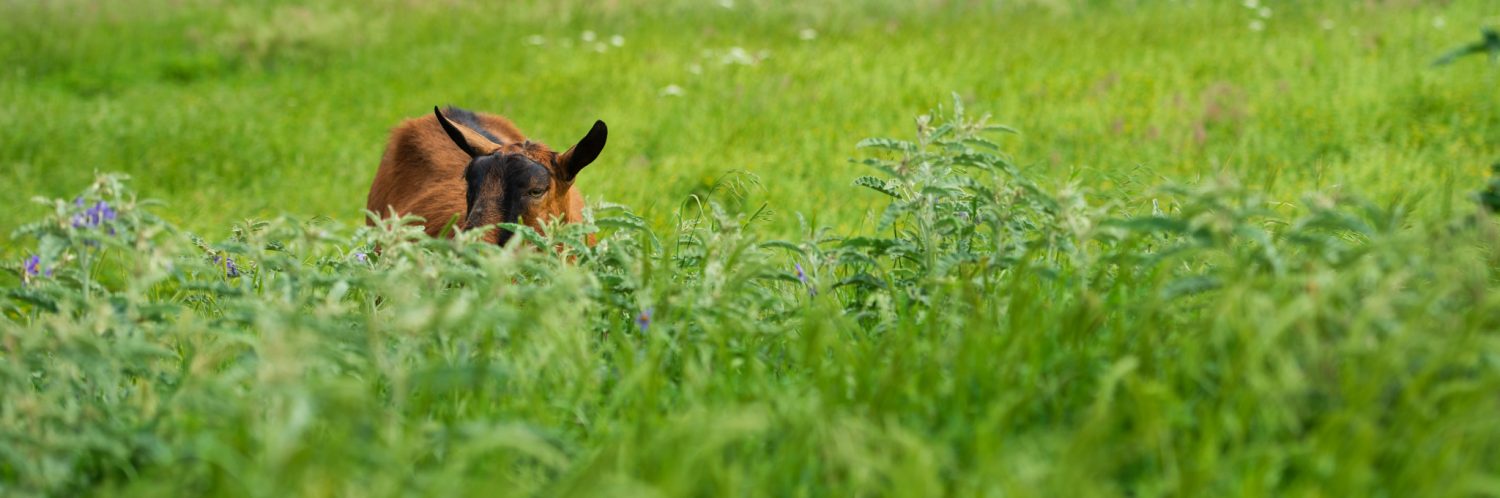
Since adopting the starch free diet last year for the arthritis I have one major dietary weakness – ice cream. It is my big treat now that cookies (sigh…) and chips are out. I treat myself to Haagen-Das or Breyers once a week. I kept wondering how hard it would be to make ice cream from the goat’s milk. We still haven’t gotten an ice-cream maker, however, so it was just sort of random musing.
A couple weeks ago I googled some basic custard ice cream recipes. I noticed some comments mentioned just freezing it and stirring periodically. Last night I gave it a whirl with this recipe. I used straight goat’s milk, versus the half milk, half cream. Since goat’s milk is naturally homogenized its all in there already. Being maker-less, it went right into the freezer in tupperware and was stirred a couple times. Oh my! Ohmyohmyohmy! It was incredible. Forget cheese. I love my goats but hate goat cheese of any variety. But goat’s milk ice cream….. Wow.
Ingredients
1 cup whole milk
1 cup heavy cream or whipping cream
2 egg yolks
1/3 cup sugar
1 teaspoon real vanilla extract (not imitation!)
Directions
1 Beat eggs very well with a mixer, gradually add sugar beat until thick and lemon colored.
2 Stir in milk and heat, stirring until thickened.
3 Remove from heat and cool mixture.
4 Add cream and vanilla, cover and chill mixture.
5 Pour into ice cream maker and follow manufactures directions.
this too shall past
That is the gist of the second chapter of the Napthali book where she discusses the concept of equanimity – the ability to keep calm whatever is happening. She discusses the myriad emotions that visit us and suggests that we consider them just that – temporary visitors. As such, we can acknowledge their arrival and allow them to come and go, exercising some objectivity versus clutching them tightly. We ‘host’ these emotions rather than becoming passengers, driven by them.
When something normally considered bad happens, you can handle it – it doesn’t derail you. Likewise, if something good happens you feel joy without feeling dependent on or attached to the event.
This reiterates the message of resignation found in Surrender to Divine Providence which I have read and reread countless times. (I will “get it” yet!) That whole book is about being at peace with the will of God. We can know with certainty that everything that happens has run by God first. He allows it all for (and only for) our greater good. Each will last just as long as He deems wise and not a minute more or less. We can allow ourselves to feel happiness and pain, knowing God has ordained each for a purpose, without feeling the driving need to control their arrival and departure. Someone else has it all well in hand. As the author says:
We should desire what God does and accept with filial submission all that is decided by His Providence
In a spirit of conformity to His holy will we should accustom ourselves for the love of God to putting up with all the little daily vexations, such as a word said that wounds our self-esteem, a fly that annoys us, the barking of a dog, knocking into something as we walk along, a small accidental hurt, a light suddenly going out, a rent in our clothes, a pen that won’t write, and so on.
This issue of control is brought up in the Motherhood book also:
With equanimity we accept what is and stop trying to control the inevitable and impermanent
What is inevitable?
…gain and loss, pleasure and pain, praise and blame, fame and disrepute. No matter how hard we try to attract or avoid any of these, we’ll experience all of them in their turn.
Trying to anticipate each or expecting to exercise control over them causes us unnecessary suffering.
St Philip Neri wrote something similar. He describes three stages of spiritual development:
In the spiritual life there are three degrees.The first may be called the animal life; this is the life of those who run after sensible devotion, which God generally gives to beginners, to allure them onwards by that sweetness to the spiritual life, just as an animal is drawn on by a sensible object.
The second degree may be called the human life; this is the life of those who do not experience any sensible sweetness, but by the help of virtue combat their own passions.
The third degree may be called the angelic life; this is the life which they come to, who, having been exercised for a long time in the taming of their own passions, receive from God a quiet, tranquil, and almost angelic life, even in this world, feeling no trouble or repugnance in anything.
Of these three degrees it is well to persevere in the second, because the Lord will grant the third in His own good time.
In all three sources, tranquility comes after much practice in taming ones emotions and is not generally to be had otherwise. Much commentary is made about being intentional in our reactions. With every challenge or trial we can choose joy. We can decide whether to let things roll off our back or to hold them in to fester. We can be driven by the need for emotional and sensational highs or, conversely, by the need to avoid unpleasantness. Or instead, we can greet both confidently and peacefully. The common theme is that this lofty goal is best achieved by mastering lots of little challenges:
It is even more important to practice conformity to God’s will in these small things than in larger ones, both because they are more frequent and because the habit of supporting them in a Christian spirit prepares us in advance and in a natural manner to show resignation when we have to face serious difficulties.
– Surrender to Divine Providence
trip
indoor pool
room service
little people bundled into softs beds
driving to the school
one well-appointed dorm room
three new roommates
lots of late night snacks stocked
goodbyes
long trip home
a very lovely weekend
and so it goes
The thought manifests as the word
The word manifests as the deed;
The deed develops into habit;
And habit hardens into character.So watch the thought and its ways with care,
and let it spring from love
– Buddhist quote
“Watch your thoughts. They become words. Watch your words. They become deeds. Watch your deeds. They become habits. Watch your habits. They become character. Character is everything.”
– Emerson
 Starry Sky Journal