Friday Funschool – P

P is for Patterns and puzzles

ASL – P and puzzle

P template (can be painted this week or covered with peas or paper) and tracer pages  

Nursery Rhymes and Fairy Tales:

The Three Little Pigs print or etext
The Pied Piper – etext or print

Pussycat, Pussy Cat

Pussycat, pussycat where have you been?
I've been to London to visit the Queen
Pussycat, pussycat what did you there?
I frightened a little mouse under the chair. 

P is for Pronunciation – Natural Structure recommends Peter Piper's Perfect Pronunciation for silly tongue twister work.  Consider it painless speech exercises! 

Math 

Pattern work is a mainstay of the hands on preschool program. Once you begin to look for them you will find potential patterning everywhere you look.  You can purchase pattern blocks and books to go with. Mine have all enjoyed making patterns and pictures with the blocks and having a partner try to recreate them either side by side or after covering the blocks with a paper first. There are cards available and we have made good use of them. They keep kids busy for a long time. 

Unifix has a really nice set of pattern books and the cubes are a great investment for preschool math work since they are not limited to one type of activity.  

Building Thinking Skills – Primary has been part of our preschool for many years now. It DOES call for a LOT of manipulatives however. 

You need not purchase a thing however. Have you got beans? Paper clips? pennies?  You can paste these to strips of poster board and make your own pattern cards.  Children can copy these or you can repeat the pattern twice and allow ample space for the children to continue the pattern on their own.  We made some pattern sticks with black pipe cleaners and colored pony beads.  For the master sticks we bent and glued the beginning and end beads.  Then we made some empty sticks with one end bent and closed so the beads would not fall off as the child recreated the patterns.

Some patterns:
abababa
aabaabaab
aabbaabb
abcabcabc
abbcabbcabbc
aabaacaabaac

and so it goes. You can easily adjust the level of difficulty for many ages and stages. You can alternate colors, items, positions to make the patterns. 

More lesson plans here

P is for puzzles.  Of course!  What would early learning be without them?  We love Lauri puzzles. They also have some pattern work products.  Typically the first Montessori puzzles are 3 shapes.  Then there are those with one shape in various sizes. They work up to the botany and zoology puzzles.  I recently discovered some Waldorf puzzles which are so beautiful and incorporate patterns. (see left sidebar) Obviously these are to be introduced later.

Again, if money is a consideration there are options. Some simple homemade alternatives exist.  Cut the fronts off favorite cereal boxes, laminate and cut into as few or many pieces as your child can manage to reassemble correctly.   

Brendan is loving popsicle stick puzzles. To make, tape 6 (or more) craft sticks together and draw a design with marker that spans all the sticks. The child then reassembles the sticks in the correct order to make the picture. Difficulty is adjusted with the complexity of the design. This is an all absorbing activity for us at the moment. 
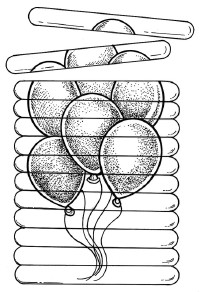
Craft_stick_puzzles

Another good activity is recreating felt pictures.  We have been playing around with a pumpkin face game which we found here. You can use any picture however. Make a simple design with cut felt pieces, draw or take a picture and include it on the tray with the pieces and a larger felt background mat. The child reassembles the pieces to match the picture. 

P is for Pegboards
These are a hit around here as well. You can buy premade sets however we made ours easily with a piece of cut pegboard plywood and large beads glued under the four corners to raise it up high enough for golf tees to rest in the holes. The smallest funschoolers will be smitten with just dropping the tees in.  Olders can begin to use colored tees/pegs to make patterns and pictures. 

Sensorial/Prewriting
P is for pushpin work, another fun Montessori activity. This is typically connected with elementary geography work in Montessori schools but increasingly preschool teachers are introducing it as a prewriting activity. Here are some pictures of our pin work.  We printed off some seasonal clip art shapes and cut them to fit the cork tile squares we picked up at Walmart for next to nothing. You can find extra large push pins in the office supply section.  They are the perfect size for pin work since they are very close in diameter to crayons and pencils.  To do the work the child pins his shape to the cork tile,  gets a pin and begins to punch tiny holes around the shape essentially perforating it so he can pop it free from the paper. 
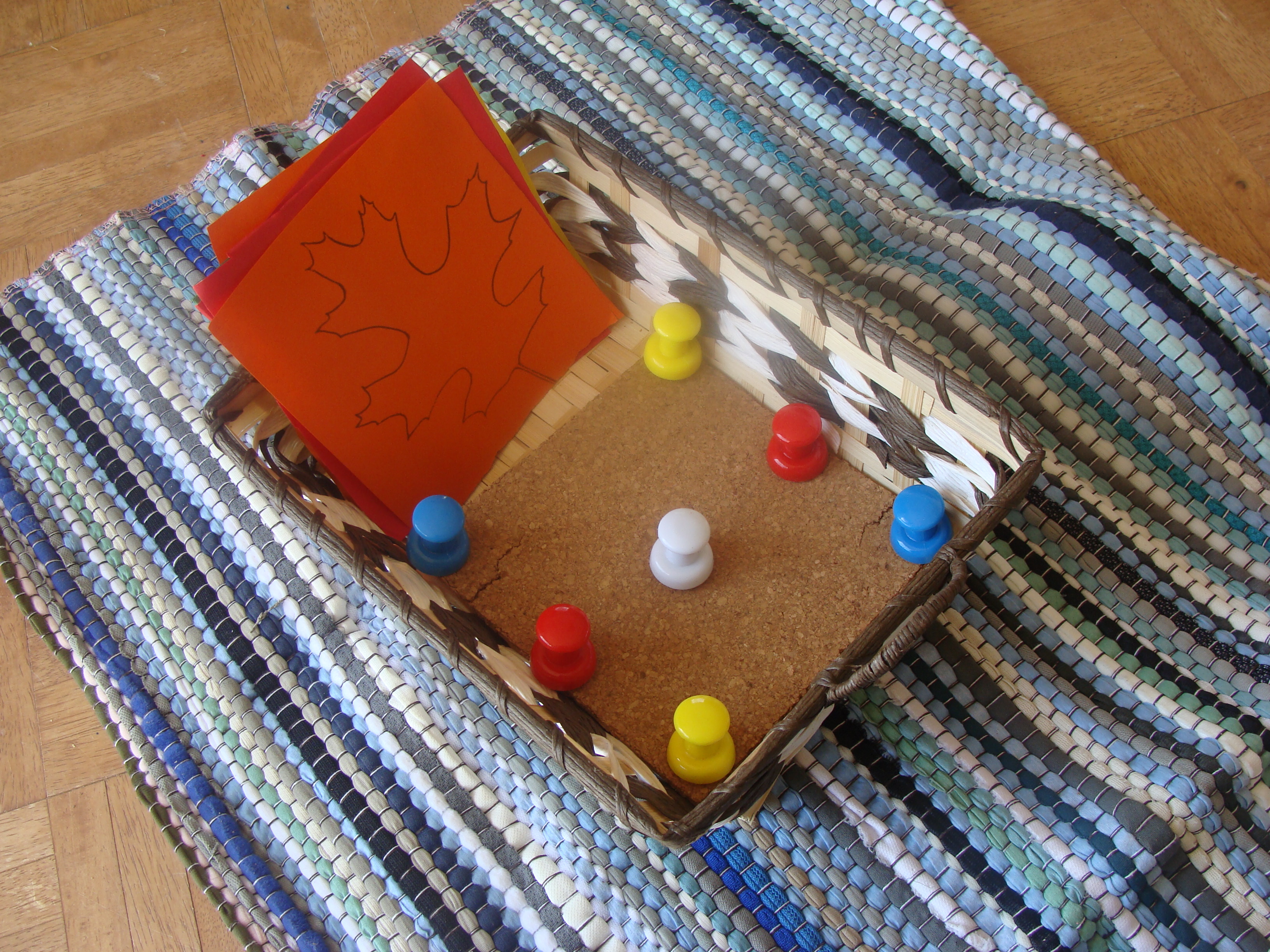
DSC01426

P is for Paper Punching!  Another favorite of late. Punches are readily available at craft stores. They REALLY work little hands so its best to begin with tiny ones and then work up to larger punches or you may meet frustration. Assemble a variety of punches and paper squares on a tray.  That's it!  If you like you can gather the punched pieces and include some larger papers and glue on another tray for more work. 
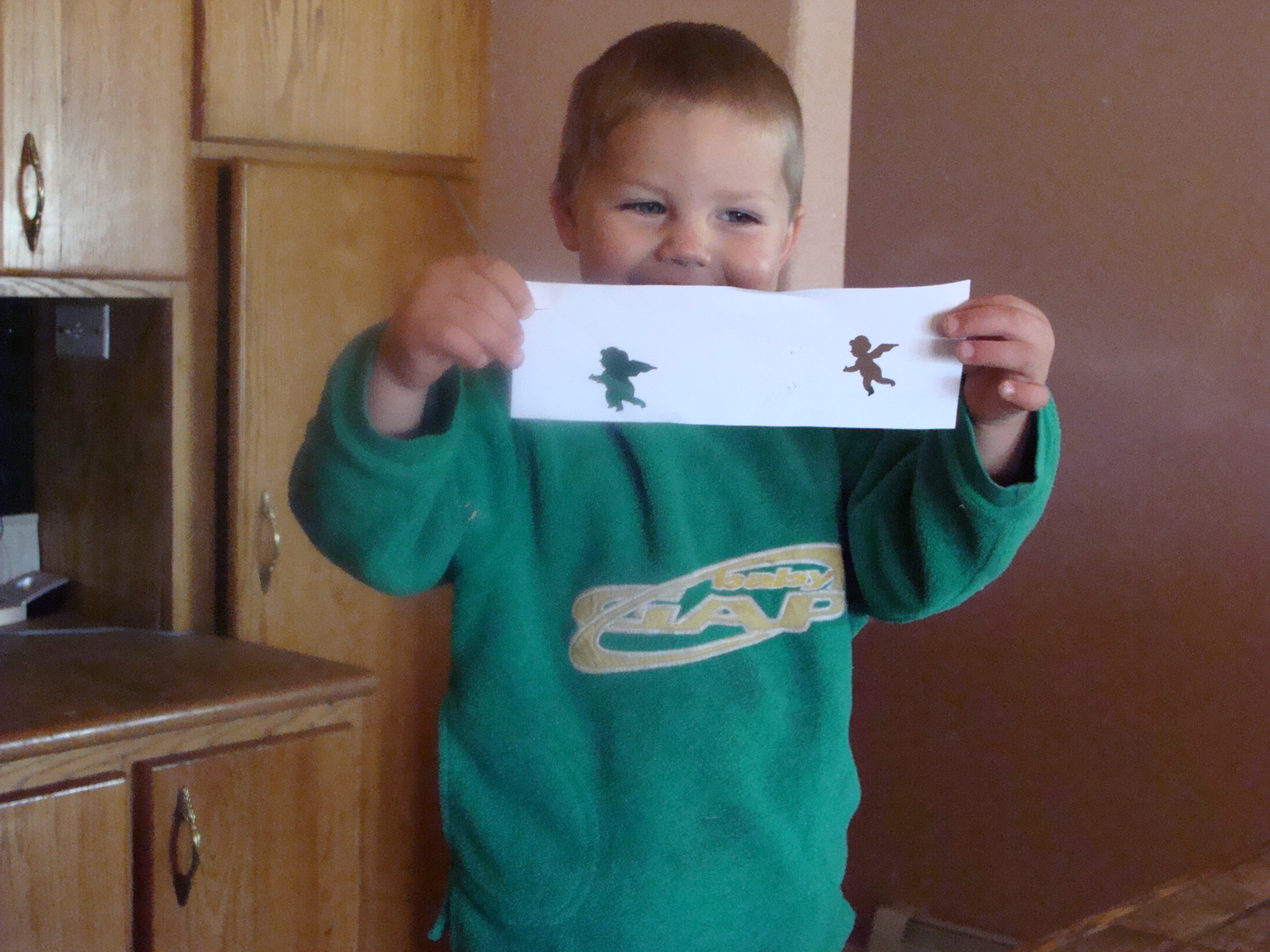
DSC01611

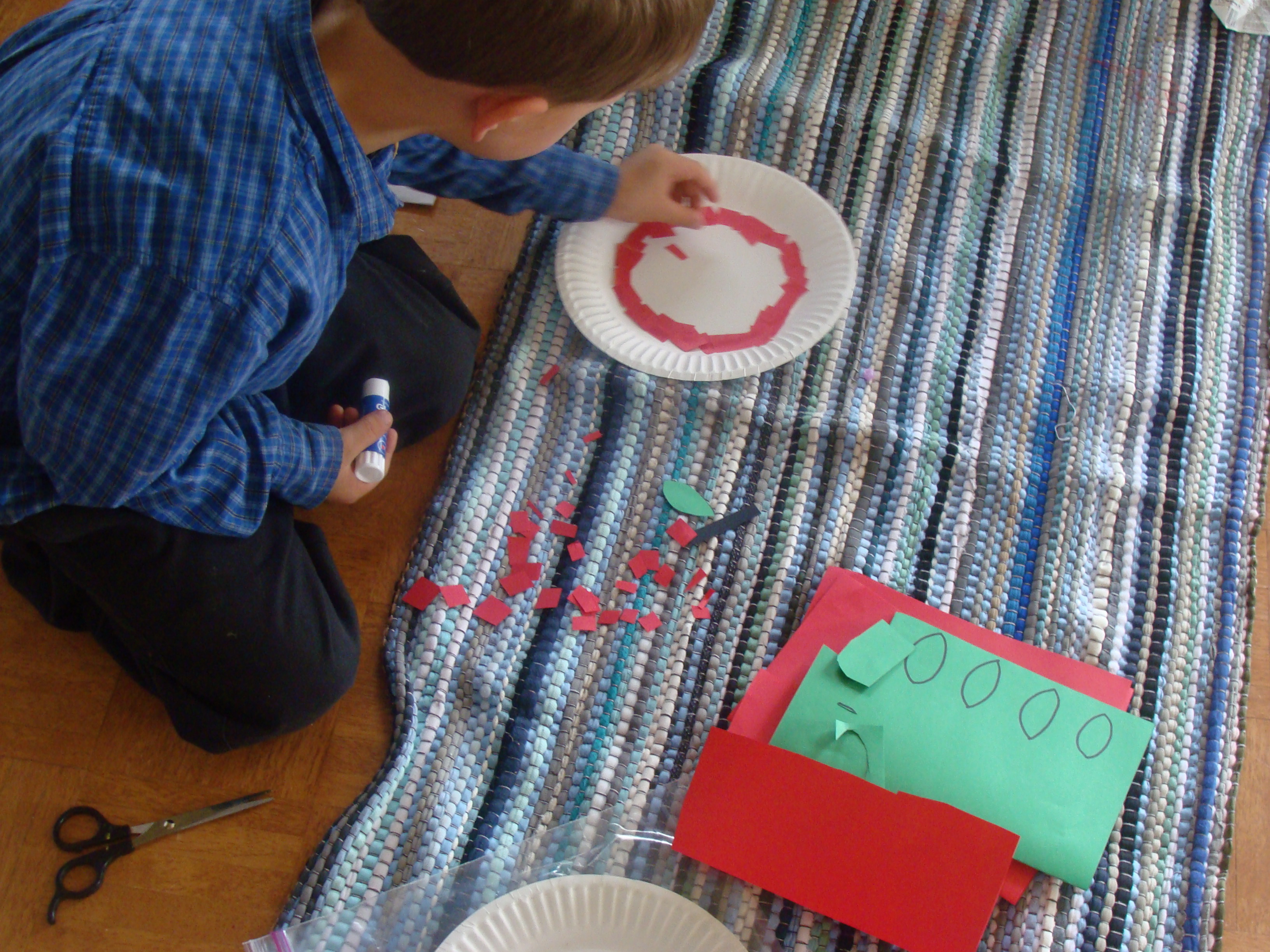
P is for Paper Crafts.  You know I can't leave that alone. ; )  Papercrafts can range from the sublime to the ridiculous. We have loved origami since we first read about a Japanese woman teaching a preschool class the ancient art many years ago. On the left sidebar (the art album) you can see some of the designs our under sixes have created from this site. The teacher at this blog includes a paper plate art activity regularly among her other activities. The idea is not so much that these make fantastic art per se but they DO require children to follow directions and work sequentially which are skills that will be necessary in many areas as they progress through school. 
DSC01463

P is for Practical Life activities.  Practical Life is Montessori's term for everyday life skill work such as tying shoes, self care, food prep, care of the environment and so on. It is put well here:

The purpose and aim of Practical Life is to help the child gain control in the coordination of his movement, and help the child to gain independence and adapt to his society. It is therefore important to “Teach teaching, not correcting” (Montessori) in order to allow the child to be a fully functionional member in hios own society. Practical Life Exercises also aid the growth and development of the child’s intellect and concentration and will in turn also help the child develop an orderly way of thinking.

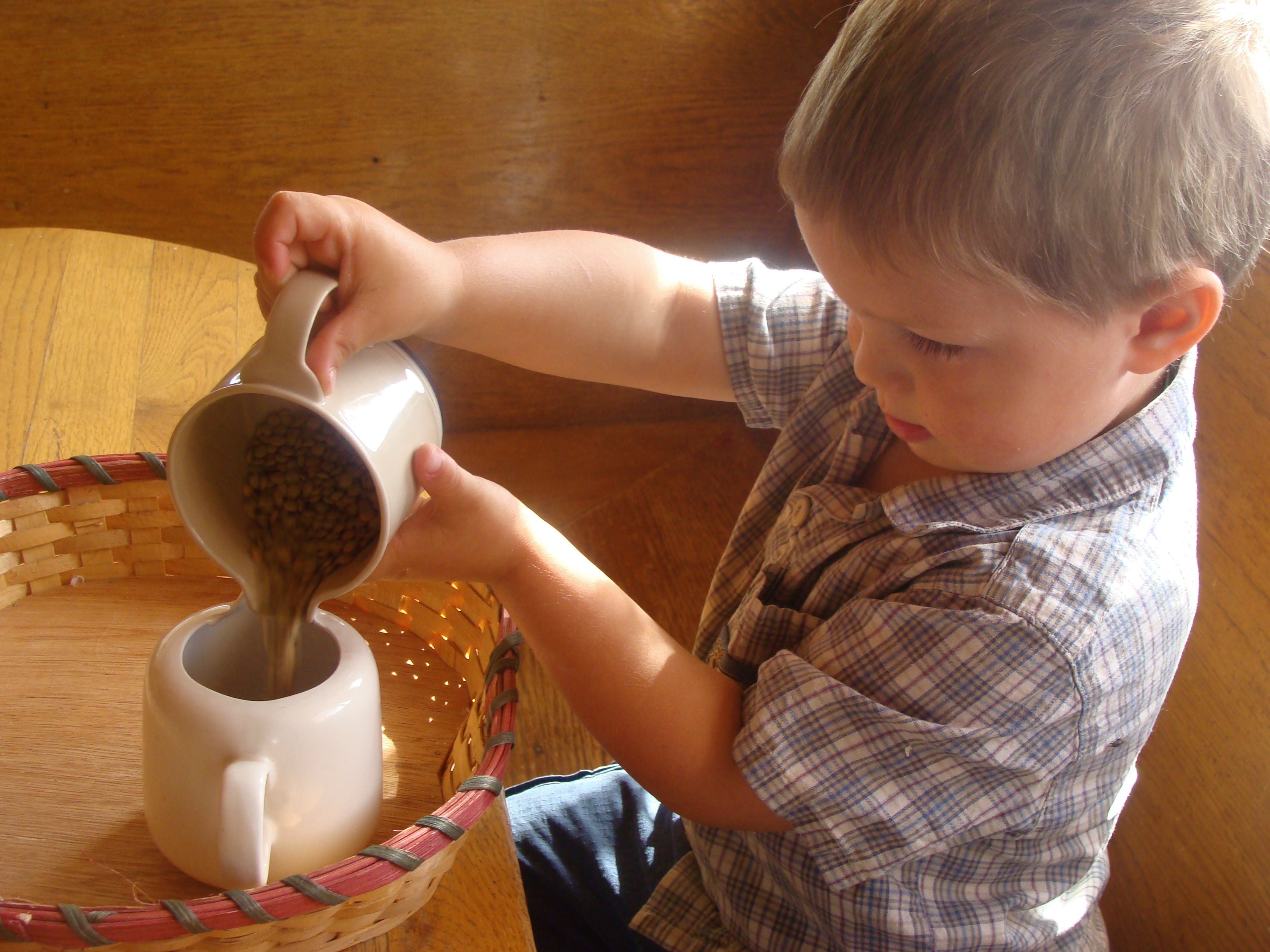
You can find many ideas at Montessori World.  For P week you may wish to begin with some Pouring work.  Get two pitchers (creamers work well) and fill one with dried peas. Demonstrate how to hold the full pitcher in the right hand and place the left hand fingers under the edge to balance while pouring into the empty pitcher.  You can progress to plastic cups with marker lines at various heights. 
DSC01469

Plant care is another practical life work. Any non toxic houseplant works. Discuss watering (and overwatering!) and dusting of the leaves. Provide a small watering can and spritzer. 

Pet care is another oft overlooked practical activity but can be easily incorporated into even urban settings.  A large animal is not necessary and is often a burden to children and parents. Small caged pets like birds or lizards  or fish work just as well. Keep some informational picture books nearby and assign the child the feeding and cleaning duties – with help and supervision of course.

Art

P is for Picture Study.  Many educational methods encourage exposing children to great works of art. A Montessori program used often is Mommy It's a Renoir. You can purchase art postcard sets to go with. They begin with simple matching exercises and work up to identifying schools of art. My friend Maureen had a wonderful nearly free idea. She chooses one piece of art per month (or quarter – you decide) and prints it off from the internet.  She also prints off some smaller versions of the same print and laminates them to make little magnets or simply tapes them around the house like on the bathroom mirrors.  This makes for painless review. By month's end the child easily recognizes the work. 

It doesn't get much easier than this. Cut the potato  in half. Carve simple shapes into the cut edge. dip into paint and press onto paper. 

Thrift stores and craft stores carry very inexpensive art prints.  Do try to include one in your school area. Art are another cheap option. You can purchase enough prints for a whole school year worth of monthly picture study that way. 

Snacks
Peanut butter, pasta, potatoes, pie, pizza, and pickles this week! A special cooking project would be making popcorn balls. Pie is another great option. Homemade pizza is an easy project for little people. You make the crust or buy a premade crust. Children can brush on the sauce and sprinkle veggies and cheese atop. 

Bible
P is for Pentecost    Kieran at five made this paper model of the pentecost. It took me a bit to figure out how to make it flip over but once we did it made quite a nice object lesson to go with the story. 
Image_p2p

Thoughts about gift giving this holiday season

Eileen shared this article on the Waldorf Home Educator's list and I asked her if it would be alright to reprint it here.  She graciously agreed and I am so pleased to share it. Eileen has spoken eloquently about why to carefully consider quality and quantity when selecting gifts. Our motto for school and home is "A few things done well."   To this we can add the gift giving motto: "A few well-chosen things."  Enjoy and do visit Eileen's blog and business (links at bottom!).  You can view a sample lesson at her site which includes fingerplays, chalk drawing examples, recipes and more.  

Some parts of this article really hit home. I recall a Christmas many years ago when our big boys were 4, 2 and 1.  We were taping them opening gifts and were appalled quite frankly.They tore through and discarded. I would like to say we made big changes then and there but it was more gradual in reality. 

She also spoke to that urge I had last year this time to shoot for natural decorations. To that end we are looking at Colonial Williamsburg Christmas books and thinking about gilding nuts and drying fruit slices for the tree. We are keeping Marsha Johnson's advice foremost – Make memories, not junk.   

Natural Gift Giving for the Holidays

Watching our child’s eyes light up with excitement during the holiday season
is one of the many joys of parenthood. With our love, each year, many of us
go to the ends of the earth, wait in long lines for hours and spend more
than our budget permits in an attempt to create a magical experience for our
children.

More often than not, we return from our shopping trip overwhelmed and over
budget. And when the holiday arrives, we are understandably disappointed to
see our carefully found treasures thrown into a pile of accumulated things
while our children move on to open the next package.

Not long ago, the holiday season was a simple time of family traditions,
gratitude, and gift-giving from the heart. The magic and beauty of the
season did not come from how much one could receive but from how much one
could give.

Decorating was beautiful and modest with candles and branches of evergreens
draping the doorway. Family and friends would gather together, bringing
along homemade treats and small gifts of appreciation.

Most gifts were made by hand and simple. Mothers would knit sweaters for
their children and fathers would search local shops for the perfect gift.
Children would receive much less but appreciate much more. A new set of
blocks, a special doll, or a set of books would be cherished for years to
come.

Toys were natural and open-ended, leaving room for hours of imagination and
free play. They did not blink, flash, need batteries, or keep children
indoors for most of their day.

How, in a world that is much different now, do we recapture the truth and
surround our children with warmth, simplicity, and peace this holiday
season?

The Benefit of Natural Toys

Toys of today are much different than the basic and sturdy toys of our past.
In addition to the more recent concerns of lead paint on some foreign-made
toys, some of the components that are added to products made with PVC
plastics have been linked to cancer and other serious ailments. “A recent
Greenpeace study revealed that PVC softeners known as phthalates have been
found to cause liver and kidney damage and disrupt hormonal systems in
children (see "Teething Toxins," In Brief, March/April 1998). In response,
several European nations have banned PVC toys altogether. U.S. toy
distributors are still debating the issue.”

With the very safety of our children’s playthings in question, many parents
are choosing to buy natural toys and products for children this year. But
safety is not the only benefit of items made from natural materials such as
wood, cotton, silk, or wool.

Children, like sponges, absorb their environment and the world around them.
The quality and essence of the things that we surround our children with can
have a direct effect on their behavior, health, and ability to learn.
Holding something beautiful that is made from the earth has tremendous
positive psychological effects on human beings.

In fact, natural materials teach children correctly about the world around
them. When a child picks up a rock that is made of plastic, it feels light
and weightless. In nature, rocks are heavy and solid.

Toys that do not require batteries invite open-ended play. This type of play
sparks children’s creativity and requires them to finish the story on their
own. Many electronic toys have a predetermined ending – leaving little room
for imagination causing the child to lose interest quickly.

More often than not, loud toys over-stimulate young children. Blinking
lights, loud sounds, and so much going on muffles the child’s ability to
hear his or her imagination speak. We must quiet the noise in order to allow
our children to listen to the true magic that is within.

Equally important is the fact that natural toys are better for the
environment. Plastic can sit in landfills for hundreds of years and is not
biodegradable.

If you have a skill such as sewing, knitting, or woodworking, consider
making your child something special this year. Not only does this send a
message of love, but it also teaches patience. The time spent on creating
something from hand is a wonderful way to show your children the benefit of
working toward a goal.

If you are not particularly crafty, there are plenty of retailers that sell
natural toys online. Before purchasing, be sure to ask the retailer where
the toys are manufactured and what materials are used during production.
Here are some wonderful places to start shopping for natural children’s
products.

https://www.taraluna.com/
Fair Trade, Organic and Green Gifts and Products

http://www.atoygarden.com/
A Broad Selection of Open Ended, Natural, Creative and Fun Toys for
Children. Fair Trade and Made in the USA toys as well.

http://www.kinderdolls.com/
Waldorf Inspired Dolls and Toys.

http://www.achildsdream.com

Natural Crafts, Toys, Supplies, Dolls and Books.

http://www.waldorfsupplies.com/
Waldorf Home and School Supplies – Many of the art supplies are imported
from Europe.

http://www.threesisterstoys.com/http:/
/www.threesisterstoys.com/

Natural Playthings and Waldorf Toys.

http://www.ecotoytown.com/
Earth Friendly Non-Toxic Toy Store

http://planethappytoys.com/
Every product sold at Planet Happy must meet or exceed current US and
European safety standards.

http://toyspectrum.com/
Traditional wooden toys and children’s gifts.

http://www.willowtreetoys.com/
European Waldorf toys, natural wooden toys, Montessori toys and dolls that
are educational and encourage open-ended, creative play.

http://www.novanatural.com/
Waldorf dolls, children’s books and natural craft supplies to stimulate
creative play.

http://www.oompa.com/
Natural and Wooden Toys and Products.

http://www.thewoodenwagon.com/
All of The Wooden Wagon's toys comply with the rigorous European testing
standards.

Quality over Quantity

Let us keep in mind that it is not only the quality of the gifts we give
this year but also the quantity. How much is really enough?

Before holiday shopping, take a good look around your home. How loved are
your child’s belongings? Gifts lose their value when children are surrounded
by so many things. It is unfair of us to expect a child to cherish a new toy
when they are surrounded by so many of them.

When deciding to purchase an item for your child, be selective and ask
yourself the following questions: What purpose will the toy have? Does your
child already have this type of item? Does it engage all five senses and
encourage imagination? It is much better to offer fewer, higher quality toys
that your child will get more use out of than an abundance of toys that will
go unappreciated.

This is a wonderful opportunity for parents to teach children the lesson of
giving this holiday season. This year, many children around the world won’t
even have a holiday meal, let alone presents. Talk to your child about this
and then spend a day sorting through items that are no longer cherished or
age-appropriate to donate to others. If the charity only accepts new toys,
considering selling your items and donating the money earned to a worthy
cause.

Simplify and Reduce Stress

Much as young children take in the aesthetics of their environment, they
also absorb the feelings and emotions of their caregivers. We must be
mindful of the message we are sending to them during the holidays and
throughout the year. Here are a few ideas on how to limit stress and create
a more peaceful celebration for yourself and your children:
§ Try to limit the number of commitments you make. When possible, combine
functions to avoid excessive travel or entertaining. Consider scheduling
some events for after the holidays so you can relax and truly enjoy the
company of your family and friends.

Create beautiful traditions with your children. String popcorn, make
ornaments, or go caroling. Allow even the youngest child to assist with
preparing the holiday meal, setting the table, or baking cookies.

Demonstrate kindness. Visit a nursing home, adopt a needy family, or write
letters to those who may be alone this holiday season. Children can add so
much to the lives of others who have so little.

Consider shopping online for many of your gifts this year. This is a
wonderful way to save gas and reduce your stress by avoiding busy stores and
shopping malls.

Above all, let us remember that true happiness cannot be wrapped and placed
under a tree. When we teach our children this, we have already given them
the greatest gift.

Eileen is a work-at-home mother to four daughters. She writes and publishes
monthly nature guides for parents and caregivers of young children at
http://www.littleacornlearning.com/
and has many ideas and activities for parents on her blog at
http://eileensplace.blogspot.com/

TEACHing moms

Lorrie Flem is doing just that – teaching moms to 'get things done with ease and joy'.  Ease and Joy.  Two very encouraging words.  It can be done once you push past procrastination and fear and do the next thing. I subscribed to the TEACH magazine mailing list a few months ago and it is now on my wish list for Christmas after sampling the articles. (I think my entire wish list – save for the camera – is composed of print items lol!) 

A tidbit:
What's the #1 secret to living a great life? What is the key to becoming a great person?

Your ability to discipline yourself "to do what you should, when you should do it, whether you feel like it or not."

 I have found Lorrie to be a very like-minded woman with a similar approach to home and school.  Lots to glean here. 

Designing for special needs

I discovered the Wonder Time site this week and was especially interested in this article about designing homes for special needs kids. They highlighted thoughtful changes that make a big impact on little people such as raised beds in the garden, indoor swings, and moving the furniture to the sides of the rooms versus filling the interior spaces as is more correct from a design perspective. (but is a nightmare for wheelchair navigation.  

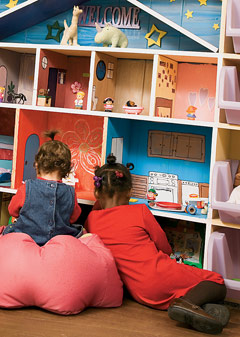
I especially loved the built-in dollhouse and my head is abuzz with ideas for same.  I would like to get a wood house for Tess but the truth is most of the houses I have seen (in plastic or wood) are just awfully small for clumsy hands to work in. This one looks much more user friendly and hey, you can't knock it over. : )  

Coolhouse_2_art

More gov’t/elections work

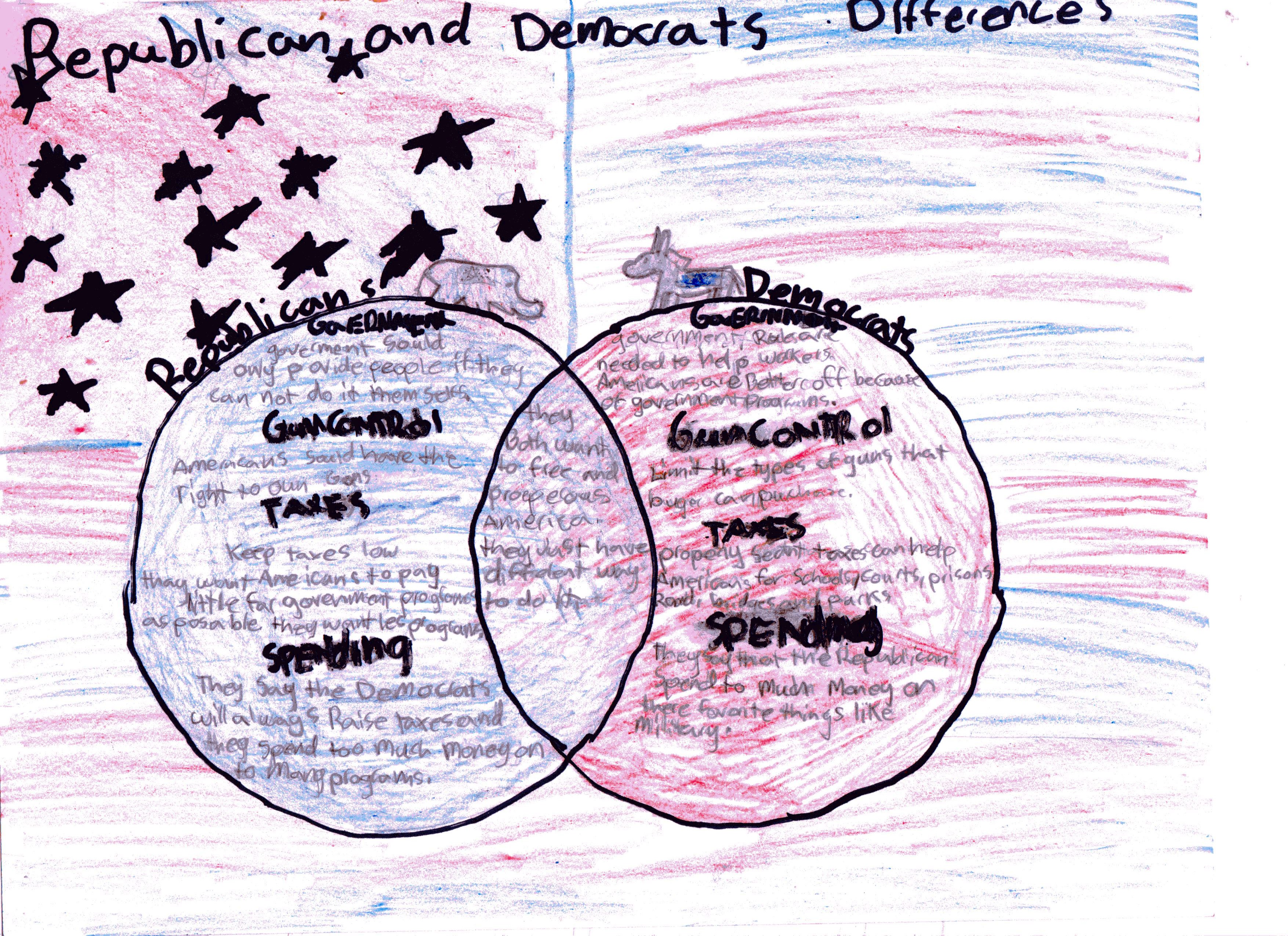
The latest study was comparing and contrasting the two major parties and discussing the role of third parties.  I uploaded a Venn diagram today as an example. The information was taken from the book Friendly Foes for what it's worth.  (I mention in case you may disagree with the presentation of a particular party shown here)  The point being the parties both share the goal of a strong America, yet they differ in how they define that. 

We have also enjoyed these sites:

There are very simple explanations of the election process and the roles and qualifications of a president in the above.  The first link in particular is excellent for students of all ages and adjusts the level of detail from early elementary to high school information. 

We will be working on the steps to becoming elected president,the electoral college, and the President's cabinet this week and will continue to upload as we go. 

Next week we are planning a little party for election night to include party symbol cookies and mapping of the blue and red states. Nothing elaborate but hopefully they are beginning to understand the process. 

2 party venn

My Symphony

To live content with small means;
to seek elegance rather than luxury, and refinement rather than fashion;
to be worthy, not respectable, and wealthy, not rich;
to study hard, think quietly, talk gently, act frankly;
to listen to stars and birds, to babes and sages, with open heart;
to bear all cheerfully, do all bravely, await occasions, hurry never.
In a word, to let the spiritual, unbidden and unconscious, grow up through the common.
This is to be my symphony.

"My Symphony" by William Henry Channing


Loved this!  HT: Homespun Living


The fine art of carrying on

Susan has inspired me again.  She put words to what I have long felt but couldn't articulate well:


"I think it's good to be aware of what is happening in the world and then to do whatever we need to do (or can do) to care, to help those who need help, and to bring about change. But I also think it's wise and good to continue to find joy and beauty in the daily blessings, as long as we have them. To refuse to be all-consumed with circumstances, to overworry about them, and to focus on them so intensely that it keeps us preoccupied or brings us low.

In fact, I think there is something beautiful about a person who can carry on well, with a lovely spirit, in spite of difficulties, big or small, both in the bigger world, and in their personal lives. Those who continue with traditions, rituals, and routines, making the most of what is available at a given time. Those who choose gratitude and trust in the Lord rather than fearfulness and complaining, either about what might happen or about what is happening."


As I told her, I sometimes worried about appearing superficial for going on about home and family.  Why not be politically or environmentally 'active' or the like?  As one commenter suggested, maybe I just "don't understand" the importance of these issues.  No, it isn't that. It's what Susan said. <g> We assess, we make appropriate changes where we can, and then we carry on. 

Our primary role as a maker of a home and tender of a family is to maintain those 'rituals and routines' she mentions.  They are common, yes, and so very ordinary. Then again so is breathing…  I know my sphere of influence. I am not likely to impact the political world much, regardless of how much I chatter. What I do here DOES impact many people in very concrete ways however. While I mean little to the big world, I mean everything in the world to a few small people who look to me for their cues. How we carry on before them not only determines the tempo and quality of their days but it sends a strong message about trust, about composure, and about how to face difficult circumstances – of which they will no doubt experience a fair share in their lives.

Ours is less about controlling our circumstances than about choosing how we will respond to them. I hope that more often than not that these little eyes see us responding with a certain amount of grace and confidence. I hope they see us focusing on the blessing and choosing joy. I hope they see a smile more often than a grimace.  Writing like Susan's helps to keep me moving in that direction. 


The formative period for building character for eternity is in the nursery. The mother is queen of that realm and sways a scepter more potent than that of kings or priests. ~Author Unknown


*don't miss her entire series on the Slow Life!  

car mat

I got some questions about Brendan's car mat and have been  meaning to get back to you all on them. Our mat is nearly 20 yrs old now!  My sister in law made it for our oldest boys way back then. It is lovely.  The base is heavy green twill and there are pockets along the bottom to store cars.  She appliqued roads, trees, and houses.  There is even a pond with little duck buttons on it. There are also green pom pom shrubs here and there.  

To be honest our big boys didn't play with it much. We were slow to the less is more game.  They just had far too much stuff and tended not to concentrate much on any of it. Made for a LOT of clean up and hassle and waste. (not to mention wound up kids)  Brendan and Tess have a fraction of the playthings they had. In fact Brendan's cars are among his few toys at the moment. He REALLY enjoys them though. Lesson learned. 

Some of you loved the mat but feared your sewing skills or lack thereof would prevent you from making a similar one.  There are still options!  You can use fusible interfacing like Wonder Under to iron on your roads and accessories. Or you can just paint! With all the fabric paint available you can make very nice roads etc.  Just be sure to cut your base with pinking shears or iron it under with Stitch Witchery or something to keep it from fraying. 

Here are some mats to inspire you.