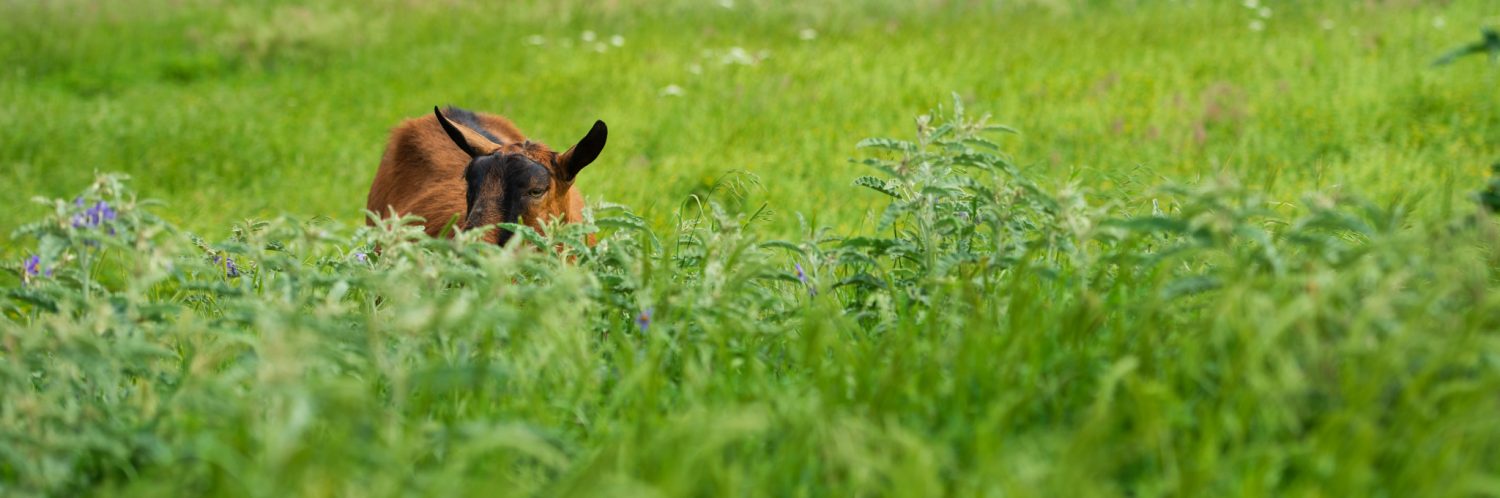
P is for Patterns and puzzles
P template (can be painted this week or covered with peas or paper) and tracer pages
Nursery Rhymes and Fairy Tales:
Pussycat, Pussy Cat
Pussycat, pussycat where have you been?
I've been to London to visit the Queen
Pussycat, pussycat what did you there?
I frightened a little mouse under the chair.
P is for Pronunciation – Natural Structure recommends Peter Piper's Perfect Pronunciation for silly tongue twister work. Consider it painless speech exercises!
Math
Pattern work is a mainstay of the hands on preschool program. Once you begin to look for them you will find potential patterning everywhere you look. You can purchase pattern blocks and books to go with. Mine have all enjoyed making patterns and pictures with the blocks and having a partner try to recreate them either side by side or after covering the blocks with a paper first. There are cards available and we have made good use of them. They keep kids busy for a long time.
Unifix has a really nice set of pattern books and the cubes are a great investment for preschool math work since they are not limited to one type of activity.
Building Thinking Skills – Primary has been part of our preschool for many years now. It DOES call for a LOT of manipulatives however.
You need not purchase a thing however. Have you got beans? Paper clips? pennies? You can paste these to strips of poster board and make your own pattern cards. Children can copy these or you can repeat the pattern twice and allow ample space for the children to continue the pattern on their own. We made some pattern sticks with black pipe cleaners and colored pony beads. For the master sticks we bent and glued the beginning and end beads. Then we made some empty sticks with one end bent and closed so the beads would not fall off as the child recreated the patterns.
Some patterns:
abababa
aabaabaab
aabbaabb
abcabcabc
abbcabbcabbc
aabaacaabaac
and so it goes. You can easily adjust the level of difficulty for many ages and stages. You can alternate colors, items, positions to make the patterns.
More lesson plans here
P is for puzzles. Of course! What would early learning be without them? We love Lauri puzzles. They also have some pattern work products. Typically the first Montessori puzzles are 3 shapes. Then there are those with one shape in various sizes. They work up to the botany and zoology puzzles. I recently discovered some Waldorf puzzles which are so beautiful and incorporate patterns. (see left sidebar) Obviously these are to be introduced later.
Again, if money is a consideration there are options. Some simple homemade alternatives exist. Cut the fronts off favorite cereal boxes, laminate and cut into as few or many pieces as your child can manage to reassemble correctly.
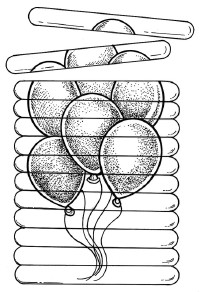
Brendan is loving popsicle stick puzzles. To make, tape 6 (or more) craft sticks together and draw a design with marker that spans all the sticks. The child then reassembles the sticks in the correct order to make the picture. Difficulty is adjusted with the complexity of the design. This is an all absorbing activity for us at the moment.
Another good activity is recreating felt pictures. We have been playing around with a pumpkin face game which we found here. You can use any picture however. Make a simple design with cut felt pieces, draw or take a picture and include it on the tray with the pieces and a larger felt background mat. The child reassembles the pieces to match the picture.
P is for Pegboards
These are a hit around here as well. You can buy premade sets however we made ours easily with a piece of cut pegboard plywood and large beads glued under the four corners to raise it up high enough for golf tees to rest in the holes. The smallest funschoolers will be smitten with just dropping the tees in. Olders can begin to use colored tees/pegs to make patterns and pictures.
Sensorial/Prewriting
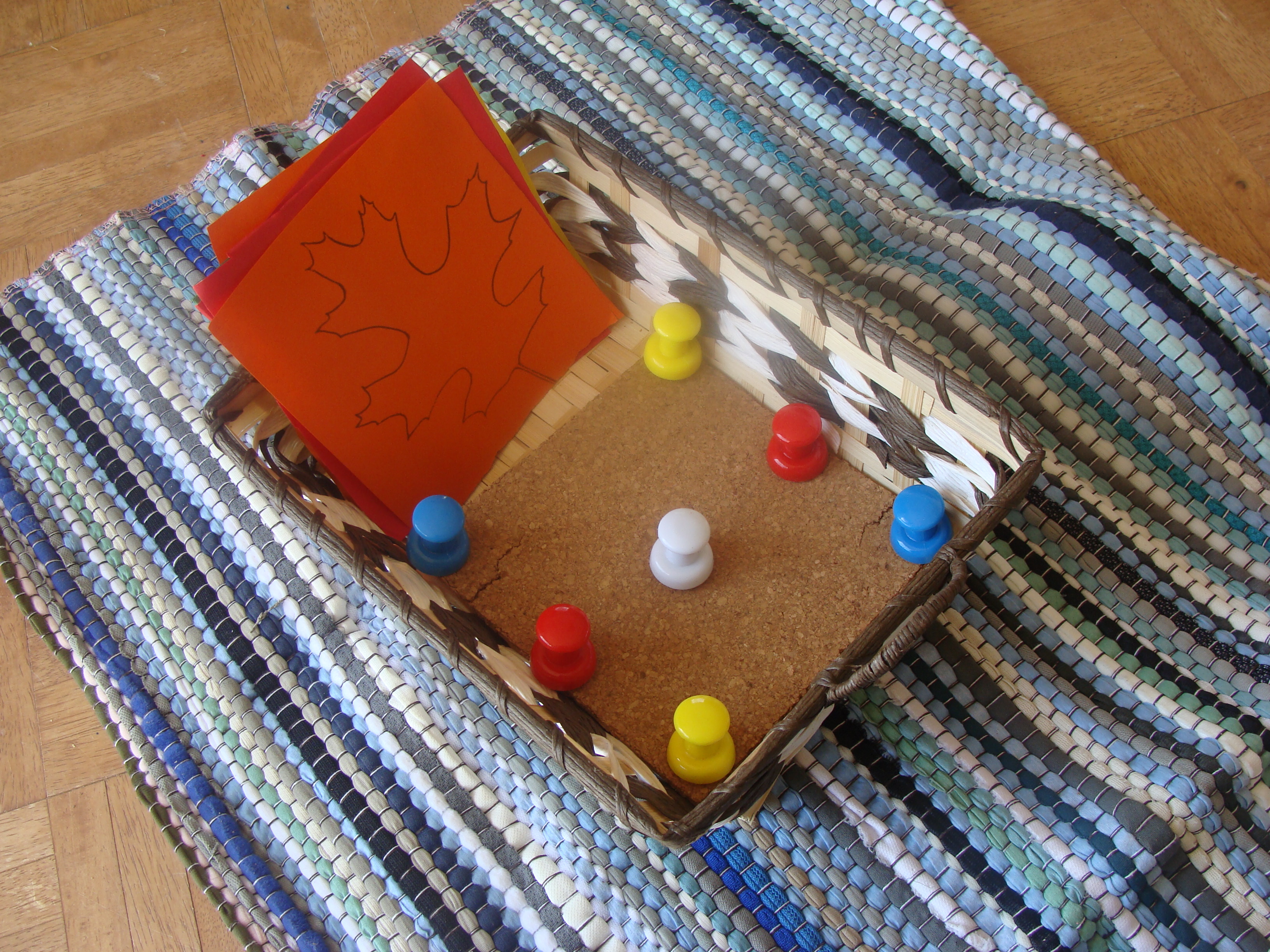
P is for pushpin work, another fun Montessori activity. This is typically connected with elementary geography work in Montessori schools but increasingly preschool teachers are introducing it as a prewriting activity. Here are some pictures of our pin work. We printed off some seasonal clip art shapes and cut them to fit the cork tile squares we picked up at Walmart for next to nothing. You can find extra large push pins in the office supply section. They are the perfect size for pin work since they are very close in diameter to crayons and pencils. To do the work the child pins his shape to the cork tile, gets a pin and begins to punch tiny holes around the shape essentially perforating it so he can pop it free from the paper.
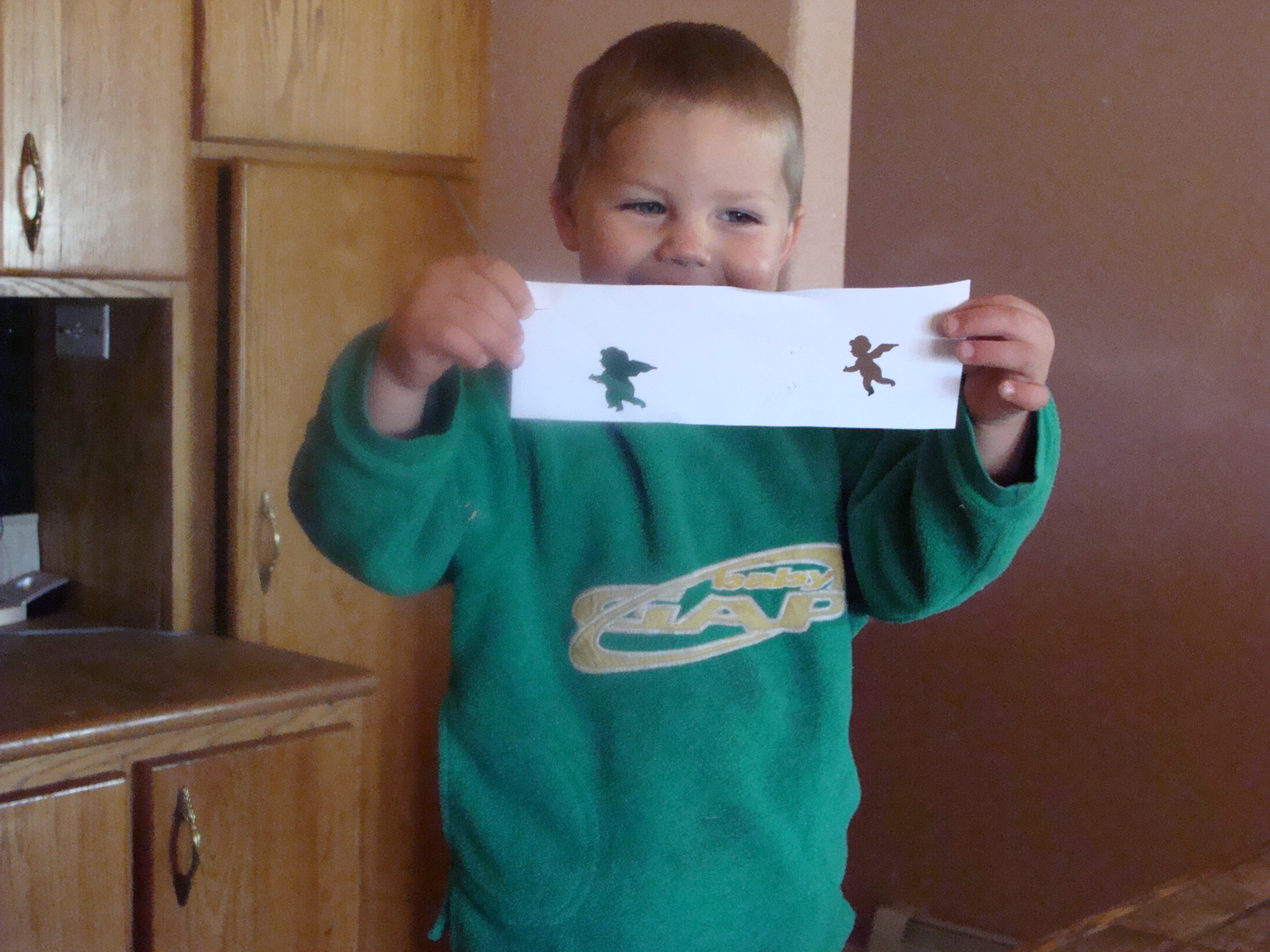
P is for Paper Punching! Another favorite of late. Punches are readily available at craft stores. They REALLY work little hands so its best to begin with tiny ones and then work up to larger punches or you may meet frustration. Assemble a variety of punches and paper squares on a tray. That's it! If you like you can gather the punched pieces and include some larger papers and glue on another tray for more work.
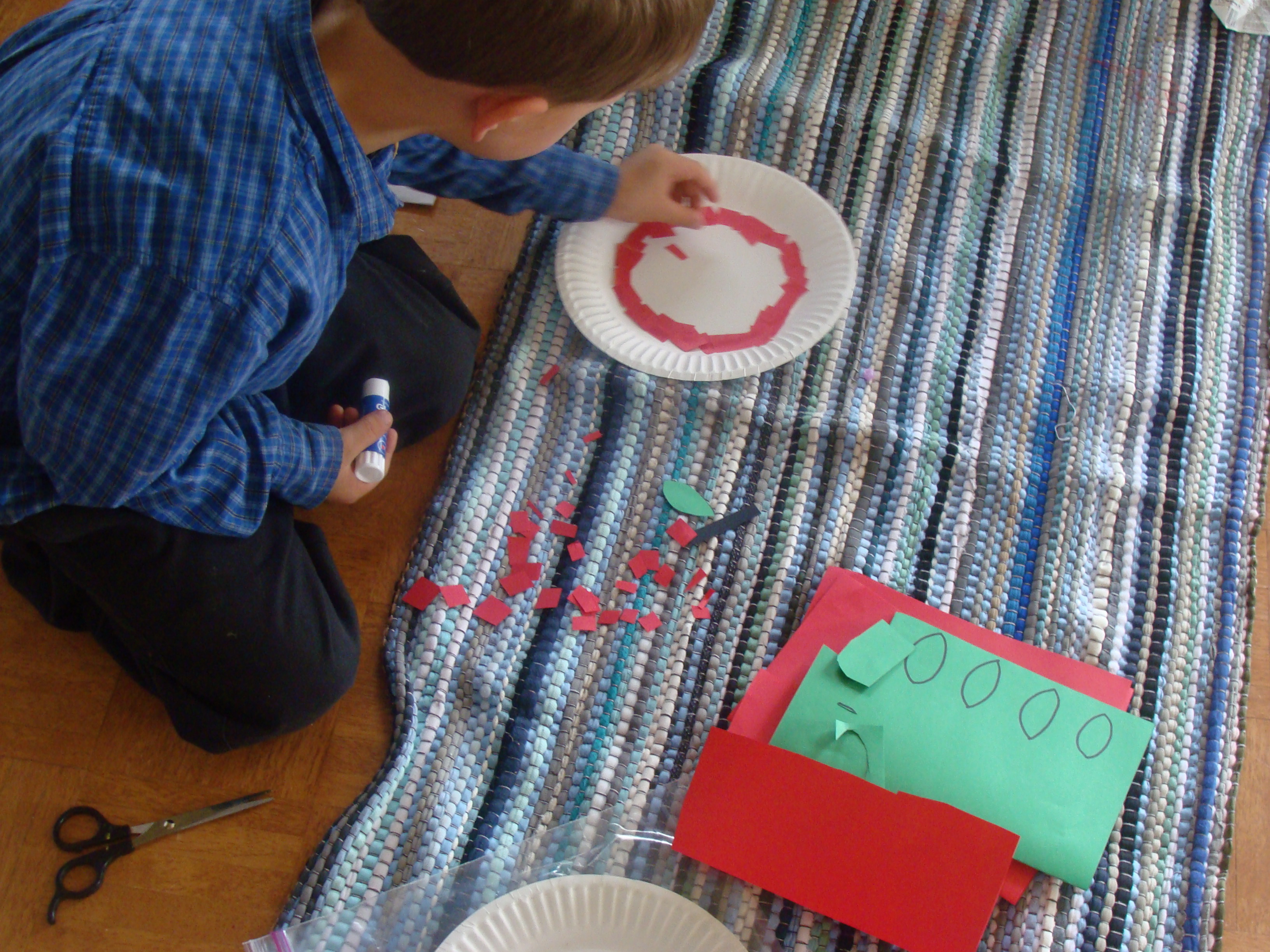
P is for Paper Crafts. You know I can't leave that alone. ; ) Papercrafts can range from the sublime to the ridiculous. We have loved origami since we first read about a Japanese woman teaching a preschool class the ancient art many years ago. On the left sidebar (the art album) you can see some of the designs our under sixes have created from this site. The teacher at this blog includes a paper plate art activity regularly among her other activities. The idea is not so much that these make fantastic art per se but they DO require children to follow directions and work sequentially which are skills that will be necessary in many areas as they progress through school.
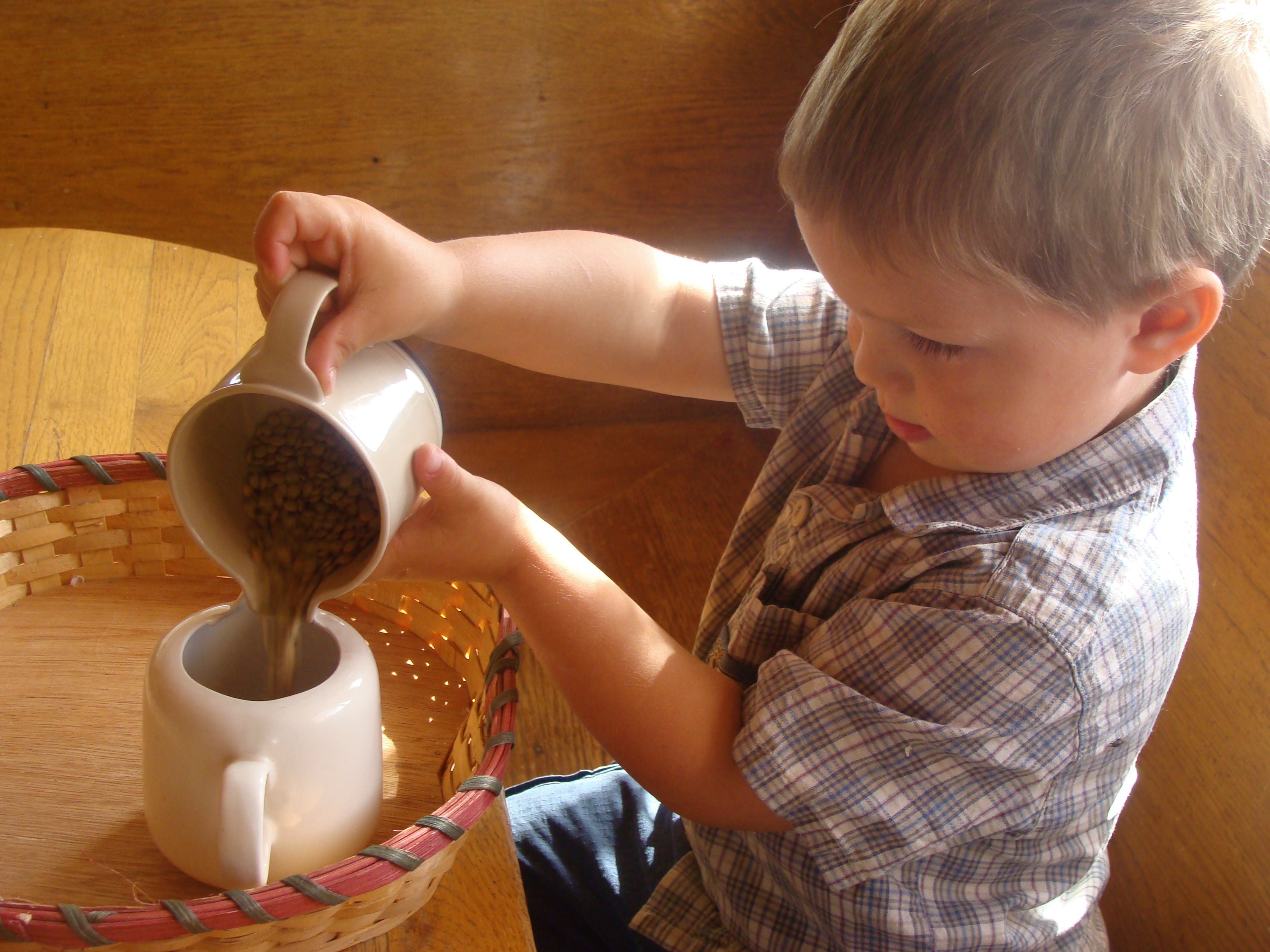
P is for Practical Life activities. Practical Life is Montessori's term for everyday life skill work such as tying shoes, self care, food prep, care of the environment and so on. It is put well here:
The purpose and aim of Practical Life is to help the child gain control in the coordination of his movement, and help the child to gain independence and adapt to his society. It is therefore important to “Teach teaching, not correcting” (Montessori) in order to allow the child to be a fully functionional member in hios own society. Practical Life Exercises also aid the growth and development of the child’s intellect and concentration and will in turn also help the child develop an orderly way of thinking.
You can find many ideas at Montessori World. For P week you may wish to begin with some Pouring work. Get two pitchers (creamers work well) and fill one with dried peas. Demonstrate how to hold the full pitcher in the right hand and place the left hand fingers under the edge to balance while pouring into the empty pitcher. You can progress to plastic cups with marker lines at various heights.
Plant care is another practical life work. Any non toxic houseplant works. Discuss watering (and overwatering!) and dusting of the leaves. Provide a small watering can and spritzer.
Pet care is another oft overlooked practical activity but can be easily incorporated into even urban settings. A large animal is not necessary and is often a burden to children and parents. Small caged pets like birds or lizards or fish work just as well. Keep some informational picture books nearby and assign the child the feeding and cleaning duties – with help and supervision of course.
Art
P is for Picture Study. Many educational methods encourage exposing children to great works of art. A Montessori program used often is Mommy It's a Renoir. You can purchase art postcard sets to go with. They begin with simple matching exercises and work up to identifying schools of art. My friend Maureen had a wonderful nearly free idea. She chooses one piece of art per month (or quarter – you decide) and prints it off from the internet. She also prints off some smaller versions of the same print and laminates them to make little magnets or simply tapes them around the house like on the bathroom mirrors. This makes for painless review. By month's end the child easily recognizes the work.
It doesn't get much easier than this. Cut the potato in half. Carve simple shapes into the cut edge. dip into paint and press onto paper.
Thrift stores and craft stores carry very inexpensive art prints. Do try to include one in your school area. Art are another cheap option. You can purchase enough prints for a whole school year worth of monthly picture study that way.
Snacks
Peanut butter, pasta, potatoes, pie, pizza, and pickles this week! A special cooking project would be making popcorn balls. Pie is another great option. Homemade pizza is an easy project for little people. You make the crust or buy a premade crust. Children can brush on the sauce and sprinkle veggies and cheese atop.
Bible
P is for Pentecost Kieran at five made this paper model of the pentecost. It took me a bit to figure out how to make it flip over but once we did it made quite a nice object lesson to go with the story.

 Starry Sky Journal
Wow! You are amazing what a resource! I haven’t been to your site for a while but now I’ve just got to subscribe!!
Thanks for so much fabulous inspiration. My little rainbow babies are going to love trying lots of your ideas 🙂
Total to our doudoune moncler pas cher out of the ordinary Moncler embalm! There are a strapping million of doudoune moncler which proclivity plain you more charming and elegant. Moncler women’s solicit at ShopStyle. Machine shop commonplace stores to suavity Moncler women’s look on sale.