I have read and reread this essay over the past 24 hrs. I couldn't say it better myself so I won't.
Since it is similar to some other things I have read and has triggered a lot of reflection on my part I will elaborate on some points though.
"as a wife and mother I am living my dreams"
This is my repeated conclusion. I have toyed with going back to school on and off for many years. Still not ruling that out. Increasingly however I come back to the truth that this IS what I want to be doing. Nothing else is on hold or set aside or being secretly longed for. I have the life I determined to make, although I may not have been able to fully picture how it would all play out.
It is much harder than I expected. It is far more challenging. It does not have a time card I can punch to validate the effort. And there is no punching out at 5pm. However the opportunities – creative, spiritual, emotional – are vast and remain largely untapped in the general public. I am glad to be here.
"I only spend time with friends I cherish."
This is only sort of true for me, but more true than it used to be and online and off. I am becoming ever more realistic about what it means to be a friend in the truest sense of the word. It takes time. It takes listening. It takes remembering. There is a limited amount of all that I have to give and give well after job #1 above.
Facebook may tell you that you have hundreds of friends. You don't. Be charitable to all. Be intimate with a few. Not because you are selfish or stingy, but because those you love deserve the best you have to give, and further, because the very definition of intimacy implies discretion and exclusivity and is grossly distorted in cyberspace. There is a sort of emotional voyeurism and prostitution online which troubles me. It is changing the face of friendship – on the one hand bringing people of common interests together from afar, on the other it is tearing down the walls of propriety and privacy and inviting the evaluation and condemnation of strangers. I am still sorting out how I feel about all that.
on the flip side she mentions letting go of relationships which tear you down. She talks about forgiveness even if "there is never a reconciliation."
This is a touchy subject and I have faced it personally. There is a balance to be negotiated between letting go and abandoning, between forgiveness and excusing, between letting go and giving up, between knowing what you can do and knowing what only God can do, between knowing when to be actively involved in the healing process and when to be quietly praying behind the scenes – which is definitely NOT doing nothing. Letting go may mean letting go of our expectations of others and discerning what role we can and should play in one another's lives.
I think these lines fall in a different place at different times in our life. As much as I am moved by the words of many creative young women online, I have noticed that by and large their faces are much younger than mine. That underlying angst, the need to vocalize and debate and articulate is different at mid 40s than it was at 30. I have seen heated discussions about the merits of cloth diapers, disposable diapers and no diapers at all. To homeschool or not to homeschool? Is homesteading the only viable answer to the dangers of mass food production and property rights violations? (and I can tell you my opinions on all of these are not what they were 15 yrs ago) Further, is it even valid for others NOT to come to the same conclusions as we have. It is possible for us to be happy and thriving if we choose very different paths than we have considered in the past? Maybe letting go means sometimes letting go of the way we were so sure was right.
It seems at 30 you begin to discern there are problems with myriad possible solutions and it does seem as if you could just land on the correct ones the problems would be solved. Maybe that is what is different in middle age, different approaches to the problem of pain and a different solutions. Susan said it best:
"One of the blessings of middle age is that you've been through a lot of changes, a lot of ups and downs, maybe some crises, probably some loss. And what you learn, if you welcome the lesson, is that it all ends up not mattering. What matters– really matters (and I'm not being spiritually trite here)– is loving God and loving others."
If our 30s were about solving the problem of pain perhaps 40s bring some understanding that not everything needs to be solved by us or perhaps that acceptance and trust are more likely to help us learn the lessons that pain brings than actively working on eliminating the challenge ever could. It is not there for no reason. God does not will evil or suffering in our lives but He does use it. Letting go may mean letting go of our timetable for the resolution of our problems and further, the means by which they are resolved.
It may even mean our whole picture of what 'resolved' looks like – our definition of both problem and solution – is likely to evolve significantly. A dear friend and I have mused about the trials and the blessings in our lives and how often we have been very wrong in deciding which were which. That is one point I can't stress enough.
I am usually wrong about which are which.
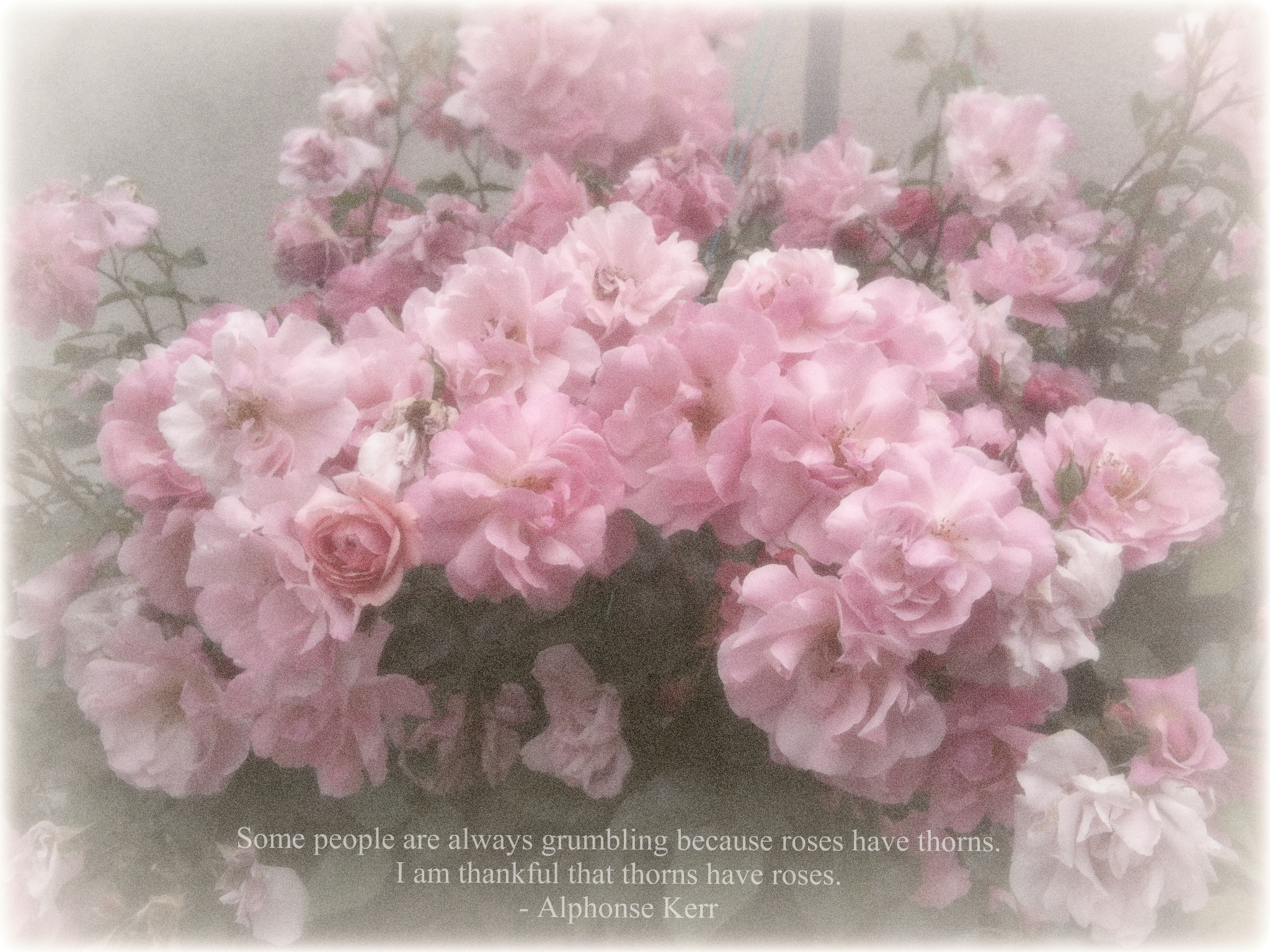
Letting go for me, today, means letting go of my assessment of which is which and trusting that somehow, some way, it is ALL blessing, even when it hurts. It's about welcoming the lesson, as Susan says, and it is far easier said than done. Age does not automatically produce that response, but practice does. It comes down to a determination to see the blessing wrapped in the pain, because it is there. It is always there.















 Starry Sky Journal