The Informed Patriot

Photos Of Time Before The Invention Of That Grossly Antisocial Device: The Smartphone

"We must read our newspaper of course- newspapers on both sides; but he who founds upon his newspaper is an ignorant patriot and an illiberal citizen.

His opinions are no more than parrot-like repetitions of other men's sayings;

whereas he who dwells with dutiful interest upon the history of his own country, distressed over her ignominies, proud when she has shown herself great; who has pondered the history of another great empire – admiring the temperate justice with which its distinct colonies were administered, and scrutinizing the causes of its fall – he gradually acquires some insight as to the meaning of national life.  He is able to express an opinion which is not a mere echo, and gains convictions which will certainly be of use to his country, even if they are only known to the people about his own fireside." 

Charlotte Mason, Volume 4 Some Instructors of Conscience: History and Philosophy

Years ago, Laura Berquist urged readers to prioritize 'formation over information' though one could not argue that she did not value information as well. The trouble is that information by itself requires much interpretation and careful application. Hence the old adage: a little bit of knowledge is a dangerous thing. 

The idea that insight is acquired gradually is not a popular one in our day of instant everything. It used to be a commonly held belief that responsible citizenship involved a good deal of study through immersion in whole books on a variety of topics. Lately, while chatting with friends, one or the other of us will be challenged about how much we have read about a specific topic of current interest.  Often, either I or the other will have to respond with, "Very little."  The good news is we need not succumb to the pressure to hastily claim a position while having little foundational information to base that upon.  We can – ought – to step back and begin the laborious process of informing ourselves the same way our forefathers did.  As Miss Mason says, that involves reading from both sides of the aisle in any discipline.  It means avoiding the echo chamber like the plague.  

The informed patriot does not gloss over uncomfortable truths, nor does that history discount the indisputable forward steps.  This good citizen spends proportionately more time listening and observing than proclaiming or condemning. If the short, attention-grabbing newspaper articles of yesteryear were a concern for Miss Mason, I can imagine how distressed she would be to know how much of our contemporary worldview is drawn from brief statements of no more than 280 characters.  There is a great danger in confusing sloganeering with philosophy. 

The screens may be here to stay.  As we look ahead to both a new school year and an election year, I consider it one of my primary duties as an educator today, and a citizen, to keep them from usurping the position whole volumes ought to hold for us and for our children. 
Now You Are Ready

B8E14335-53DB-46E2-BD08-1AEDA52772DF

Lindsay Boever who wrote regularly at the wonderful My Child, I Love You blog is now on Instagram.  She shared a particularly convicting short story today here
When she entered the novitiate years ago the novice master asked her one question daily: What do you have to offer….  It was a Socratic exercise which led to a simple, but profound lesson. 

What skills best equip us for success? Make a list then click over.  

Leisure

Jul 2020 tree buds web

What is this life if, full of care,
We have no time to stand and stare.

No time to stand beneath the boughs
And stare as long as sheep or cows.

No time to see, when woods we pass,
Where squirrels hide their nuts in grass.

No time to see, in broad daylight,
Streams full of stars, like skies at night.

No time to turn at Beauty's glance,
And watch her feet, how they can dance.

No time to wait till her mouth can
Enrich that smile her eyes began.

A poor life this if, full of care,
We have no time to stand and stare.

William Davies

In all our productivity, and amidst all our cares, may we make sure to carve out a bit of time to stand and stare.  


Mother Culture: summer reading – Incidents

"Mothers should cultivate their souls so that in turn they may cultivate the souls of their children."  

Karen Andreola penned those words long ago and later picked up the the term Mother Culture from a Parents' Review magazine.  For years she has promoted Charlotte Mason's insistence that,

"A mother reaps advantages by applying Miss Mason’s education-through-the-humanities. These cultural things aren’t frivolity but a person’s very bread of life."

I found myself malnourished in the humanities after several month's of the news monopolizing every screen I accessed. I know what to do when this happens. It is time for fresh air, for working with our hands, and for study – meaty, challenging study. I dimmed the screens and dove into books. 

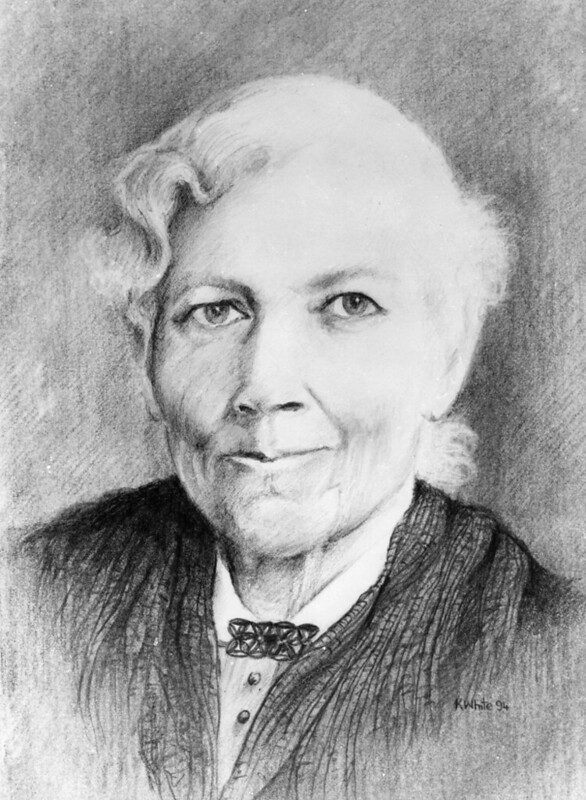
It was a day of celebration when our little local library branch opened for in person browsing.  Ordering books online was a lifesaver throughout the springtime quarantine, but you can't know what you're missing without walking the aisles.  When I was able to do that I found Harriet Jacobs' Incidents in the Life of a Slave Girl in the new books section.  I almost passed it up, thinking it was a new release fiction novel. That would not have been a non-starter mind you, but I was thrilled to discover it was a primary source memoir from 1862.  Over the next few days I read through the entire thing and was launched on a rabbit trail of research. 

6803434301_a8fddd33a5_c

“It has been painful to me, in many ways, to recall the dreary years I passed in bondage. I would gladly forget them if I could. Yet the retrospection is not altogether without solace; for with these gloomy recollections come tender memories of my good old grandmother, like light fleecy clouds floating over a dark and troubled sea.”

Harriet was born to a skilled carpenter who had been able to keep house with his wife and children. Hence for the first six years of her life she was unaware of her position as property of another. "Though we were all slaves, I was so fondly shielded that I never dreamed I was a piece of merchandise, trusted to them (her parents)for safe keeping…” When she was orphaned at six years of age she and her brother were moved to her mother's owner, Margaret Horniblow, where she was embraced and raised as a member of the family for another six years.  She was uncharacteristically taught to read and write during these years. 

6803433649_43a679fdf7_c

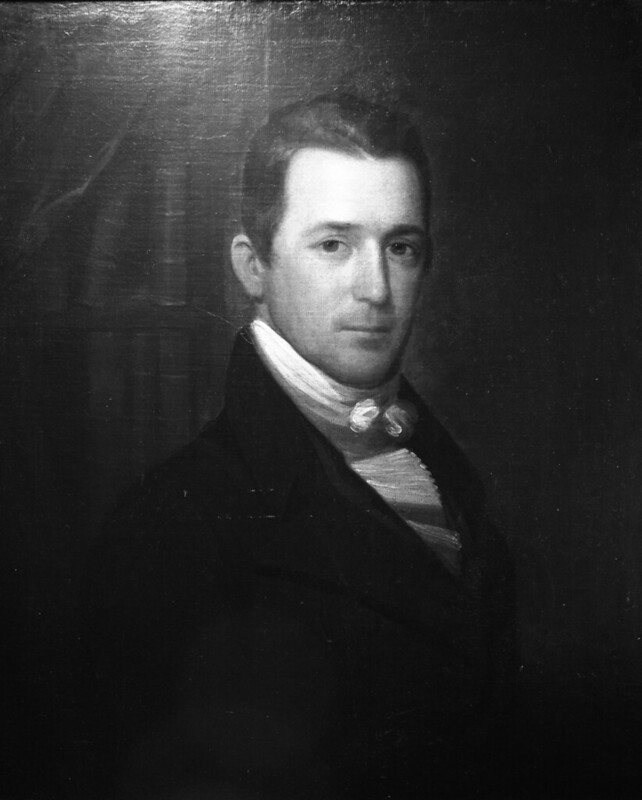
“When I was nearly twelve years old, my kind mistress sickened and died," writes Jacobs. "She had promised my dying mother that her children should never suffer for anything; and when I remembered that, and recalled her many proofs of attachment to me, I could not help having some hopes that she had left me free. My friends were almost certain it would be so. They thought she would be sure to do it, on account of my mother’s love and faithful service."  This was not to be however, as was usually the case with benevolent owners' wishes. Her heirs considered such affection to be absurd, indulgent, and financially impractical.  Harriet was moved to the home of a lecherous doctor and his family, where she – like innumerable young black women in her situation – endured all manner of abuse.  This is where the heart of the memoir begins.  It is an honest and unusually frank retelling and, though it has been established as accurate and factual, it apparently was too raw for 19th century sensibilities.  It did not go into a second printing and was only resurrected during the Civil Rights movement of the next century. 

6803433903_b5c3f47c50_c

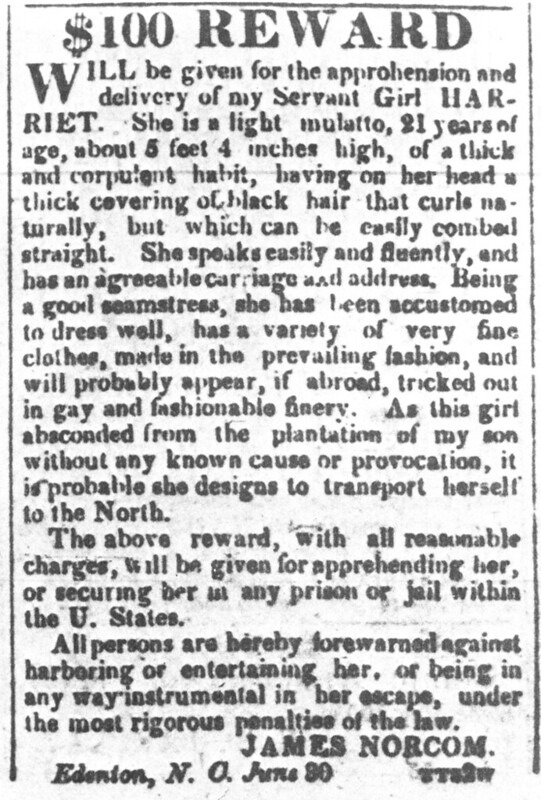
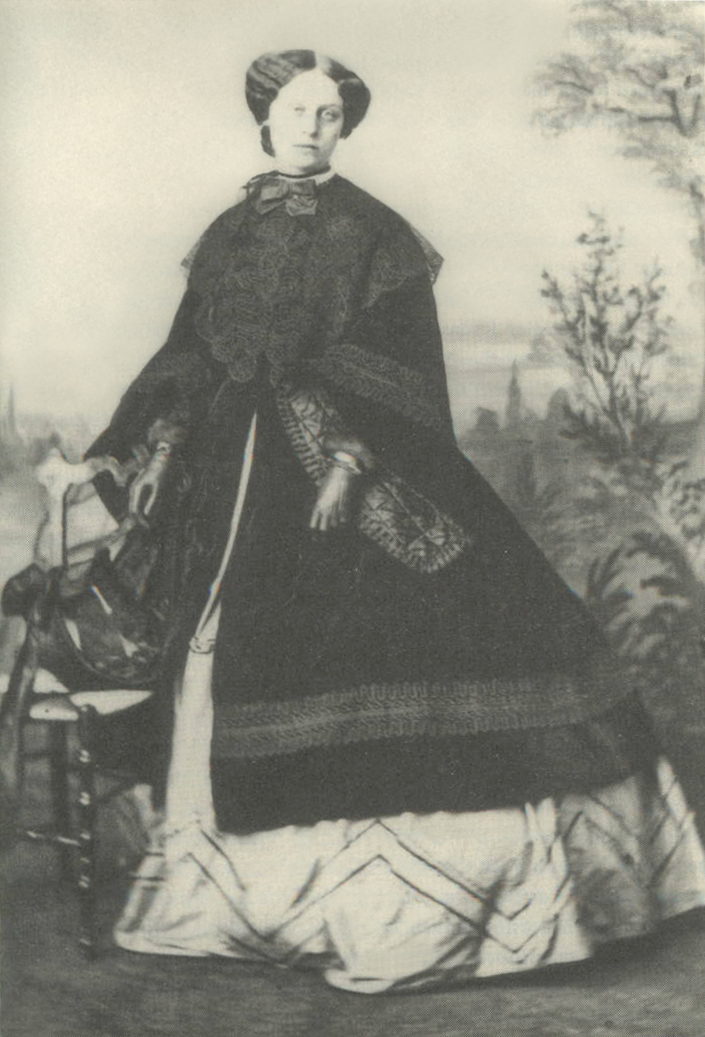
Harriet had an indomitable spirit and a clever mind. She foiled the doctor's attempt to break her and was driven to ensure the freedom of her children, conceived through a clandestine affair with a local landowner. Her free grandmother and uncle eventually conspired to hide her in a crawl space attic 9×7 feet and only 3-4 feet high for what ended up being seven years in nearly complete darkness save for a tiny hole she carved out to watch her children or catch the sound of their voices below.  Seven years. Body and spirit were nearly broken by the time she escaped.  Thanks to the Fugitive Slave Act, many more years of eluding the doctor would follow. He was close on her heels as she attempted to support herself and regain physical custody of her children.  (Louisa below)

Louisa_Matilda_Jacobs

Summaries of her story can be found here  

and here

Harriet eventually found refuge in the home of abolitionist Nathaniel Parker Willis and his wife Cornelia Grinnell Willis.  Willis has been referred to as the Dickens of the West. The New York Times remembered Willis "as a poet, as [being as] popular with the mass of American readers as Byron was in England; his verses were the first found and the most read on the centre tables of polite society, and his prose sketches were deemed models of perfection" (New York Times, Jan. 22, 1867, 4)  After the doctor's death Cornelia Willis finally succeeded in purchasing Harriet's freedom.  Though grateful to have the long years of running behind her, Harriet expresses the outrage that such a thing was needed in a "free" nation,

“'The bill of sale!' Those words struck me like a blow. So I was sold at last! A human being sold in the free city of New York! The bill of sale is on record, and future generations will learn from it that women were articles of traffic in New York, late in the nineteenth century of the Christian religion. It may hereafter prove a useful document to antiquaries, who are seeking to measure the progress of civilization in the United States."

May we do just that – learn from it. 

Harriet worked tirelessly for the remainder of her life as an abolitionist and teacher of newly freed children and adults.  She and her brother ran a reading room for a time and she opened a school with her daughter. I will tell you what she knew and what I know to the true – reading is the great equalizer of persons. Education is a gift.  Never take it for granted and do not stop learning during the busy years, dear mothers.  There are stories you need to hear to make sense of your world. This is one of them.  


A related title here

Upcoming reading on similar themes:

Running a Thousand Miles to Freedom by William and Ellen Craft

Viktor Frankel Man's Search for Meaning

Walter Cizek's He Leadeth Me


on silence

No description available.

"We should speak only when circumstances or the glory of God or love for our neighbor requires it.  Apart from these cases it is better to be silent. In silence we find the spirit of recollection and the grace of God which is its source. We learn that to be recollected and interior people we must speak but little, and then say what the Spirit tells us in our heart we ought to say.

Readiness to speak too much is the sign of a distracted heart and mind, and such distraction is already a great evil. 

Sentiments of piety easily vanish in the course of conversation; silence on the contrary preserves and strengthens them. 

You will find few people who repent of having kept silence, but many who regret having said too much.

The wise man speaks only when the right moment comes (Sirach 20:6), that is, when silence would be wrong or unfitting. 

Whenever many words are spoken, sin is not lacking. (Proverbs 10:19) The man who speaks less is always more prudent. 

Constant experience tells us that where there is greater silence, there is greater innocence. Remember the principle that it is always better to remain silent when there is no need to speak.  It is a great art to be able deliberately to speak or remain silent, and men can be quite expert in everything else but ignorant here. Grace gives us better instruction than all the teachings of men. 

The less you speak to creatures, the more God will speak to your heart."

The Imitation of the Blessed Virgin

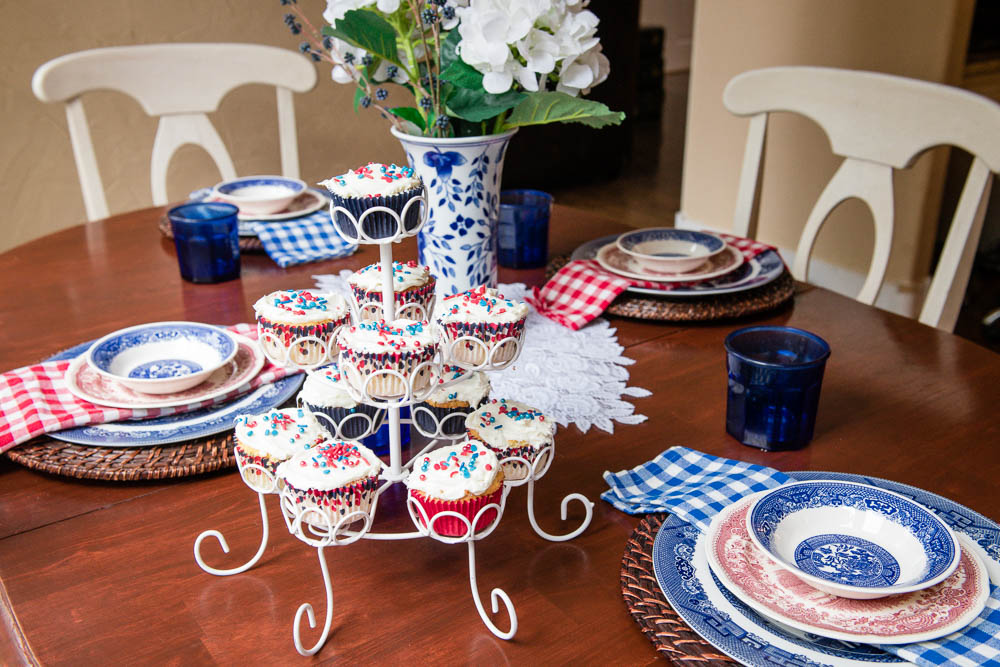
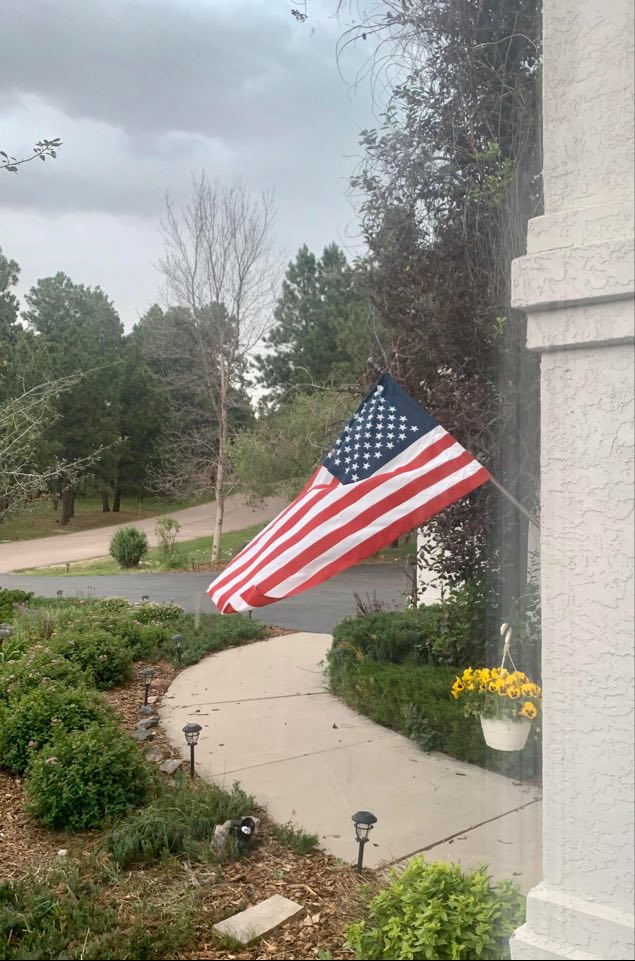
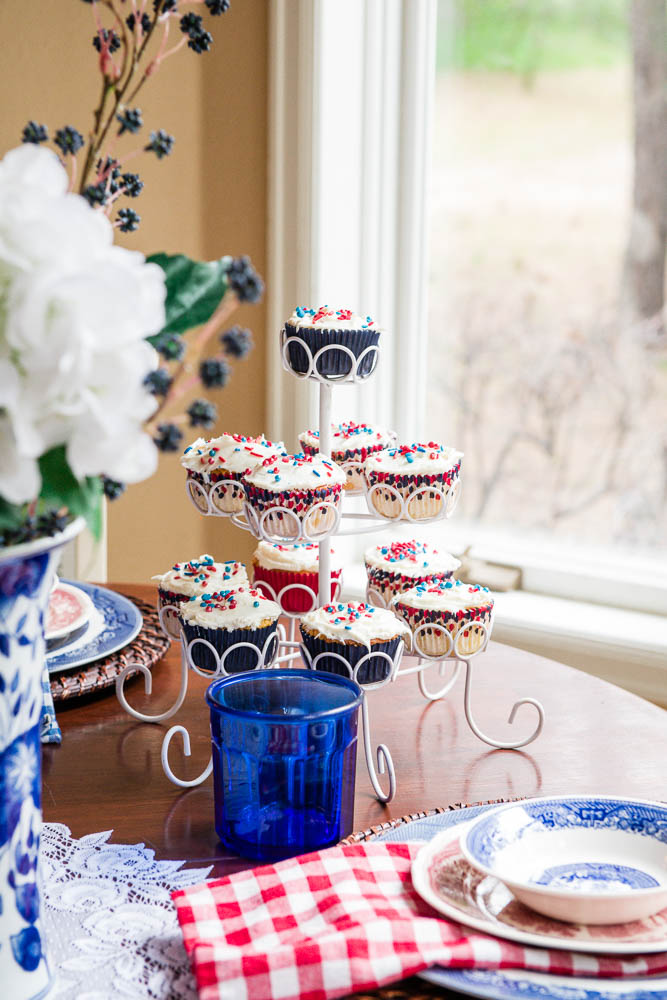
The 4th at home

"We hold these truths to be self-evident, that all men are created equal,

that they are endowed by their Creator with certain unalienable Rights,

that among these are Life, Liberty and the pursuit of Happiness."

I have observed this holiday in many places over the years.  As a child we lived across the street from the state fairgrounds for some years and watched fireworks in the sticky summer heat from our porch or on the back of a car.  Later, we all walked down to the park near the high school in the small town where I met my husband.  I missed one 4th entirely since I was an exchange student in the Netherlands that summer.  Then there was the summer when we stood by a grandstand at a military base in Germany with a band belting out the national anthem on an electric guitar.  I would go into labor with our first child soon after.  

We watched one of Selena's last concerts in Texas one hot Independence Day with three little boys and me pregnant with our first daughter.  There was a joint celebration in England one year where we all got bottlenecked on a farm field until 2am. 

There have been celebrations overseas that were boycotted by host nation folks for political reasons.  This year there are boycotts inside our borders.  It's not a perfect Union by any means but I like to think we continue to work towards that in our imperfect, messy manner.  There is still no other place I would rather be. 

It is stormy here at home this year.  The kids are scattered to various parties or work. I will be watching Rowan Atkinson's new series with Colin and eating the ribs slowly cooking on the grill. 

Jun 2020 4th web

Jun 2020 4th web

Jun 2020 4th web
Jun 2020 4th web

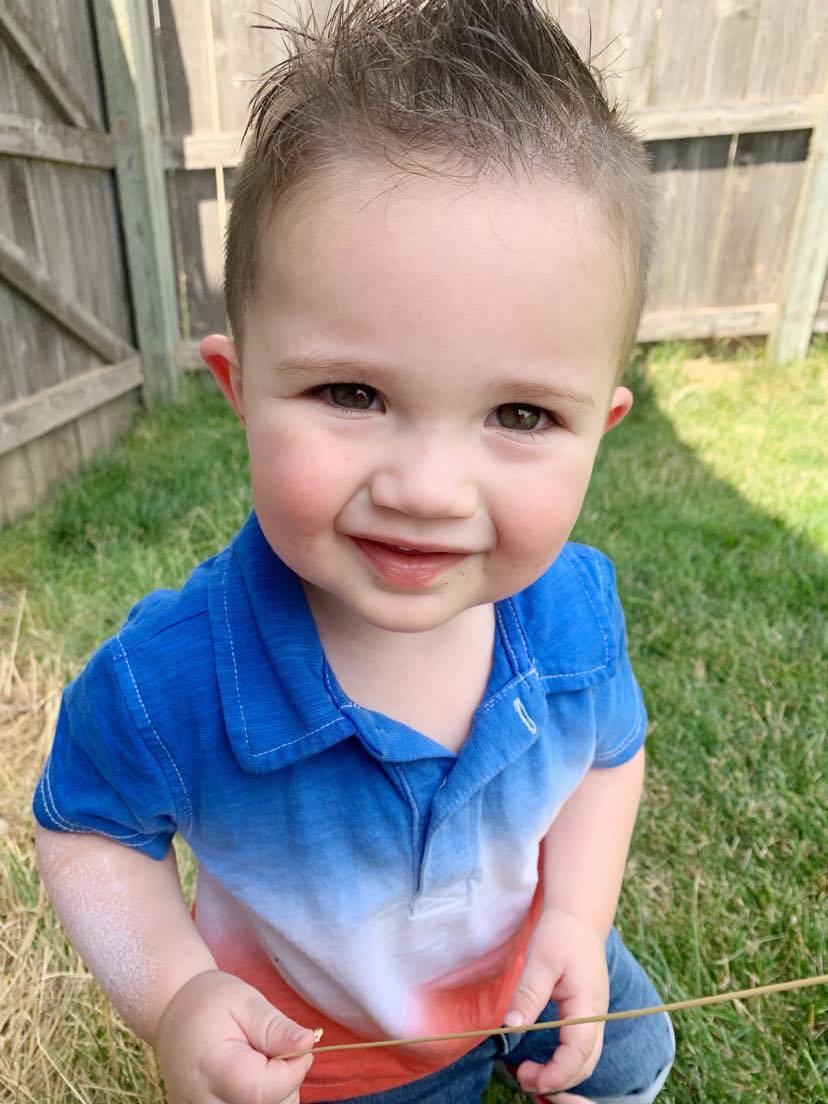
Moira sent pics of the babies in their star spangled best. 

4th 3
4th 3

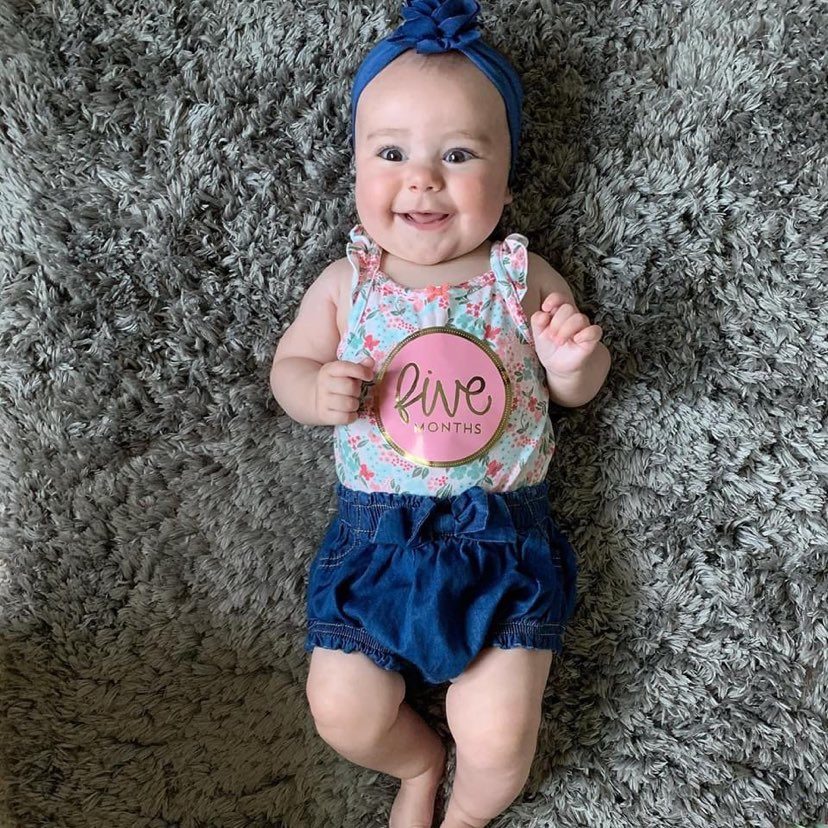
The little girl cousins are five months old this weekend.  

Avery

I was thinking about some of the poems we have studied over the years and these two seemed timely this year.  The first we memorized years ago for school.  The second, an insightful, raw, yet hopeful look at America in the thirties by Langston Hughes.   May we continue to build one nation under God, indivisible, with liberty and justice for all.  


                        "AMERICA FOR ME"

    'TIS fine to see the Old World, and travel up and down
    Among the famous palaces and cities of renown,
    To admire the crumbly castles and the statues of the kings,—
    But now I think I've had enough of antiquated things.

           So it's home again, and home again, America for me!
           My heart is turning home again, and there I long to be,
           In the land of youth and freedom beyond the ocean bars,
           Where the air is full of sunlight and the flag is full of stars!

    Oh, London is a man's town, there's power in the air;
    And Paris is a woman's town, with flowers in her hair;
    And it's sweet to dream in Venice, and it's great to study Rome;
    But when it comes to living there is no place like home.

    I like the German fir-woods, in green battalions drilled;
    I like the gardens of Versailles with flashing fountains filled;
    But, oh, to take your hand, my dear, and ramble for a day
    In the friendly western woodland where Nature has her way!

    I know that Europe's wonderful, yet something seems to lack:
    The Past is too much with her, and the people looking back.
    But the glory of the Present is to make the Future free,—
    We love our land for what she is and what she is to be.

           Oh, it's home again, and home again, America for me!
           I want a ship that's westward bound to plough the rolling sea,
           To the bléssed Land of Room Enough beyond the ocean bars,
           Where the air is full of sunlight and the flag is full of stars

Henry Van Dyke 1909


Let America be America again.
Let it be the dream it used to be.
Let it be the pioneer on the plain
Seeking a home where he himself is free.

(America never was America to me.)

Let America be the dream the dreamers dreamed—
Let it be that great strong land of love
Where never kings connive nor tyrants scheme
That any man be crushed by one above.

(It never was America to me.)

O, let my land be a land where Liberty
Is crowned with no false patriotic wreath,
But opportunity is real, and life is free,
Equality is in the air we breathe.

(There's never been equality for me,
Nor freedom in this "homeland of the free.")

Say, who are you that mumbles in the dark?
And who are you that draws your veil across the stars?

I am the poor white, fooled and pushed apart,
I am the Negro bearing slavery's scars.
I am the red man driven from the land,
I am the immigrant clutching the hope I seek—
And finding only the same old stupid plan
Of dog eat dog, of mighty crush the weak.

I am the young man, full of strength and hope,
Tangled in that ancient endless chain
Of profit, power, gain, of grab the land!
Of grab the gold! Of grab the ways of satisfying need!
Of work the men! Of take the pay!
Of owning everything for one's own greed!

I am the farmer, bondsman to the soil.
I am the worker sold to the machine.
I am the Negro, servant to you all.
I am the people, humble, hungry, mean—
Hungry yet today despite the dream.
Beaten yet today—O, Pioneers!
I am the man who never got ahead,
The poorest worker bartered through the years.

Yet I'm the one who dreamt our basic dream
In the Old World while still a serf of kings,
Who dreamt a dream so strong, so brave, so true,
That even yet its mighty daring sings
In every brick and stone, in every furrow turned
That's made America the land it has become.
O, I'm the man who sailed those early seas
In search of what I meant to be my home—
For I'm the one who left dark Ireland's shore,
And Poland's plain, and England's grassy lea,
And torn from Black Africa's strand I came
To build a "homeland of the free."

The free?

Who said the free? Not me?
Surely not me? The millions on relief today?
The millions shot down when we strike?
The millions who have nothing for our pay?
For all the dreams we've dreamed
And all the songs we've sung
And all the hopes we've held
And all the flags we've hung,
The millions who have nothing for our pay—
Except the dream that's almost dead today.

O, let America be America again—
The land that never has been yet—
And yet must be—the land where every man is free.
The land that's mine—the poor man's, Indian's, Negro's, ME—
Who made America,
Whose sweat and blood, whose faith and pain,
Whose hand at the foundry, whose plow in the rain,
Must bring back our mighty dream again.

Sure, call me any ugly name you choose—
The steel of freedom does not stain.
From those who live like leeches on the people's lives,
We must take back our land again,
America!

O, yes,
I say it plain,
America never was America to me,
And yet I swear this oath—
America will be!

Out of the rack and ruin of our gangster death,
The rape and rot of graft, and stealth, and lies,
We, the people, must redeem
The land, the mines, the plants, the rivers.
The mountains and the endless plain—
All, all the stretch of these great green states—
And make America again!

Langston Hughes  1935

The very teeth of suffering

AD056AD6-B1CE-48BE-8E38-76FE3D9D78CC

"Our vision is so limited we can hardly imagine a love that does not show itself in protection from suffering. The love of God is of a different nature altogether. It does not hate tragedy. It never denies reality. It stands in the very teeth of suffering. The love of God did not protect His own Son. The cross was the proof of His love – that He gave that Son, that He let Him go to Calvary’s cross, though “legions of angels” might have rescued Him. He will not necessarily protect us – not from anything it takes to make us like His Son. A lot of hammering and chiseling and purifying by fire will have to go into the process.”

Elisabeth Elliot