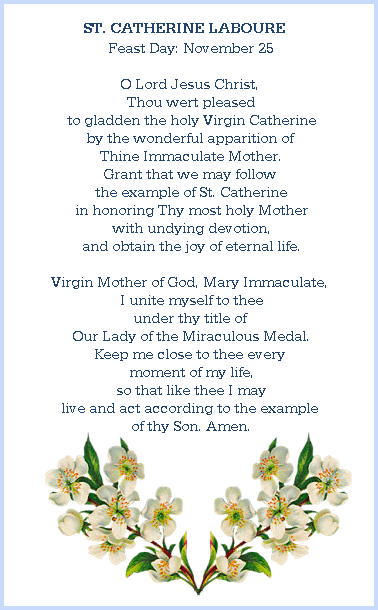
ST. CATHERINE LABOURE CARD: TEXTST. CATHERINE LABOURE CARD: IMAGE

Things we somehow did not know about St Catherine Laboure before today:

Her first name, before religious life, was Zoe. I am not sure I have ever heard of a Zoe before recent times and this intrigues me now. 

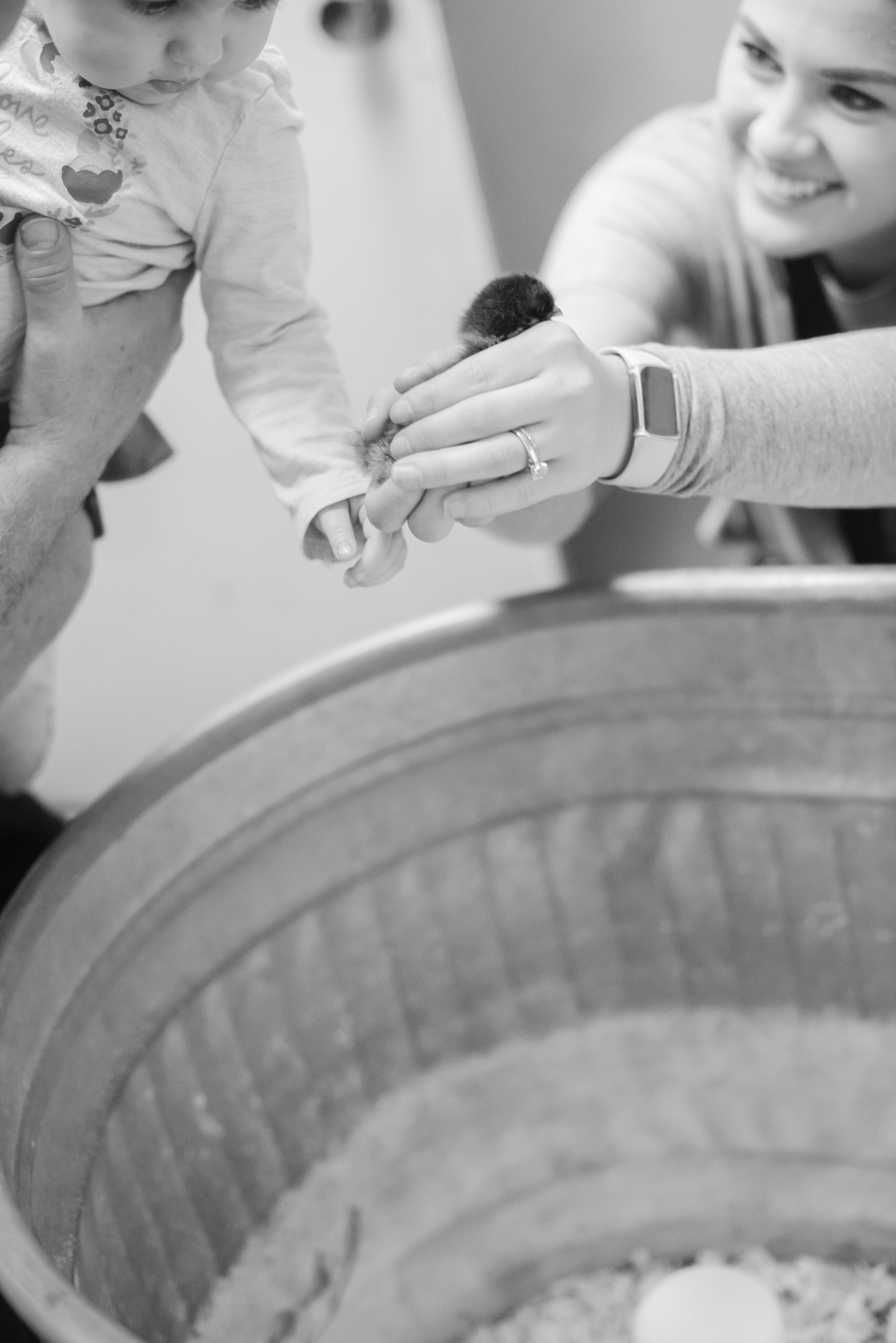
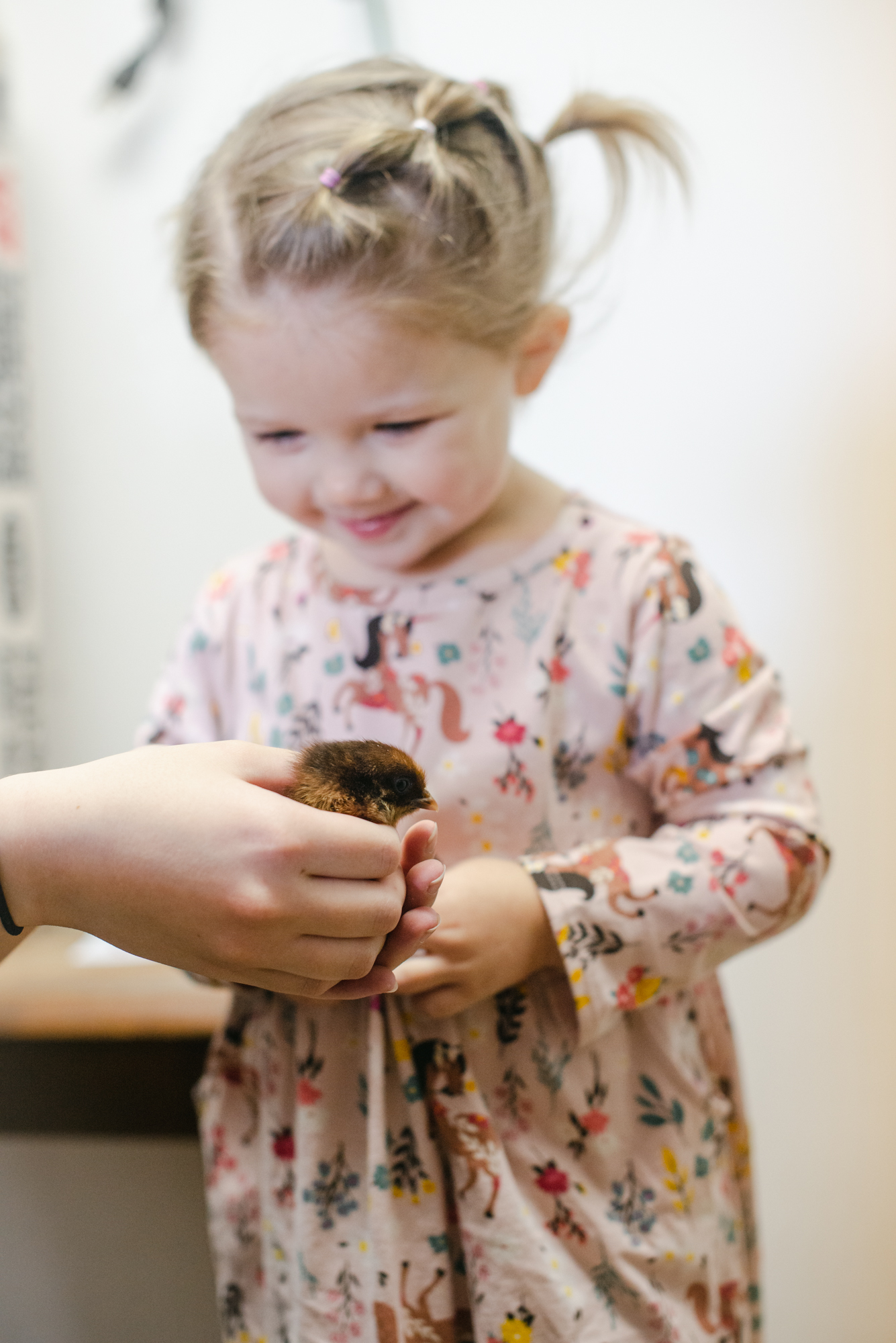
She not only cared for the aged and infirm, but she was in charge of the poultry for the order. 

Those who knew her commented that she was "rather insignificant", "matter-of-fact and unexcitable", "cold, almost apathetic"

This is no doubt due to "the precautions she had taken to keep herself unknown."

I have a deep devotion to the Miraculous Medal. My story is deeply tied up with hers. For reasons too plentiful and diverse to list here, I became disillusioned with the Church of my youth which was barely hanging on and largely run by poorly formed lay people. I began to venture more deeply into my mother's new age resources.

By the time I was a young mother I had also seen a multitude of problems there and was no closer to finding answers I so desperately sought. Through a library story hour program we met Catholic homeschool families and eventually landed at a catechism program offered at an old downtown church in the city we lived in then. An older man would stop by some class days and sold old Catholic books for a quarter or fifty cents. An avid reader, I scooped several up and began to explore these new ideas. Suddenly there were answers coming together.

He approached me one Saturday morning and said, "If I bring something for you and your son would you wear it?  It's free!" Free being my love language I said, "Sure?" The next week he brought two very bulky Miraculous Medal necklaces and placed one over my head and one over my son's.  Six weeks later I was in the confessional for the first time in many years.  The rest, as they say, is history. Or rather it is an ever-unfolding story complete with more plot twists than I ever expected. I was back though.  The journey began there.  This is where I mark a definite starting point.  

I am forever grateful to a humble sister who spent her whole life serving and performing tasks the rest of the world would find lowly at best. She was the only one in her large family who was not given benefit of education, due to her mother's early death and the responsibilities which fell to her afterwards. She didn't wow her contemporaries as evidenced by the "rather insignificant" comment.  I imagine her now cleaning her coop much as I do. In quiet conversation with God as she went about the very unglamorous tasks required in caring for folks who cannot care for themselves. "Matter of fact" suggests to me that she put one foot in front of the other. In another place it relates that her life is "notable for her devotion to profound silence."

profound silence

farm work

physical care of the infirm

 St Catherine Laboure, pray for us. 

Butler's Lives biography here

Nov 2022 lucy will field web-12

Don’t Miss It

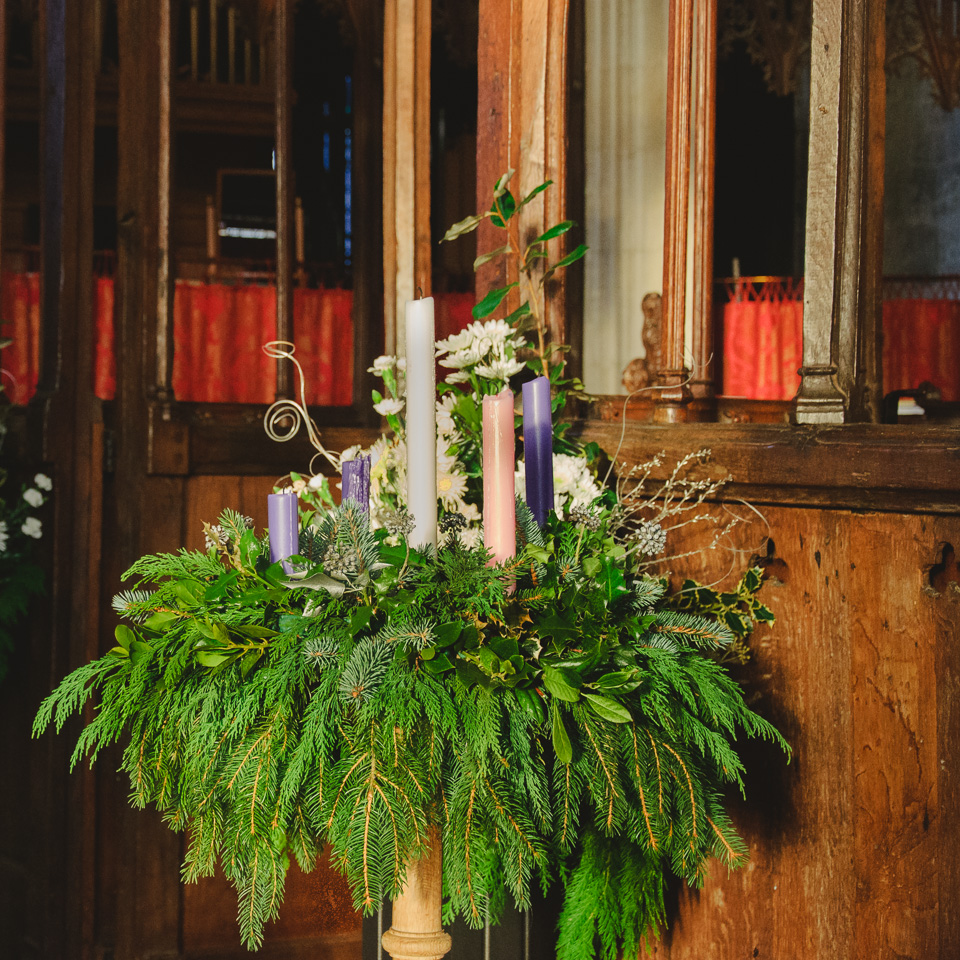
Dec 2014 advent wreath web (1 of 1)

“The season of Advent means there is something on the horizon the likes of which we have never seen before …

What is possible is to not see it, to miss it, to turn just as it brushes past you.

And you begin to grasp what it was you missed, like Moses in the cleft of the rock, watching God’s [back] fade in the distance.

So stay.

Sit.

Linger.

Tarry.

Ponder.

Wait.

Behold.

Wonder.

There will be time enough for running. For rushing. For worrying. For pushing. For now, stay. Wait. Something is on the horizon.”

~ Jan L. Richardson


Christ does not force His entry into a home. He enters only by invitation. He remains only when evidently welcome.  - Christ in the Home


St Andrew Novena Nov 30 – Dec 24

Hail, and blessed be the hour and moment
At which the Son of God was born
Of a most pure Virgin
At a stable at midnight in Bethlehem
In the piercing cold
At that hour vouchsafe, I beseech Thee,
To hear my prayers and grant my desires (mention request here)
Through Jesus Christ and His most Blessed Mother

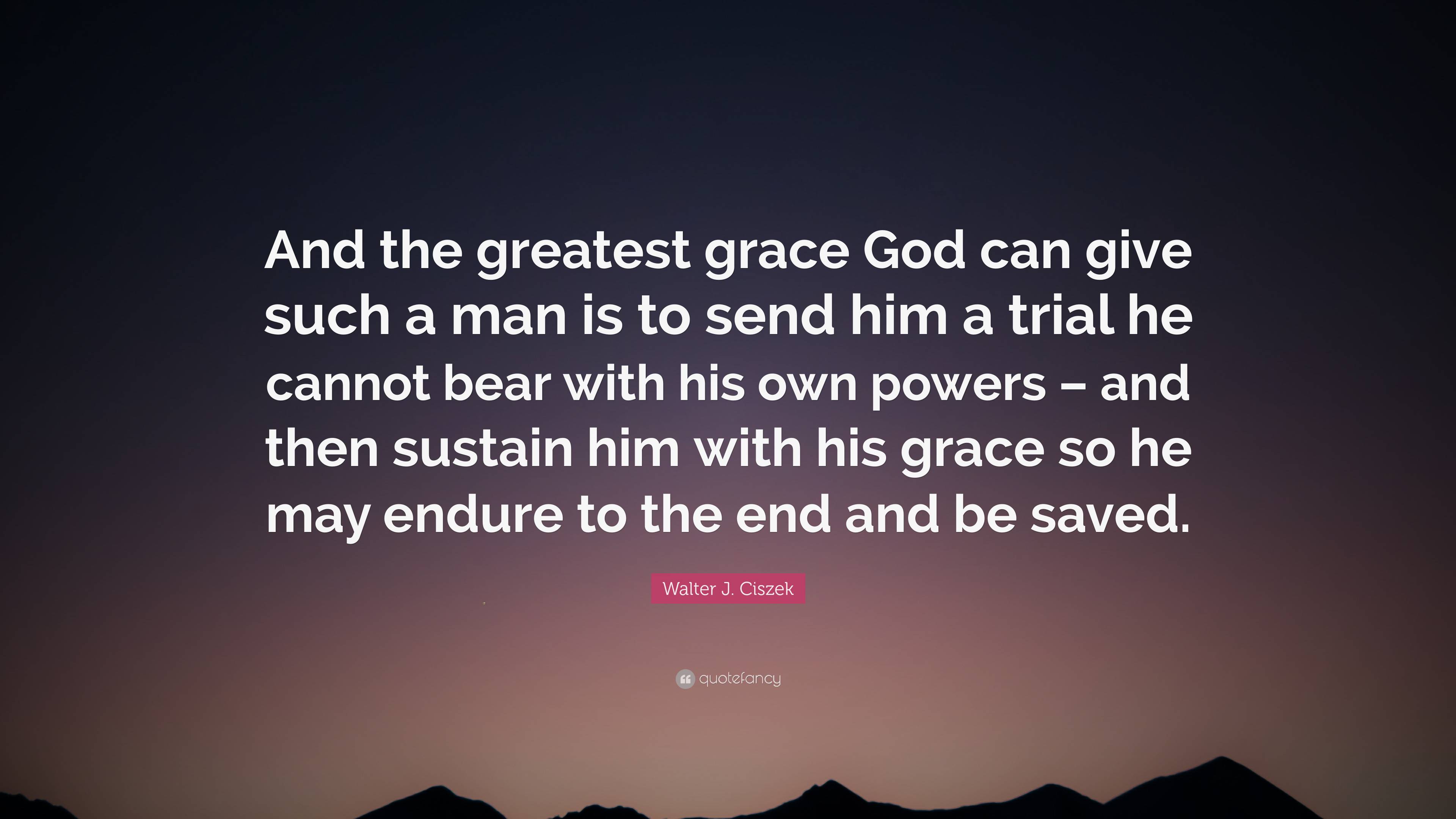
the greatest grace

Apr 2021 easter web-3

The book we read for book club last month was He Leadeth Me by Fr. Walter Ciszek.  I did not print a notes pdf for this study unfortunately but have been mulling over different passages, particularly relevant during the Easter season.  This book moved along at a snail's pace.  It hit me – like the proverbial ton of bricks – that this was a huge metaphor for spiritual enlightenment.  So slow.  So painfully slow. And when you finally get a glimpse, you realize it was there all along.  Simple, obvious perhaps. Convicting to your very core. 

The whole message boiled down to the Cross and the will of God.  He reflects over and over on how very often God strips us of all those things we come to rely on for our peace of mind and security – our routines, the familiar things in our lives, our own abilities – and brings us face to face with Himself.  This can be terrifying, quite honestly.

“We go along, taking for granted that tomorrow will be very much like today, comfortable in the world we have created for ourselves, secure in the established order we have learned to live with, however imperfect it may be, and give little thought to God at all. Somehow, then, God must contrive to break through those routines of ours and remind us once again, like Israel, that we are ultimately dependent only upon him, that he has made us and destined us for life with him through all eternity, that the things of this world and this world itself are not our lasting city, that his we are and that we must look to him and turn to him in everything. Then it is, perhaps, that he must allow our whole world to be turned upside down in order to remind us it is not our permanent abode or final destiny"

There are those who have suggested that a sure sign of being in God's good graces is material blessing and great good fortune.  I will submit that the witness of the martyrs and the saints says otherwise.  It will very often present as an unraveling of all earthly stability, gradually leading us to rely on God alone. That can be a hard sell, to be sure. 

Lest we go there in our minds he is quick to assure that God is not vindictive.  The falling is on us., on our human weakness.  He is an economical God, however, and will make good use of every mistake, every misstep:

“Mysteriously, God in his providence must make use of our tragedies to remind our fallen human nature of his presence and his love, of the constancy of his concern and care for us. It is not vindictiveness on his part; he does not send us tragedies to punish us for having so long forgotten him. The failing is on our part.”

He also reassures us that the will of God is not all that mysterious nor "out there" someplace.  It is right before us in each circumstance we find ourselves in day by day:

"…things suddenly seemed so very simple. There was but a single vision, God, who was all in all; there was but one will that directed all things, God's will.

I had only to see it, to discern it in every circumstance in which I found myself, and let myself be ruled by it.

God is in all things, sustains all things, directs all things.

To discern this in every situation and circumstance, to see His will in all things, was to accept each circumstance and situation and let oneself be borne along in perfect confidence and trust."


Quotefancy-7027038-3840x2160


This has become the lesson of this Easter season.

In Our Domestic Cares

Our copy of the unabridged Butler's Lives of the Saints has been such an inspiration to me. How we came to own it is a funny story. I had borrowed the first volume from the library.  Upon returning they insisted it was damaged due to paint on the cover.  I paid for the book to be replaced, took the damaged volume home, and promptly discovered the "damage" wiped completely off.  Since it was now ours we began to read from it daily.  The detailed biographies of both major and lesser known saints have captivated me.  Today there was a rather long story of St Frances of Rome, who loved God intensely and assumed the best way to serve Him would be as a religious.  Her parents had other plans to which she acquiesced and she lived out her vocation as a wife and mother with every bit as much discipline and zeal. She famously quoted as saying,

"A married woman must leave God at the altar to find Him in her domestic cares;"

In her article here, Meg Hunter-Kilmer says:

"The trick of the devil is to convince us that our circumstances make holiness impossible. “Maybe I could have been a saint,” we think, “if I hadn’t married him or had so many children or gotten in that car accident or had an abortion or dropped out of college or become so bitter.”

St Frances pivoted admirably and threw herself into the vocation chosen for her, no excuses. It was precisely through circumstances she did not choose that she became a saint.  God sent her companions in this journey.  Her husband came to adore her and refused to put limits on her charitable work. Her sister-in-law became her closest friend and partner in serving the poor. Most miraculously, after a serious trial, God sent her an angel which was visible to her for the rest of her life though his image faded some when she committed some fault.  Clarity was restored each time when she righted her course.  

Her Bull of Canonization states that, “Her prayers and sufferings helped bring to end Western Schism (1378-1449), as well as the residence of popes in Avignon France.”  This is a terribly important reminder that we cannot know the fruits of our suffering and prayers but we must be assured that they are never wasted. St Frances was not a diplomat, she was a housewife. It was not her negotiations that ended the schism, but her private suffering and devotion. 

I hope you'll read the whole entry for her life in Butlers online here.  The Kindle version of Georgianna Fullerton's biography of the saint is currently free on Amazon

February Book Club: Farenheit 451

We just finished this month's read and I am pasting our notes below.  This was my third go at Bradbury's classic.  My son encouraged me to read it about 5 years ago.  It spoke to me on so many levels I read it aloud to the kids at home.  Reading it again in our current culture was almost painful. Still, even in the author's dystopian society there is the possibility for salvation on a deeply personal level.  In the end, though we strive together for a greater good, that likely starts with very personal transformation. 

Download Farenheit 451 Notes


“I did/did not like this book because…” 

 The general feedback was positive. The book was convicting, if unnerving.  Bradbury’s predictions of future technology were uncanny.  


“I wish the author would have…..”

The lack of closure and uncertainty of the future of several characters disappointed some.  

We discussed that Mildred and her friends reflected the stereotypical 50s female character rather than the post-feminist era woman.  While there are indeed checked out, frivolous, and self medicating women today they are not nearly as passive or concerned with propriety and social norms.  This suggests perhaps Bradbury did not have as good a handle on the feminine character then or now. 

“It convicted me about something in my own life…”

“It aligned with/opposed Catholic thought in this way…”

Given that this was a cautionary tale it invites much self reflection.  One comment made over and over was how striking was man’s inhumanity.  This circled back to ideas discussed in our last book (Man’s Search for Meaning) that to harm another you must first dehumanize him.  There was unanimous horror over the violence of the youth.  (“Those who cannot build must burn.”)

When asked about their concerns about imminent war the women comment that, “It is always someone else’s husband.”  In fact, all the suffering of others is routinely dismissed as having nothing to do with the characters personally.  (“Am I my brother’s keeper?”)

We discussed the fine line between using technology and it using us.  Much as we condemn Mildred’s complete escape from reality via screens, we should also consider our own screen time.  We discussed “phubbing” or ignoring family members while on the phone or computer or video games.  What should be our attitude towards technology?  The Church maintains that technology and machines in general are morally neutral.  It is our use of it that determines.  What safeguards do we have in place to protect ourselves and our families from those who would use these tools in negative ways or from the addictive nature of some technology? 

We decided the message of the author which is articulated by Faber is that man craves substance and connection.  Entertainment is a poor, but popular, substitute for both.  Do society/media/govt encourage this?  Why? What can we do to encourage authentic connection with others, particularly those who have been swept up in this cycle of fast-paced, often poorly considered responses? How do we learn to cultivate civil discourse in an era of increasing hostility?

What is the best response to this increasing hostility and diversity of opinion?  In Farenheit the societal conclusion was conformity of thought and the avoidance of uncomfortable discussion.  Can we do better?  

What can we deduce from comments strewn through the text about how other nations viewed this future society?  

What does it tell us that it took war and devastation to bring people back to their senses?  What does this tell us about comfort and suffering? 

What role does religion play in this future society?  

We know the Bible has been banned with other books.  We know that even non religious intellectuals were memorizing and preserving the books of the Bible.  The question is posed, “Christ is one of the “family” (a media character) now.  I often wonder if God recognizes His own Son the way we’ve dressed Him up or is it dressed Him down?”   Faber indicates that Jesus is used as a marketing tool more than for personal transformation.  Does this happen today? Does society ban religion or re-brand it to make it more palatable as well as financially advantageous?  

Beatty remarks that we must all be alike and how this must happen.  He says, “Not everyone born free and equal as the Constitution says, but everyone made equal.”  He asserts that books would make this impossible.  The assumption is that some would read more or differently than others and naturally improve themselves more than others and thus perfect equilibrium would be impossible.  

What does equality mean?  What does the Constitution affirm?  Are we equal in essential value and opportunities or should we be assured of equal success? 

Diversity is both invoked and suppressed in this book.  On the one hand the great diversity of future society is said to be the reason for censorship.  Strict control of language and thought and education arose in the interest of appeasing many diverse groups.   Beatty reveals society and business, rather than actual altruism, were the driving forces, “The bigger your market, the less you can handle controversy.  Remember that!”

Faber succinctly sums up by saying that each one is now made in the image of the others.  How does this compare to the biblical truth that we are made in the image and likeness of God? And if we are all made in God’s likeness how do we explain the diversity?  What is the unity and similarity the Bible is referring to? (Hint: it is our underlying humanity vs our individual characteristics. The soul vs the mind and body) 

The professors remind Montag repeatedly to remain humble, not to inflate one’s ego because they are well read.  The purpose of reading is not to puff oneself up but to give back to society, to rebuild culture, and to pass on something of value and substance to future generations who will eventually demand to know how society degenerated to such an extent.  

Faber tells Montag three things are missing from a world without books: quality information, the leisure to digest it, and the freedom to act on what they've learned.  Beatty and Faber explain that covertly discouraging rich language and replacing it with graphic and sound saturated intense media prevent contemplation.  Authority and peer pressure work to subdue the few who slip through the cracks and begin to form questions. 

What role does nature play in the reforming of Montags character?  What role can it play in our lives?  “…the more he breathed the land in, the more he was filled up with all the details of the land. He was not empty. There was more than enough here to fill him. There would always be more than enough.”

Why do we read fiction?    Fiction is a lie that tells us the truth. – Albert Camus


Related books and articles:

https://www.youtube.com/watch?fbclid=IwAR3IBG5Rf2YcMcBwVD0rrAO3OFcNRvrd0Fq0sNHzoN8k4bjMvAQVDCi-kkA&v=BiqDZlAZygU&feature=youtu.be

https://www.goodreads.com/book/show/767958.Leisure?from_search=true&from_srp=true&qid=7WmAXTj6h2&rank=1

https://www.goodreads.com/book/show/36300732-the-reading-life?from_search=true&from_srp=true&qid=wszpqWeupA&rank=2

https://www.goodreads.com/book/show/8323492-my-reading-life?from_search=true&from_srp=true&qid=XVsDPy94sh&rank=1

https://www.goodreads.com/book/show/38502471-i-d-rather-be-reading?from_search=true&from_srp=true&qid=aTUA0mdUko&rank=1

https://www.goodreads.com/book/show/5129.Brave_New_World?from_search=true&from_srp=true&qid=8rjQ4U74U9&rank=1

https://www.goodreads.com/search?q=1984&qid=NucXgIgSyh

https://www.goodreads.com/book/show/3636.The_Giver

https://www.goodreads.com/book/show/170448.Animal_Farm

https://www.goodreads.com/book/show/74034.Amusing_Ourselves_to_Death

https://www.goodreads.com/book/show/53438190-live-not-by-lies

https://www.goodreads.com/book/show/159979.The_Image

https://www.goodreads.com/book/show/9778945-the-shallows

https://www.netflix.com/title/81254224

https://time.com/5216853/what-is-phubbing/

http://richardlouv.com/books/last-child/

 

to gain mastery

"…we shall not fail to observe the fasts, disciplines and periods of silence which the Order commands;

for, as you know, if prayer is to be genuine it must be reinforced with these things;

prayer cannot be accompanied by self-indulgence.

This body of ours has one fault: the more you indulge it, the more things it discovers to be essential to it."

St Teresa of Avila, The Way of Perfection 

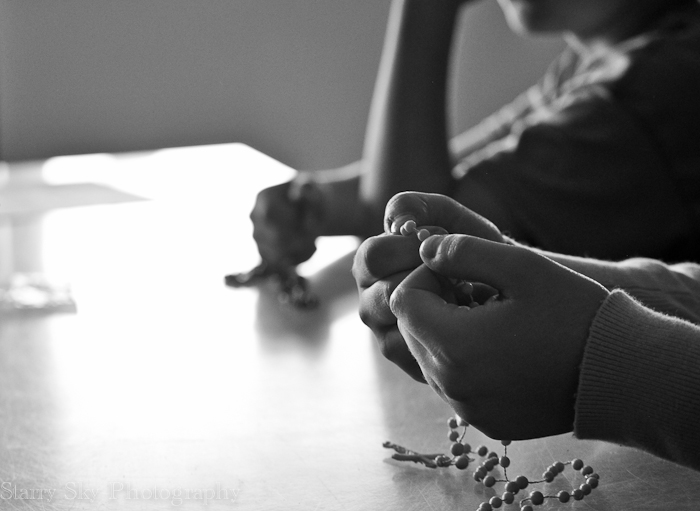
May 2012 rosary web-8


Help me O Lord to gain the mastery over my body and to conquer it completely; so that I may attain that magnificent liberty of spirit which allows the soul to devote itself undisturbed to the exercise of a deep interior life.    - Divine Intimacy


The Lights We Bear

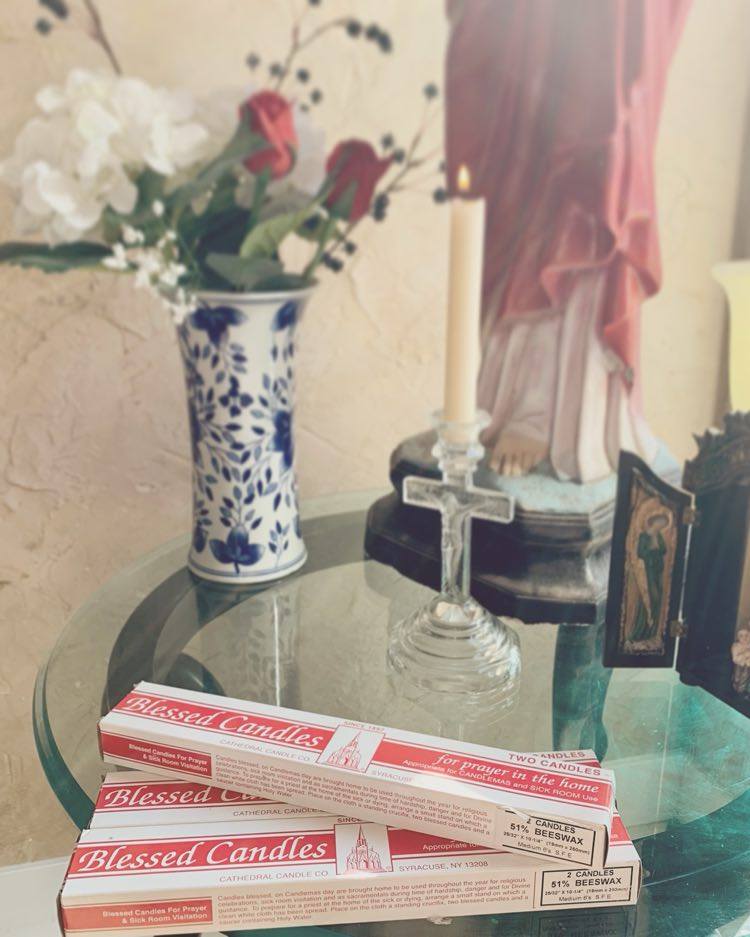
Candelmas

It was a beautiful morning for Candelmas today. We got up before dawn to make it to the early mass and procession in the neighborhood around the church. The tiny smoke trails wafting up from the children's candles in front of the colored glass windows as the sun poured in nearly took my breath away. 


This is an ancient celebration of the Church we repeat in our day. Alban Butler tells us:

The procession with lighted tapers on this day is mentioned by pope Gelasius I., also by St. Ildefonsus, St. Eligius,St. Sophronius, patriarch of Jerusalem, St. Cyril of Alexandria, &c., in their sermons on this festival. St. Bernard says,

"This holy procession was first made by the virgin mother, St. Joseph, holy Simeon, and Anne, to be afterwards performed in all places and by every nation, with the exultation of the whole earth, to honor this mystery."

In his second sermon on this feast he describes it thus: "They walk two and two, holding in their hands candles lighted, not from common fire, but from that which had been first blessed in the church by the priests, and singing in the ways of the Lord, because great is his glory."

He shows that the concurrence of many in the procession and prayer is a symbol of our union and charity, and renders our praises the more honorable and acceptable to God.

We walk while we sing to God, to denote that to stand still in the paths of virtue is to go back.

The lights we bear in our hands represent the divine fire of love with which our hearts ought to be inflamed, and which we are to offer to God without any mixture of strange fire, the fire of concupiscence, envy, ambition, or the love of creatures.

We also hold these lights in our hands to honor Christ, and to acknowledge him as the true light, whom they represent under this character, and who is called by holy Simeon in this mystery,  a light for the enlightening of the Gentiles; for he came to dispel our spiritual darkness.

The candles likewise express that by faith his light shines in our souls: as also that we are to prepare his way by good works, by which we are to be a light to men."


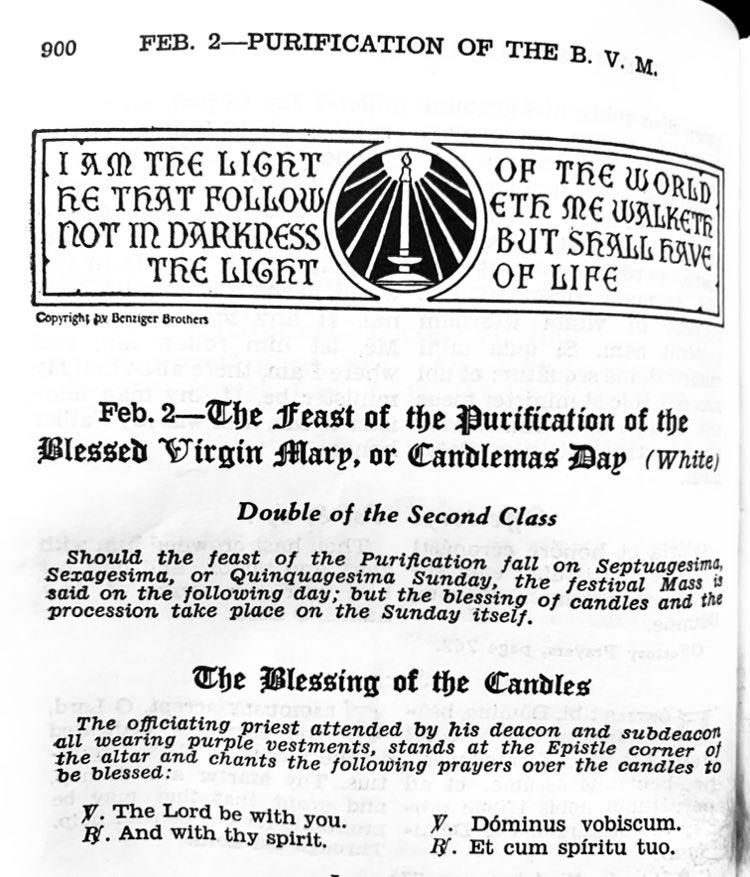
Candelmas


"O Lord Jesus Christ, the true Light, Who enlightens every man that cometh into this world, pour forth Thy blessing upon these waxen candles and sanctify them wit the light of Thy grace; and be pleased to grant that, as these lights, kindled with visible fire, dispel the darkness of night, so our hearts, being enlighten with invisible fire, even the effulgence of the Holy Spirit, may be delivered from the blindness of every vice, that with the eye of the mind purified may be able to discern those things which are pleasing to Thee and useful for our salvation; whereby after the dark trials of this world, we may be found worthy to enter into that light that is never obscured."

Roman Missal, Fr Lasance


Someone Else’s Eyes

"People read for a multiplicity of reasons. Nearly forty years in I can tell you why I inhale books like oxygen: I am grateful for my one life, but I'd prefer to live a thousand – and my favorite books allow me to experience more on the page than I could in my actual life. A good book allows me to step into another world, to experience people and places and situations foreign to my own day to day experience.

In books we encounter those things first, vicariously experiencing rites of passage on the page long before we live them for ourselves – we fall in love, or suffer a bad breakup; we lose a beloved pet, or a parent. We go to college, take on a new job, fight with a roommate, bicker with a spouse.  

Books draw us deeply into the lives of others, showing us the world through someone else's eyes, page after page. 

Books provide a safe place to encounter new and unfamiliar situations, to practice living in unfamiliar environments, to test drive encounters with new people and new experiences. Through our reading we learn to process triumph and fear and loss and sadness, to deal with annoying siblings or friend drama or something much much worse. And when we get tot hat point in our real life when it's happening to US it's not so unfamiliar.

We've been there before, in a book."         

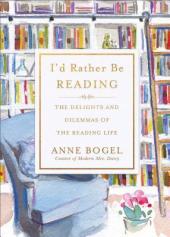
I'd Rather Be Reading 


I'd Rather Be Reading: The Delights and Dilemmas of the Reading Life


There is so much truth to this.  I have considered also, what are the ramifications then of not reading widely and well.  What happens when you have a population reading less and less each year?  This is not so much an academic question as a social and emotional one.  We are not short of information.  Data is at our fingertips.  We can easily pull it up there if we have not memorized it from a text.  I am thinking more of the impact that reading – particularly literature and biography – has on our emotional intelligence, our EQ as it has been coined. Our perspective is shaped and tweaked as we see our theories tested out in the pages of other lives.  They don't always work the way we predict.  We discover new twists, new sides of things which had not occurred to us.  

We can't know what we don't know, after all.

If books provide us with insight into other's experiences and a way to vicariously experience things that our own situations do not permit, what happens when we  have fewer and fewer of those opportunities?  

Day of the Dove

My friend Maureen shared an excellent essay today about, of all things, an alien force which inhabited the starship Enterprise.  

Intrigued?

 It stoked rage between the Klingons and humans by implanting false and exaggerated ideas in their minds about one another.  

Sound familiar yet?  

Read the rest here.  Lots of food for thought.  


Spock Star Trek Vulcan Leonard Nimoy Decal and 50 similar items | Star trek,  Star trek spock, Spock


Quit

Pastel Bouquet


Quit


Gossiping

Anticipating evils in the future

Faultfinding, nagging, and worrying

Dwelling on fancied slights and wrongs

Scolding and flying into a passion over trifles

Thinking that life is a grind and not worth living

Talking constantly about yourself and your affairs

Saying unkind things about acquaintances and friends

Lamenting the past, holding on to disagreeable experiences

Pitying yourself and bemoaning your lack of opportunities

Writing letters when the blood is hot, which you may regret later

Thinking that all the good chances and opportunities are gone by

Carping and criticizing. See the best rather than the worst in others

Dreaming that you would be happier in some other place or circumstance

Belittling those whom you envy because you feel they are inferior to yourself

Dilating on your pains and aches and misfortunes to every one who will listen to you

Speculating as to what you would do in some one else's place and do your best in your own

Gazing idly into the future and dreaming about it, instead of making the most of the present. 


             London Opinion via The Young Man's Guide by Fr Lasance


A wonderful little essay we ran across today which was included in the back the Guide book. Still good advice.