Fun photo shoots this weekend with my favorite retro girls….
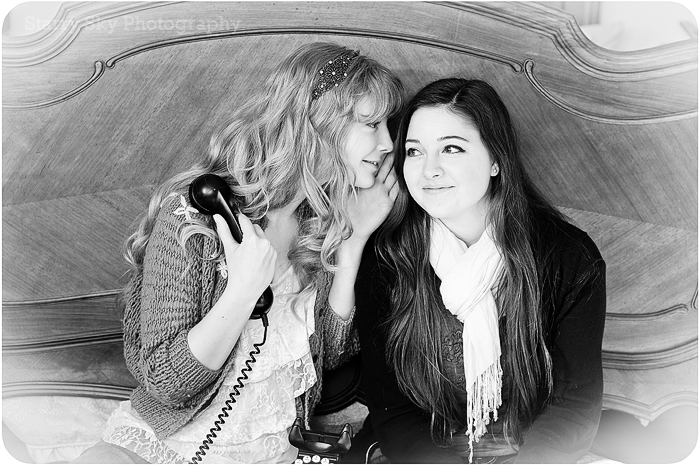
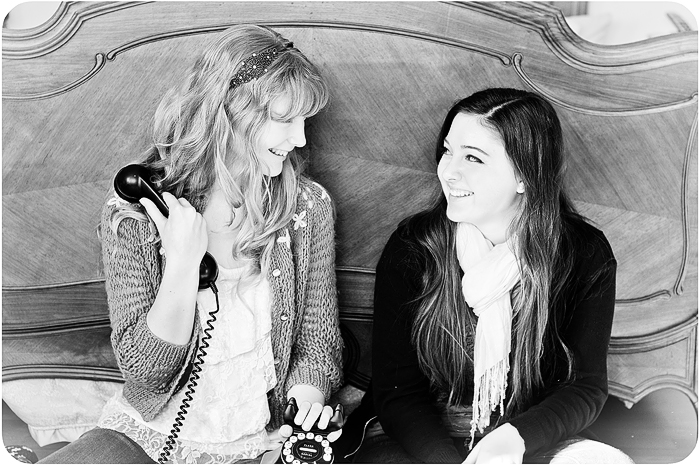
Fun photo shoots this weekend with my favorite retro girls….
Chances are good that if you have a compact or an entry level camera you have a zoom lens either built in or that came as part of your kit. Most of us love the flexibility of a zoom lens. It does a lot of legwork for us. Understanding the perks and pitfalls of your zoom feature can really improve your photos.
First let's address the two kinds of zoom on most compact cameras – digital and optical. One is good, the other is to be avoided. When you use optical zoom, your camera lens is extending to its fullest focal length. This is a good thing. It can greatly improve the composition of your pictures, drawing attention to your subject and eliminating distracting backgrounds.
When you continue past that, the digital zoom kicks in. This is a bad thing. Digital zoom basically crops your image and enlarges part of it. You lose quality with every increment further you zoom in as seen here. When you get that image onto your computer you will see more pixelation and less clarity. You want to take advantage of your optical zoom and avoid the digital zoom.
Here is another good reason to become familiar with the various lengths of your camera lens: lens distortion. The best example of this is found in self portraits, where the camera is held by the subject. Things can appear a little wonky. Noses become predominant. You may notice this as well in pictures taken of children when mom gets too close with the camera.
The reason for this is that most compact cameras and dslr kit lenses have a very wide angle at their low end. Mine came with an 18-105 lens originally. 18mm, its widest focal length, is not much different from a fisheye lens if you are close to your subject. You can see examples of that here.
A wide angle is really nice for taking in a sweeping panorama. It is really awful for taking a picture of a person within a few feet of your camera. Better to back up and zoom in a bit than to be physically close when shooting wide.
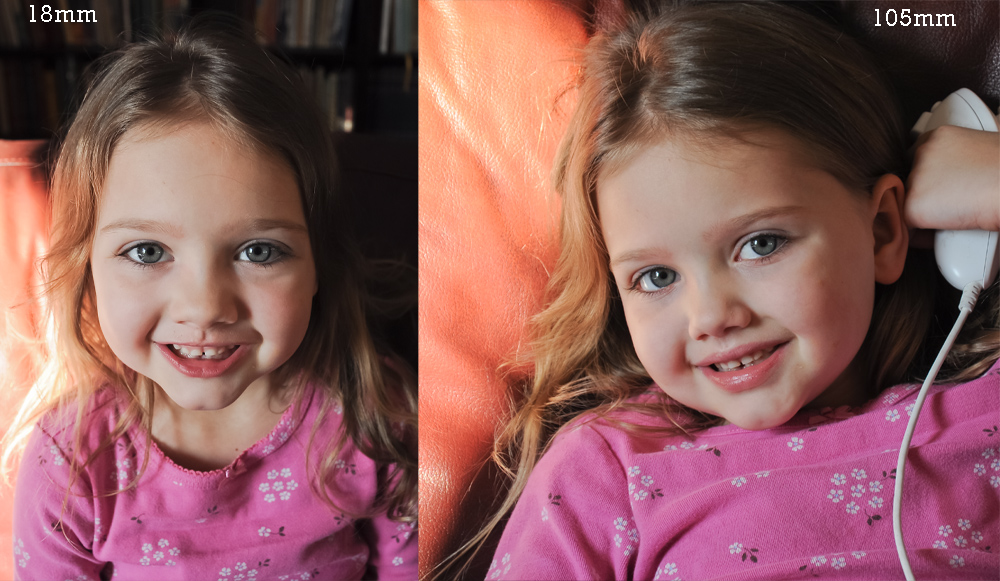
Weekend challenge:
Get a willing volunteer to sit for you take the same picture of him/her from very close and zoomed out. Then step back and zoom in a bit more with each shot, trying to keep the same amount of person in the picture each time. Got to the end of your optical zoom with this experiment. Then upload your pictures and see what you get.
You may have heard that the camera doesn't lie. Well, it does. In fact the camera records the same image quite differently at different lens settings.
This page gives a good visual comparision of the effect of various focal lengths. 50mm is usually considered to be 'normal' perspective. It is pretty darn close to what the naked eye perceives. The further you zoom OUT (lower number, lens is pushed back to camera) the more pointy and narrow the face appears. The further you zoom IN (higher number,lens protruding out of camera) the more the facial features flatten out and become more flattering to the subject. Most zoom lenses perform best somewhere in the middle of their range.
Auto is not your only option if you aren't yet comfortable setting your aperture, shutter speed, etc manually. Your camera can make a lot of decisions for you, but it helps if you give it a few hints. Enter: scene modes.
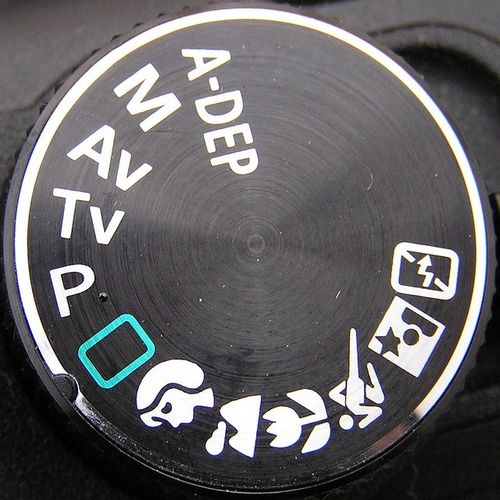
(image from Leo Reynolds)
Your camera may have a number of icons as above or it may just have the letters SCN as an option on the dial, which will pull up another menu on your screen listing all your scene mode choices. It may seem self-explanatory but let me just point out some situations you might want to choose one or the other.
Portrait Mode
This one is usually noted by a person's head. What happens inside the camera on portrait mode is that it will open up to the largest aperture available. It is best for a single subject – or a cluster of people – moderately close to you. The background will be out of focus, giving that nice, soft blur. How much blur depends upon the maximum aperture of your camera/lens. This picture was taken with a 50mm lens. My daughter's compact camera has a much smaller maximum aperture so the blur would not be quite as marked with hers.
Portait mode will usually have a slightly less sharpening than other modes. Unless you are shooting manually, your camera is recording jpeg images. It is deciding to sharpen them to different extents. In portrait mode it is going to sharpen with a light hand so as not to emphasize fine lines and blemishes.
This mode isn't only for people however. Any time you'd like to isolate your (stationary) subject and achieve an artsy effect you can try this option. And although children ARE in fact people, this mode doesn't always work well for them. More on that in a bit.
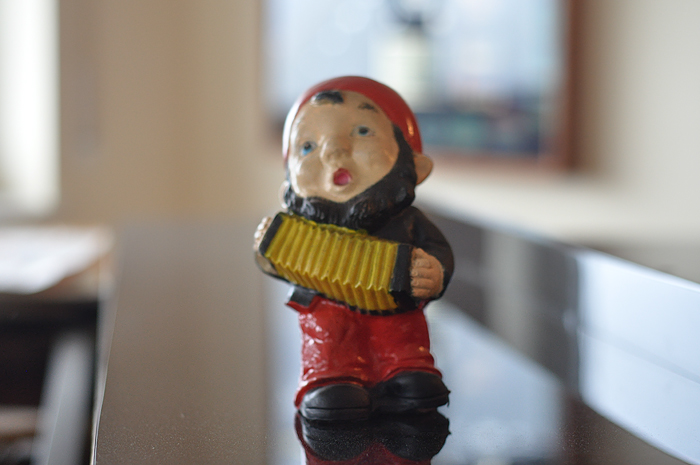
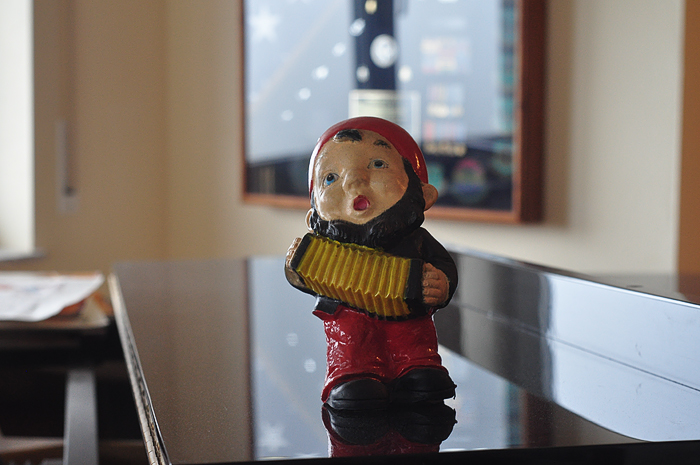
above: portrait mode
below: landscape mode
Landscape Mode
Likewise, landscape mode is not just for landscapes. Landscape mode, usually indicated by a mountain peak icon, tells your camera to shoot at a wide angle bringing the entire scene into focus at once. Wide angle means you be zoomed out getting as much of the scene into the viewer as possible. Things close to you, as well as those things in the distance will be in fairly sharp focus.
If you want to get a picture of your husband with a mountain range or a national monument off in the distance, this is a good mode to try. If you choose portrait mode simply because you have a person in the picture, you are going to be disappointed when you get home and the White House behind them is all fuzzy. : )
Sports Mode
…also not just for sports and actually not ideal for some sports events. You can find this option by looking for a runner. What happens in sports mode is that your camera is programmed to a fast shutter speed to try to freeze the action in your scene. Because the shutter is only going to open for a split second, the camera is going to have less light reaching the sensor. Therefore, it works best when there is a lot of light available (outdoors is best) or the flash is used.
Although people are indeed moving at dance recitals, for instance, the dimmed lights of a theater may not be sufficient when coupled with that fast shutter speed. If you cannot use flash then you may not get a good image on sports mode in that sort of situation. (for the record it is challenging to get good sharp images of stage performances even when shooting manually unless you have equipment specially suited for it)
Your camera is also going to give you a shallow depth of field in sports mode – blurring the background some. This mode prompts your camera's auto-focus to follow a moving subject, attempting to continually keep it in focus. Because kids are usually in motion, you may well have better luck using this mode vs. portrait when shooting children outdoors.
Don't be swayed by the names.
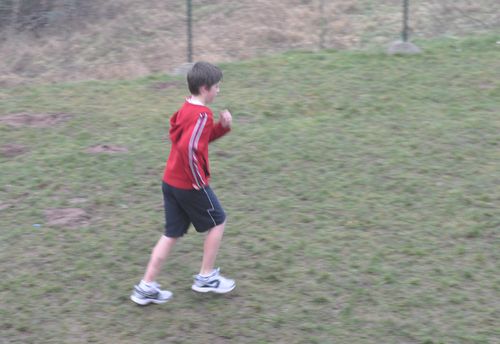
above: auto
below: sports mode
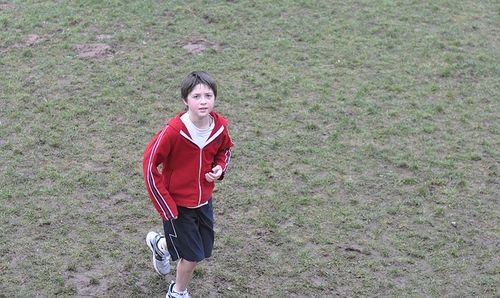
Macro Mode
Like those superclose up images of everyday objects? They draw your attention to oft-overlooked details. Since they are usually stationary, and you want to isolate your subject, a portrait mode often works here too. Because you are zoomed in to your subject, there is little room for error by way of camera shake. It is almost impossible not to jar the camera just a little when you press the shutter, so it's a good idea to use a tripod – even for your point and shoot camera. It will help to get those crisp details you are aiming for. If you don't have a tripod, you can try setting your camera on a bean bag or stack of books and using the self timer or a remote release. It really can make a difference.
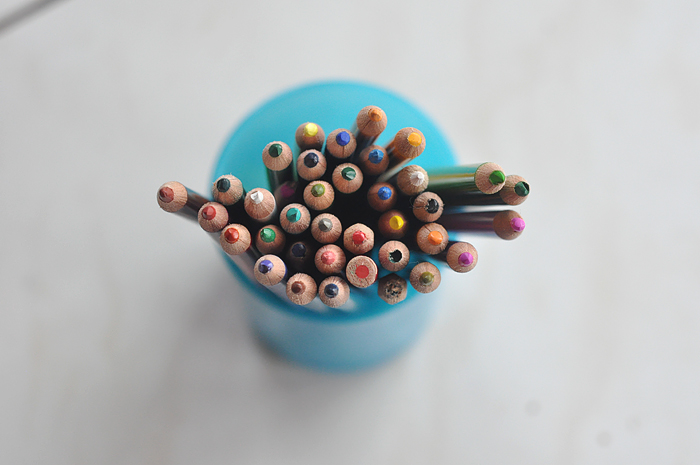 above: macro mode
Night Mode
Your camera probably has a night mode as well. It may have two – one with a moon and one with a star. The difference is whether the flash fires or how intense the flash will be. Ideally it tells the camera to shoot with a slow shutter speed to preserve as many details in the low light scene as possible. Because it is shooting at a slow speed you will again have better luck using a tripod so you reduce the risk of camera shake.
Ultimately your best results come from experimentation. That is the beauty of digital photography. You can shoot to your heart's content for practice and then delete.
Weekend Challenge:
Set up a scene and shoot it in several modes to see which comes closest, under those conditions, to what you had in mind. Use your playback/preview button to compare your images in the LED screen afterwards. This becomes even more helpful when you begin to shoot in manual. You will study the settings used on your best pictures to learn why they turned out so well. Even in scene modes, your camera will usually record the icon of the mode used to take the picture so you have that future reference. If not, keep a notepad handy.
Our theme at Snapshots Around the World this week is Reflection. It's actually been a personal theme of mine for a few weeks now. An article I read recently made the point that if you take the obvious shot, chances are it's been taken countless times already. Now, if you are traveling, you are going to want the obvious shots anyway for memory keeping's sake. Still, it's a good visual exercise to also look for less obvious perspectives.
A good for instance was this pipe we passed while wandering around waiting for my husband's race to finish. It was a rainy day and I just caught this pipe out of the corner of my eye. It stuck straight out of the ground and was full of rain water.
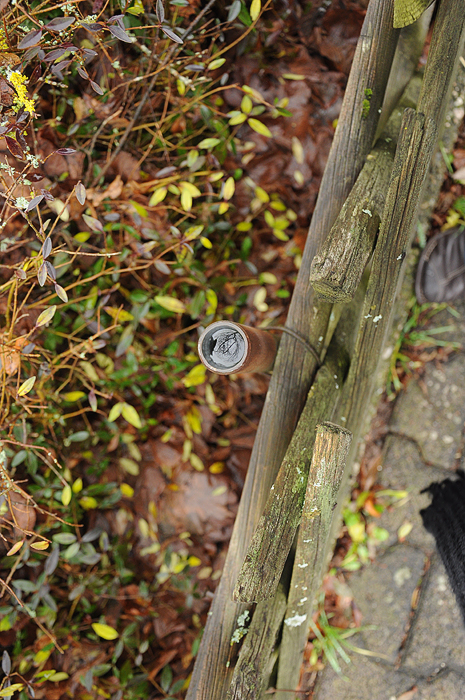
Looking closer I realized it also contained a perfect teeny tiny image of the very large tree it sat under.
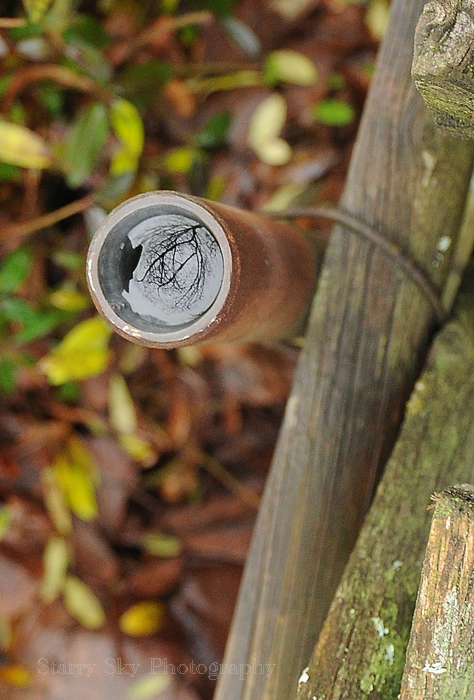
We'd love to see what you notice this week. Come play along!
Increasingly, the letters and comments coming in here ask about photography. What gear do you recommend? What books should I read? How do you….? If you frequent the blogosphere you have probably run across some stunning images on many inspiring sites. You may have dreamed over capturing your home and family in similarly breathtaking vignettes. So you start surfing, start experimenting, and often hit a wall.
I am a linker more than a writer and I don't like to reinvent the wheel. So if I can point someone to available info I do. But I noticed that most of the tutorials out there focused on manual photography and presumed a lot more background knowledge than most people just opening the box on their camera possess. There are workshops available, but those often run several hundred dollars and fill up quickly. And those workshops also require a dslr camera, often with a prime lens.
Many moms writing with questions don't have fancy cameras nor the time nor money to learn to use one. Most people are pointing and shooting. And that is ok! There is good news and bad news for wanna-be momtographers. Let's get the bad news over with first.
The pro-mom-tographers online are by and large shooting with some pretty amazing gear. Most pro photogra-bloggers have fullframe digital cameras, the two most popular being the Canon 5d mark II and less often, the Nikon d700. Some, like Pioneer Women step it up even further with the likes of a Nikon D3X. Some of the most popular lenses used by photographers I know are the Canon 50mm 1.2 and the Nikon 70-200, just for general reference. Are the dollar signs adding up? they have been for me over the past several years. But wait. That's not all.
Most of those images are edited with software like Photoshop CS5 and Lightroom 3. (That changes annually. The photography community is abuzz with discussion of the new Lightroom 4 upgrade.) Often those images are also processed with photographic actions and textures which can run $30-130 per set. In order to ensure everyone is seeing the same colors the camera/monitor/printers are calibrated using software running a couple hundred more. Those gorgeous photography flash blog templates run $100-300+. Someone needs to install and personalize them. The list goes on.
There is an old saying that it's not the camera, it's the photographer. This is true. And false. A master photographer can totally rock out a point and shoot shot, largely because he/she knows the principles of exposure and can use light, angles, and the compact camera's tools to their highest potential. However, there is no getting around the fact that good glass (and all the rest) does make a difference. Pro's aren't investing $1200+ per lens for kicks. The technology is improving all the time and today's equipment can produce images only dreamed of years ago. So, assuming you know how to use it, yes, better gear can mean better images.
Does that mean you need to break the bank to capture beautiful pictures of your life? Nuh uh.
A periodical I read as a young woman used to run a column called What is in Your Hand? It challenged us to look creatively at what God had already blessed us with. Are we using all our current resources to their fullest potential? Do we know our gear inside out? Are we tapping into all the tools available on free or near-free online editors? Very often a friend will complain about her pictures and a quick look reveals a simple fix.
Advanced imaging gear may or may not be in your future but you can probably be taking better pictures with whatever you have right now. Case in point, my son's friend who sold black and white images taken on a disposable camera.
So first things first. Get out the manual your camera came with. You don't even need to read it all right now. Start with a few basics. Check your file size and quality. Are you set to Large for size and Fine for quality? Start there. Anything else is not going to look great when you print. We had a string of bad pictures from the point and shoot on trip once and realized it had been set to email attachment image size.
If you have ever played around with settings, or have children who may have, be sure you know how to return to the camera's factory default settings. Again we had an instance when I first started to learn manual photography where I went a long stretch with underexposed images. After much desperate surfing I realized that I had hit the exposure compensation button and it never resets by itself. I hadn't yet memorized the icons on my LED screen and had no idea it was even on anymore. My manual told me how to reset the camera and we were in business again. So go ahead and experiment! But know how to start fresh again.
More to follow. Come visit next weekend. : )
 Starry Sky Journal