Knowing vs knowing

I have had the pleasure of reading these past several weeks now – really diving into books. They are much more portable than this machine. The down side is that it takes me far longer these days to get through a volume than it once did. Our daily rhythm is steady and the long unspoken-for spans of time I thought I once had have long since been filled with chores, errands, potty training, and the like. Spaces that aren’t filled with those are usually snagged for showers and naps and a stolen phone call here and there. For that reason I figured I would just share snippets of what has particularly resonated with me lately.

The first is from Leonard Sax’ Boys Adrift. It was recommended on a local homeschool list and has proven to be every bit as thought-provoking as promised. I still have lots to get through but his research and anecdotes have rung true from page one. The purpose of the book was the growing phenomenon of failure to launch in young men today. He points to a virtual epidemic of apathy and prolonged adolescence which seems to cross cultural and demographic lines. The book articulates several reasons for this: changes in education, video games, adhd meds, and endocrine disrupters.

His discussion about changes in American schools echo much of what I have read elsewhere. First he addresses research that shows vast differences in growth rates of different areas of boys’ and girls’ brains. These differences indicate that what is appropriate developmentally for one gender at one age is not necessarily so for the other.

I was most intrigued however by his analysis of education in America versus in other areas of the world. Education in our country tends to be very didactic. We cram with facts. Data is revered. There is far less emphasis here on experiential knowledge than in other countries. Our poor ranking on international tests (number #25) suggest that this focus on head knowledge has had a counter-productive effect on long term learning outcomes.

Listen to his discussion about knowing:

In English the verb to know can have two very different meanings reflecting two different kinds of knowledge:

I know Sarah.
I know pediatrics.

My knowledge of my daughter Sarah is very different from my knowledge of pediatrics. My knowledge of Sarah is experiential. I know that Sarah likes to be rocked side to side but not front to back. (he gives more examples)

Most European languages use two different words for these two kinds of knowledge. In German knowledge about a person or place you have actually experienced is Kenntnis, from kennen “to know by experience”; knowledge learned from books is Wissenschaft, from wissen, “to know about something”.
There is a fundamental belief running through all European pedagogy that both Wissenschaft and Kenntnis are valuable and that the two ways of knowing must be balanced.

He goes on to describe accompanying a Swiss third grade class high up into the mountains. Children were blindfolded and led to a tree to try to learn as much about it as possible without sight. “To see without the eyes,” the teacher explained. Then they were led away several paces and the blindfold removed. They then had to find their tree. He was skeptical of the value of this exercise until she blindfolded him and made him do the same. He found it “an unexpected and exhilarating experience.”

He shares decades of research that show the necessity of multisensory learning in developing young brains and goes so far as to say that

“a curriculum that emphasizes Wissenschaft at the expense of Kenntnis may produce a syndrome analogous to the neglected child.” (such as has been observed in studies of children raised in sterile orphanages)

This is relevant to our country because we have a generation or two now of children who have been largely raised indoors. As he says,

“You can easily find high school students in America who can tell you about the importance of the environment, the carbon cycle and the nitrogen cycle and so on, but they have never spent a night outdoors. they have plenty of Wissenschaft but not a trace of Kenntnis.”

Amen.

This seems to be the one recurrent theme in my school planning in recent years. My concern is less about facts and data and more about relationships. Formation versus information, Laura Berquist would say. I would say it is not an either/or proposition. Ideally you want them to form relationships with ideas. They can read and write until they are blue but unless the information is personally meaningful to them it is not likely to be planted very deeply. Or worse, they may swell with data and never realize how little they truly understand about it.

For the coming school year we are focusing once again on doing a few things well. Our emphasis is on learning to learn in a meaningful manner. That takes time. It takes courage on the teacher’s part to trust that slow beginnings make for a solid foundation, that giving a child the time and space to connect with ideas will lead to true knowledge in all senses of the word.

We tend to give lip service to the idea of lighting fires versus filling buckets. Then we turn around and start the faucets. I would encourage you to consider your plans for this year in that same light. Are you spending lots of time thinking about what data you plan to impart? How? When? Where? Maybe that time would be better spent this summer observing the child, arranging the environment, and setting peaceful rhythms that will all contribute to more meaningful learning in the long run. Your wallet will thank you too The materials will always be there. What is most beneficial is a keen eye, a prayerful heart, and a responsive attitude. Anyone can pass on wissenschaft. It takes a real giving of self, a release of control, and a good amount of faith to help balance that with kenntnis.

Speaking of which, I hear the sprinkler. A warm day beckons. I am going to join several dripping wet little people. : )

Multiplication Clock

I have a fascination with Waldorf math, in particular the geometric designs based upon the times tables. Being extremely visual it makes math come alive for me. Hence, you can imagine my reaction to seeing this multiplication clock. So pretty. So practical. I will only share a little bitty image. Do go to the site to get complete directions to make your own. Even if you don’t notebook regularly it would make a lovely poster for the classroom.

Rmc_one_quarter29722842_std

Creatures of Habit

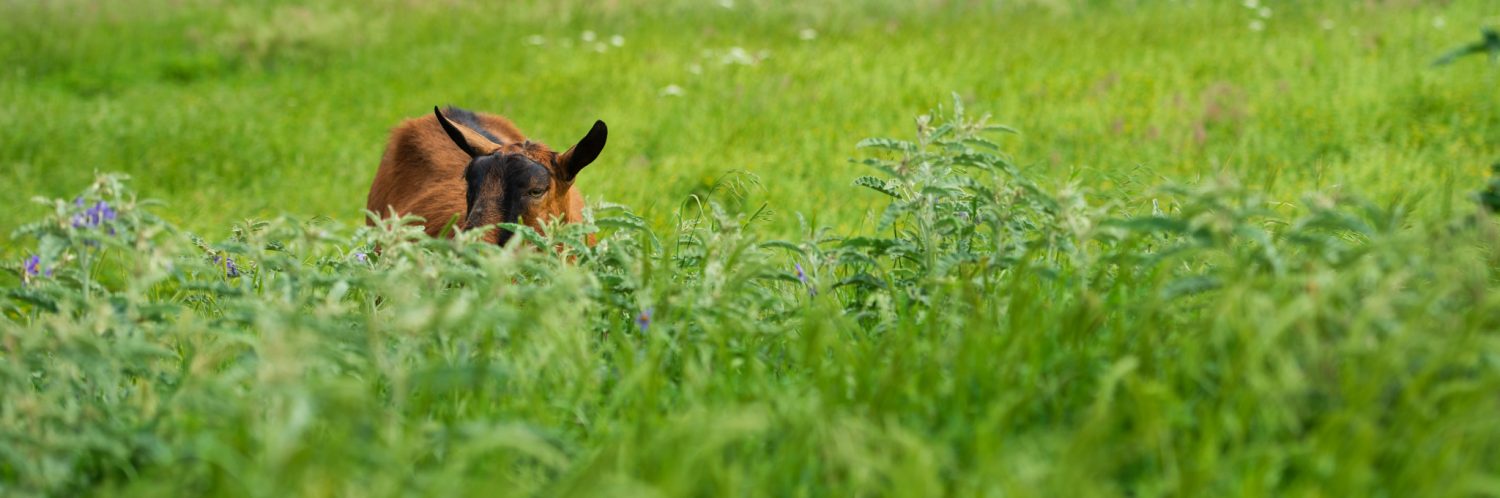
It goes pretty much the same way every morning. First there is the click and slide of the stall door latch. Then Clove, it’s nearly always Clove, comes barreling around the corner, pausing briefly to consider knocking the lid off the feed bin and diving in. I tell her not to even think about it and she lurches onto the milking stand. So it goes with each doe, each morning with very little variation.

I didn’t give it too much thought until it was Asher out there helping me the other day. Clove had to be coaxed out of her stall when Asher was holding open the door. Then she refused to go back in and made several laps around the barn in desperate confusion. A goat isn’t a particularly affectionate animal so you don’t realize they have given their complete trust to you and your routine until someone new steps in and they wig out. She hadn’t exactly expressed deep satisfaction with our little system but apparently being off of it totally threw her.

The goats aren’t the only ones around here who are creatures of habit. Allen took the older kids to camp out for the Bolder Boulder run. Asher and I stayed back with Tess and Brendan to hold down the fort. At first I imagined all sorts of free time given half the family here. Reality is, Asher and I had to split up the chores belonging to the missing kids and add them to our own. This always makes for a bit of on the spot decision making and some lapses. While I wouldn’t likely have said we had a well-oiled machine before, we seem to have had a pretty good flow going.

I remember years back a homeschool author writing about habits shared how she had moved a wall clock to a new location. For weeks afterwards various family members would glance over at the now empty space. Nothing could have convinced her of the power of habit better than that object lesson. This weekend has been a compelling example for me as well. “Why are there still dishes on the counter?” Oh yes, Aidan is gone. Lots of that type of thing has happened. More than that, there is Brendan.

We seem to have a pretty good system for supervising the B-bop boy. We seem to REALLY need one. Without those extra sets of eyes, mine are glued to him his every waking moment with the occasional hand-off to Asher so I can sweep a room or run for a bathroom break without disaster striking. We have appealed to his future aspirations, reminding him of the things that good scouts rarely do. For example, scouts do not swipe strawberries and flee to the nether regions under the bunkbeds where their pregnant mother cannot retrieve them. Nor would a good scout climb unto the kitchen table and wear the centerpiece as a hat while singing “I David Cooke!” at the top of his lungs into a cell phone charger. And a good scout never, never paints his sister’s face, even with jam. Never. Sometimes he is game. Sometimes he remains unconvinced. Always he is busy.

These past weeks have been spent factoring that reality into plans for the coming school year. By Thanksgiving there will be three little ones under four years old. One of them will be Brendan. While the details are being worked out I can tell you the master plan is to follow the advice of my mentors, Charlotte Mason and Maria Montessori. As Charlotte suggests, he will be right by my side to assure good habits supplant natural inclinations. Montessori work will have to be plentiful because his mind – and his hands – are never still. This should be considerably easier with lots of helpers on deck but it does mean a new school plan for the older kids. More on that to follow!

Meantime, if you have a very, VERY busy three year old and wonder if you will ever get another thing done then know you are not alone. My advice to you is not to even try to get “another thing done” right now. Nothing ensures future opportunity for getting things done like taking a season to instill order, peace, and self control in our whirling dervish children. I know this because I have had two other such little people. They both became skilled athletes. One is the most even tempered, helpful girl I have ever met today. You would have a hard time equating her with the busy toddler hanging upside down off the couch or rolling down the hallway in uproarious laughter or changing her clothes multiple times per day. It happened though and at this moment she is running six miles through Boulder with some thousands of runners – and her Dad. : )

I have every confidence Brendan can be such a boy. I am realistic enough to know it will not happen overnight nor without vigilance on our part. Relaxing that vigilance in early pregnancy is responsible in part for our schoolroom box/tray messes and the periodic closet tornado. What is necessary now is girding our loins and setting those good habits in stone so that he too, comes to find it a very pleasant second nature. Wish us luck!

Dsc00586_2

Dr Laura on Homeschooling (and a general rant about being meanspirited)

Dr. Laura recently weighed in on the side of homeschooling. It was a timely article. This last week dear friend Jen and I witnessed one of the most vicious attacks on homeschoolers over at The Old Schoolhouse. I won’t even link to it. It was that bad. Several hecklers, who referred to themselves as teachers but refused to sign their names (one claimed because she feared homeschool militias – hello?) anonymously attacked the guest blogger’s hair, wardrobe, punctuation, children, and general personhood. I quote one teacher:

“I reject your truth, your BS, and your hair.”

Now there’s a way to encourage fruitful discussion. Whooey.

Another claimed homeschool kids were clearly handicapped as evidenced by their obvious lack of fashion sense. It was those skirts, doncha know. Not that all homeschoolers wear them. Not that all homeschoolers are of one faith, one worldview, one curriculum, one cookie cutter. It was a convenient insult to hurl given the lack of serious data supporting academic and psychological damage from homeschooling. Apparently those are not the most critical factors in school choice. No, silly. Its about the hair. Let me tell you, girlfriends, I am in big trouble if so.

We have been in homeschool groups across the country over the past 17 years. We have happily been part of Catholic groups, Protestant groups, military base groups, and secular groups where a number of the families considered themselves pagans. There were few things that were consistently uniform among the groups but always these two: they loved learning and they never made personal attacks based upon outward appearances. Some families were very mainstream and some very eccentric – just like in public school. Some were math and science minded, some were artsy – just like in public school. Some preferred classical disciplines, some leaned toward the alternative – just like private and public magnet schools. There is an unwritten law among folks in these groups however that what is on the outside is not nearly as important as what is on the inside.

No matter what your beliefs about the hereafter may be, one thing is pretty universally accepted and that is that the ‘outside’ is not going with us when we leave here. So, while it is fun to hash out hairstyles and skirt cuts can you really fathom considering that a yardstick by which to evaluate your fellow man?

One thing we have always tried to drive home to the kids is that if a person is reduced to discussing bodily form and function they must have nothing more substantial to contribute to the conversation. Likewise when a person raises his voice or makes personal attacks he generally has nothing legitimate to add either. (thank you to the fine folks at Critical Thinking Press) In our home you may debate ‘ideas’ but you may never attack the person who holds them. It is both irrelevant and entirely unkind.

I admit there is some leftover teenager in me who does notice. However where one might interpret a dated hairdo as belonging to a woman who is clueless, I am much more inclined these days to interpret her as being far too involved with her vocation to be concerned about things as transient and superficial as fashion trends. They see women who don’t make the cut. I see women who place a premium on selflessness, service, and character. Those high-minded habits used to be considered virtues. In some faiths they nominate you for sainthood for just such traits. In mainstream Western society however those very attributes single a girl out as ‘subjugated’ and ‘brainwashed’.

I think the slam that really illustrates best how many define success was the comment:

“We will see who gets the $150,000 jobs!”

I guess we will. Income seems to determine whether a task is admirable or not. For instance, making a healthy dish for your children for free would be subjugation. Getting paid a small fortune to make a healthy dish on the Food Network – which feeds no actual human beings – is worthy of great praise.

I will probably knock myself inexorably into the ‘hopeless case’ camp when I tell you I really couldn’t care less who makes what when its all said and done. It is rarely an accurate indication of personal satisfaction. Like the ‘outside’ the income doesn’t go with either:

“All men are like grass,
and all their glory is like the flowers of the field;
the grass withers and the flowers fall”

We will not be physically beautiful forever. Investments often fail. Your paycheck will not attend you by your deathbed nor care much when you are gone. Character goes on forever. Work on the inside. Avoid contention. It is the meek who are to inherit the earth, not the loud, the angry, nor the self-righteous. Therefore I don’t engage in debate.

Make no mistake, my quibble here is not with teachers. I have dear friends in that noble profession and many in my extended family have devoted their lives to education. I have learned more than I can ever adequately express from excellent teachers who have shared their expertise. Many of them fill the sidebars. My discouragement is not aimed at any particular profession. This is not really about being a public schooler or a homeschooler. It is about being human and the dignity which that commands. Insults nearly identical to those mentioned here were levied at Michelle Dugger and her girls on a popular ‘women’s blog’ so apparently meanspirited swipes are not limited to TOS. My sorrow is over that sentiment, the yardstick being used to measure innocent children’s value. Their Father in heaven would surely not approve.
Did you paint yet?

When Kieran came into the kitchen the other morning and spotted Aidan the first thing he said was, “Aidan, did you paint yet??” They are on a painting kick of late. We have painted paper plates that grace the fridge door and we have painted notebook pages and painted for no reason at all. These are totally freestyle sessions as you can likely tell. They are less interested in the finished product right now than in mixing the paints and trying different types of paper. And that is fine by me.

It is something close to magic when 5 kids sit spellbound and nearly silent, elbow to elbow sharing a tray of paint. At least that is how it struck me watching them engrossed in color and water one morning. We have been trying to stay on task and it was tempting to gather all the supplies away and get out the books. I rightly determined to let them be for a bit. I figured it was counter-productive to interrupt their concentration and calm. They worked all the better afterwards for the time spent in quiet collection earlier.

So, did you paint yet? Do!

Dsc00322

Dsc00549

85%

from I Saw the Angel in the Marble, Chris and Ellyn Davis:

I recently read a study which concluded that 85% of all communication aimed at three year olds is either telling the child not to do something or how bad he is for having done what he just did. I was astonished. What are all these three year olds doing that they need such continual correction? I would suspect that most of the time they are simply being curious. they are exploring, and, in so doing getting into things they “shouldn’t” be getting into.

John Holt is quoted later in the passage giving his perception:

All that energy and foolishness, all that curiosity, questions, talk, all the fierce passions and inconsolable sorrows, immoderate joys, seem to many to be a nuisance to be endured if not a disease to be cured. To me, they are a national asset, a treasure beyond price, more necessary to our health and our very survival than any oil or uranium or name what you will.

85% ought to stop us in our tracks. What can we do to turn that percentage on its ear? Can we adjust the environment to allow for more exploration and safe participation? Can we adjust the schedule to allow for more rest for the adults so they can respond more positively? Can we replace “Stop” with “Try this” instead? Redirection is so much nicer than reprimand. I am not sure many of us grown-ups could function long if 85% of our feedback from those around us was negative. My thin-skinned self shrivels up with far less than that.

The Davis’ state that they are not unschoolers but they, like me, share John Holt’s deep appreciation of childhood. I am challenged to look at childish enthusiasm not as a burden but a blessing. It is a rare opportunity for us to experience once more the boundless joy that comes so naturally to little bitty people. How do we lose that? Maybe the answer lies someplace in that 85%

Amen

I saw this post on Raw Mom (I know. Just when you think you figured out what we eat too….) and had to laugh:

The other day Mika was having trouble concentrating on her homeschooling and I just finally said it like I felt it:
“Mika, I’m really frustrated and I don’t quite know how to respond to you right now.”
“Mom, if you would get more sleep, spend less time in front of the computer, and stop eating late at night, you wouldn’t be so frustrated.”
I stood there stunned. Caught in my own trap.
“Mika. Thanks.”
She’s 7, by the way.

From the mouths of babes.

I loved this one too:

childhood is not merely a preparation for living, it IS living. Children are not apprentices for adulthood, though they are usually treated as such. This is a huge mistake. Because what is actually a valid and complete period in life turns into a second-class affair,

The Montessori child at home

A child who is being trained in the Montessori system should also, as soon as it is at all possible, beging to share in the work of the household. If he is provided with a small broom and dustpan there is no reason why he should not keep his room fresh and clean and also clean up the litter of paper or dirt which he makes in the course of the day.

Pains should be taken to allow even the very little child to watch from a comfortable position any household operation in which he shows an interest. Fortunate indeed the child whose mother still cooks and sews and bakes and washes and allows her children to aid in these processes. Such children receive Montessori training without any formal apparatus.

-Dorothy Canfield Fisher 1913