Housekeeping

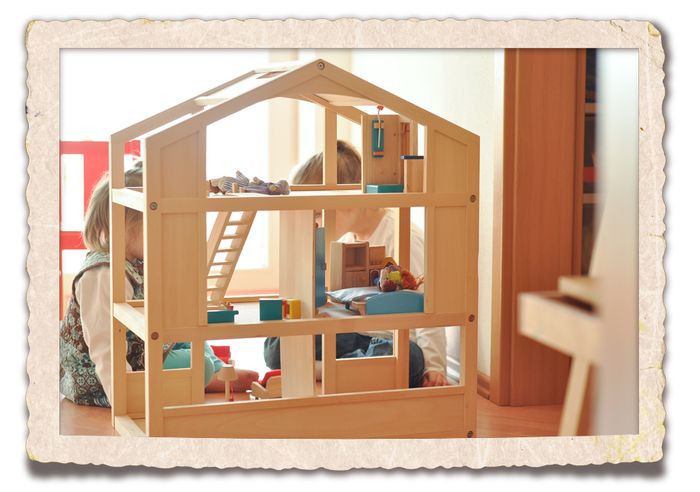
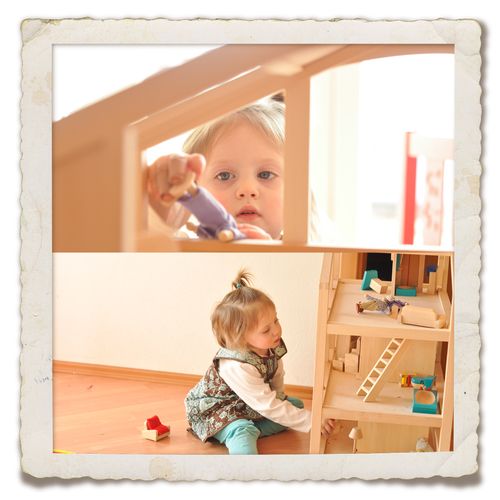
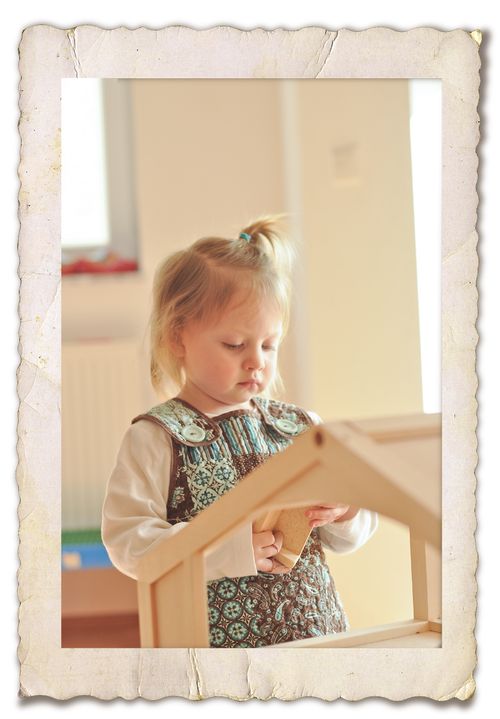
dollhouse
Her room was put in beautiful order, to her closet and shoe-bag, and she even stopped to put a clean cover on the bureau and dust nicely, to show she had not forgotten a single thing. The halls and parlors had to be thoroughly dusted now, but as none of them needed sweeping it did not take very long, and there was still time to go to market.

dollhouse


The mother looked around her. "Everything is very nice," she said. "The sink is clean, and so is the pantry, and so are all the dishes. The range is bright; the dish-towels are washed; the dining-room is in order. I noticed as I came through the other rooms that the bedrooms, bathroom, and parlors have all been looked after to-day, too. Margaret, I do believe you are as good a housekeeper as I am already."

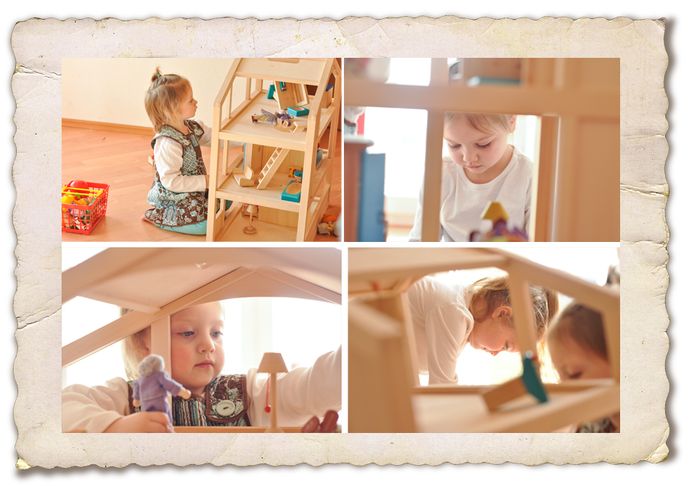
dollhouse Feb 2012 dollhouse abbie web

Margaret laughed as she took off her apron. "But I just love to do things," she replied, as she went up-stairs.

A Little Housekeeping Book Caroline French Benton, 1906

Weekend Photography Tips – zoom and lens distortion

Chances are good that if you have a compact or an entry level camera you have a zoom lens either built in or that came as part of your kit.  Most of us love the flexibility of a zoom lens.  It does a lot of legwork for us.  Understanding the perks and pitfalls of your zoom feature can really improve your photos. 

First let's address the two kinds of zoom on most compact cameras – digital and optical. One is good, the other is to be avoided.  When you use optical zoom, your camera lens is extending to its fullest focal length.  This is a good thing.  It can greatly improve the composition of your pictures, drawing attention to your subject and eliminating distracting backgrounds.

When you continue past that, the digital zoom kicks in.   This is a bad thing.  Digital zoom basically crops your image and enlarges part of it. You lose quality with every increment further you zoom in as seen here.  When you get that image onto your computer you will see more pixelation and less clarity.  You want to take advantage of your optical zoom and avoid the digital zoom. 

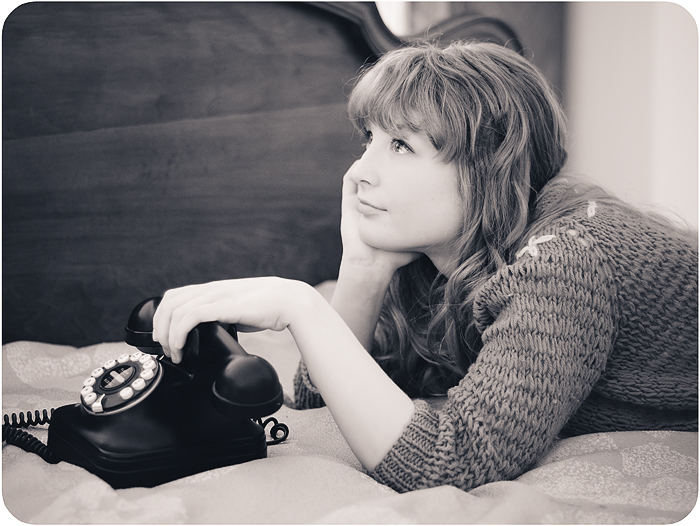
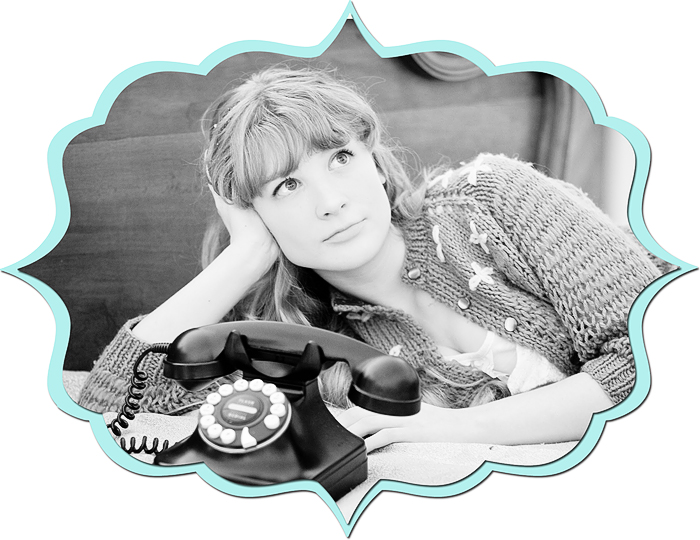
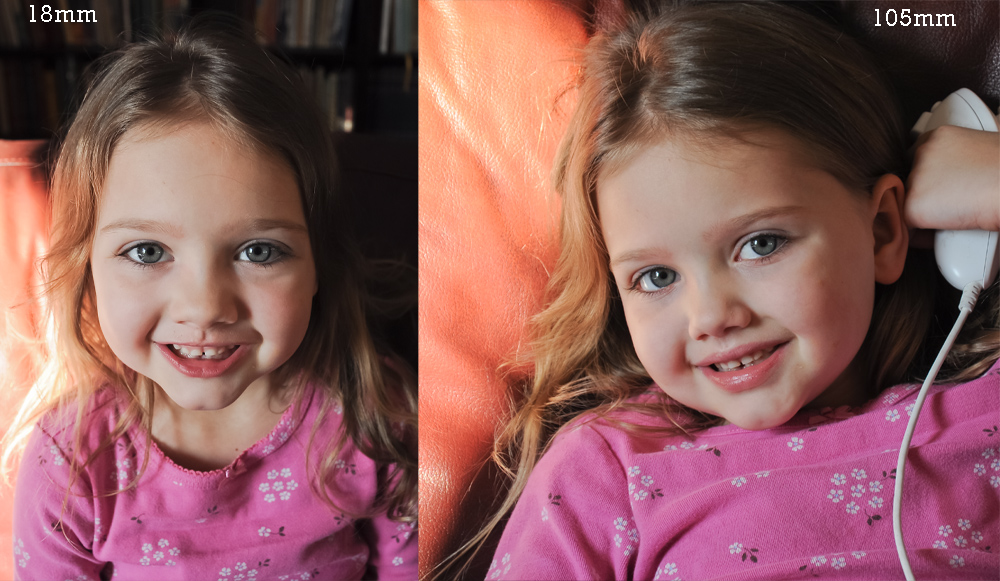
Here is another good reason to become familiar with the various lengths of your camera lens: lens distortion. The best example of this is found in self portraits, where the camera is held by the subject.  Things can appear a little wonky.  Noses become predominant.  You may notice this as well in pictures taken of children when mom gets too close with the camera.  

The reason for this is that most compact cameras and dslr kit lenses have a very wide angle at their low end.   Mine came with an 18-105 lens originally. 18mm, its widest focal length, is not much different from a fisheye lens if you are close to your subject.  You can see examples of that here. 

A wide angle is really nice for taking in a sweeping panorama.  It is really awful for taking a picture of a person within a few feet of your camera.  Better to back up and zoom in a bit than to be physically close when shooting wide.  

 lens diptych

Weekend challenge:

Get a willing volunteer to sit for you take the same picture of him/her from very close and zoomed out.  Then step back and zoom in a bit more with each shot, trying to keep the same amount of person in the picture each time.  Got to the end of your optical zoom with this experiment.  Then upload your pictures and see what you get.  

 You may have heard that the camera doesn't lie.  Well, it does. In fact the camera records the same image quite differently at different lens settings.  

This page gives a good visual comparision of the effect of various focal lengths.  50mm is usually considered to be 'normal' perspective.  It is pretty darn close to what the naked eye perceives.  The further you zoom OUT (lower number, lens is pushed back to camera) the more pointy and narrow the face appears.  The further you zoom IN (higher number,lens protruding out of camera) the more the facial features flatten out and become more flattering to the subject.  Most zoom lenses perform best somewhere in the middle of their range. 


Montessori at Home – Multiplication Manipulatives

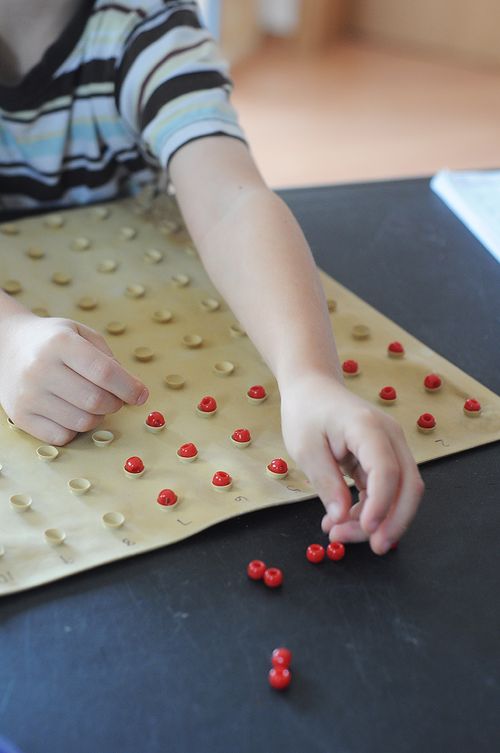
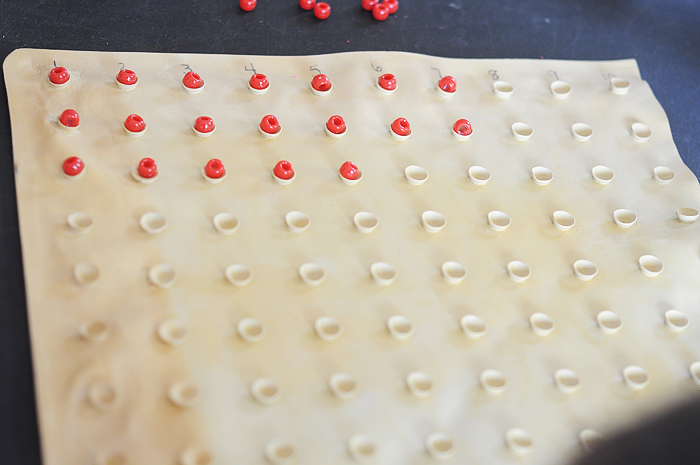
Aidan smiled when he saw Brendan using the muliplication mat.  "Oh! You got out that thing-a-ma-jiggie!"  Yes, indeedy.  That OLD thingamajiggie is an idea I altered from the basic multiplication board in the Hainstock book.  It is cut from an inverted bathmat (the kind with lots of tiny suction cups) which has not fared well in storage across the ocean. The numbers 1-10 are labeled across the top.   You can easily drop pony beads or beans across the rows of cups to illustrate groups of numbers.  

 multiplication mat
(You can also use the bath mats to make Hundred Boards.  Just use a fine tip sharpie and write the numbers on the cups.)

multiplication mat

Doesn't take long before you transition into a times table chart like this.  It is good to have some hands on work with the beads first so they can really visualize what is happening before they memorize the chart.

page
You can, of course use a printable, but when you realize just how far a pony bead can travel, and at what remarkable rates of speed, you become highly motivated to corral them. <g>

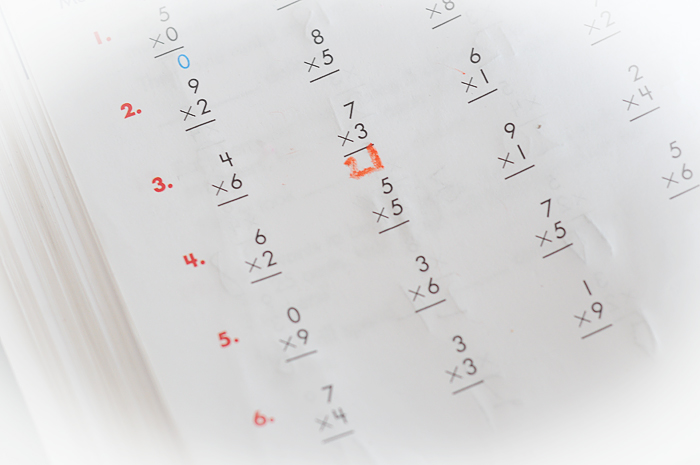
PS – you can print out multiplication problems here.   We are using inexpensive math workbooks and hopping around some for convenience. 

The Bodyguard

When I was little I used to pour over the D encyclopedia.  I memorized the names of all the dog breeds and could sort them into classes – toy, working, hound etc.  I was an animal geek for sure. 

I remember watching Benji (and reading the book and hanging the poster…) and sighing with longing for the little white Maltese sidekick of his.  My mother and I were barely scraping by however and exotic dogs were totally out of the question.  The closest I ever got was pressing my nose up to the pet store window in the mall. Oh for a dog with long flowing coat to pull up into bows and brush long into the night. 

Fast forward about 30 some years.  Toy dogs are slightly less exotic than they were in the Upper Midwest of the '70's.  Ours arrived here after bouncing around to a few other homes.  They arrived with all those flowing coat genes.  And matted to the skin.  

I admit I silently tsk'd their negligent owner and for a moment was transported back to those days sprawled out with the Brittanica.  Visions of grooming perfection wafted through my head. Never mind we owned a large shaggy dog for many years in CO who was frequently trimmed down to a very short coat.  That was the country however.  This would be different.  How quickly we forget. 

gizmo

Well truth is, we aren't all that good at dog grooming.  There are a fair number of little people under this roof who need grooming help too.  The dogs got to be a mess while I was sick last fall.  So, we told the groomer to start over and here we go again.

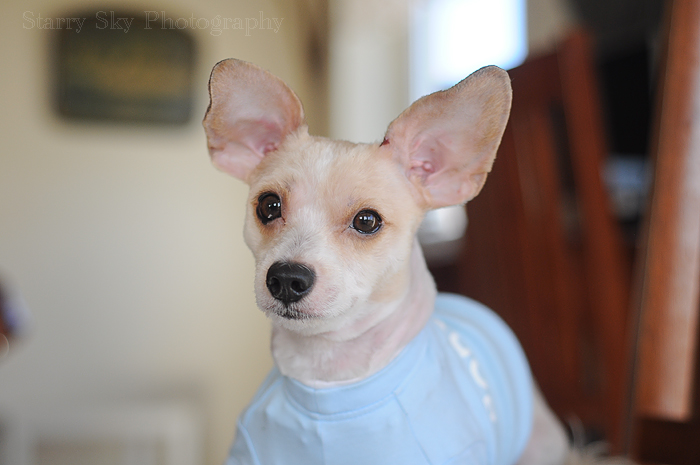
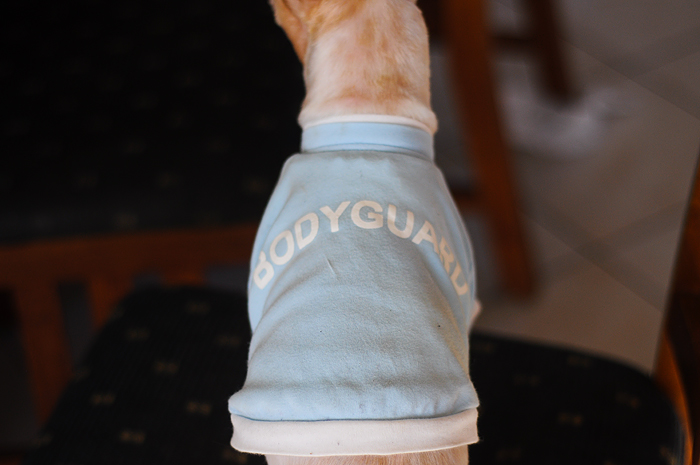
Gizmo's ears promptly sprang up like Dumbo's as soon as they were shorn.  Since it was December he also got cold.  Aidan found a coat to fit him until his own grew back.  Check it out….

gizmo

Yarn Along – the pink hat

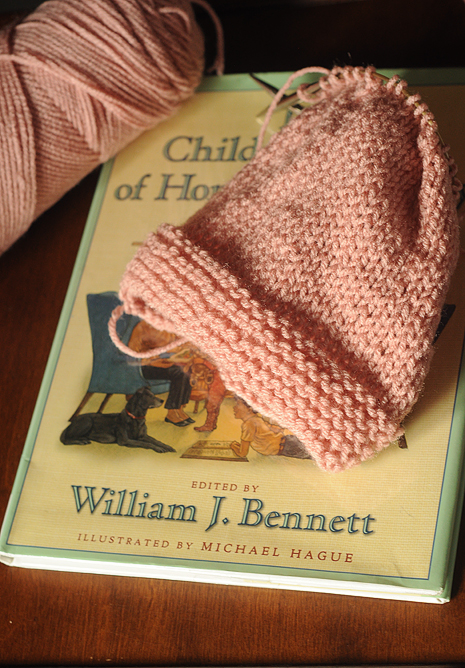
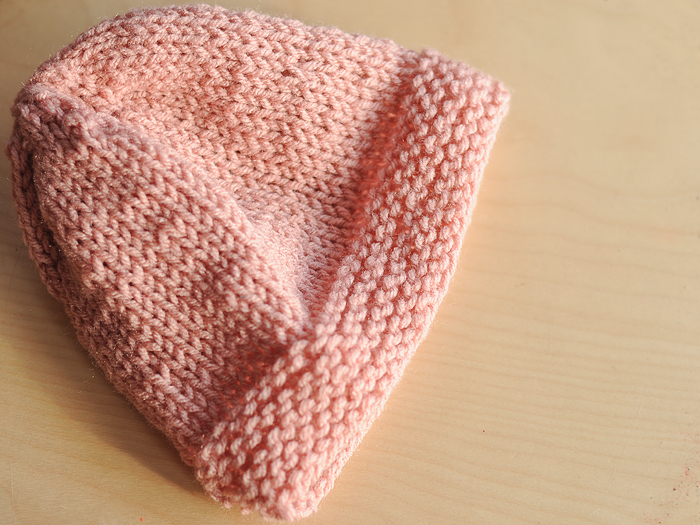
Behold, knitting project number two. : ) The hat was actually done but I didn't get around to sharing for last week's yarn along at Ginny's.   I so enjoyed making this little hat although the yarn I used was lighter than called for so the hat was smaller than intended.  That's ok, there are a couple of small heads around here.

 HAT

This was my introduction to circular and double pointed needles.  The circular knitting was a dream.  LOVED that you can get stockinette stitch without purling. No major errors, just a few stitches looser than the rest.  It seems my tension level isn't constant, much like in life…. lol.

The double points went alright but I did that part wrong.  I divided the stitches among all the needles and then began to knit so I kept ending up with too many stitches on one needle. Rebecca explained that part to me afterwards and I think I can do it right next time. 

HAT

I am stymied now for the next project. Trying to align pattern difficulty with yarn and needles I own has been impossible.  I think I am going to try to let go of the acrylic yarn stash I have and just find a pattern and the necessary yarn and needles for it.  Way too many hours on the net have not panned out. There is a fine line between thrifty and scrupulous.  A line I sometimes cross.  So someone have mercy and point me towards something small and pretty and simple.  I heard of a yarn shop not too far away and will be finding it next week.

Most of my reading has been aloud lately.  We found a Bill Bennett anthology we haven't seen before and have thoroughly enjoyed the renditions included.  The story about the young married couple and the fountain of youth nearly brought me to tears.  There was also a moving retelling of the Story of Ruth.  I see it got one glowing and one negative review on Amazon fwiw.  I like Michael Hague so it's thumbs up here. 

Another big hit was Sadako and the Thousand Paper Cranes.  It is all the more interesting since Sue and I have been working together at Snapshots Around the World this year.  We plan to exchange a box of goodies with their family.  This is the best sort of story stretcher. 

Continuing that WWII theme, Aidan just finished The Winged Watchman for school.  We are going to tackle the book report tomorrow.   We also coincidentally rented Sophie Scholl in German last week.  I didn't realize it was subtitled 'til we got home but everyone who watched loved it.  We agreed this story was much better with German actors, having lived here.  I tracked down the book version and hope to hit that soon. 


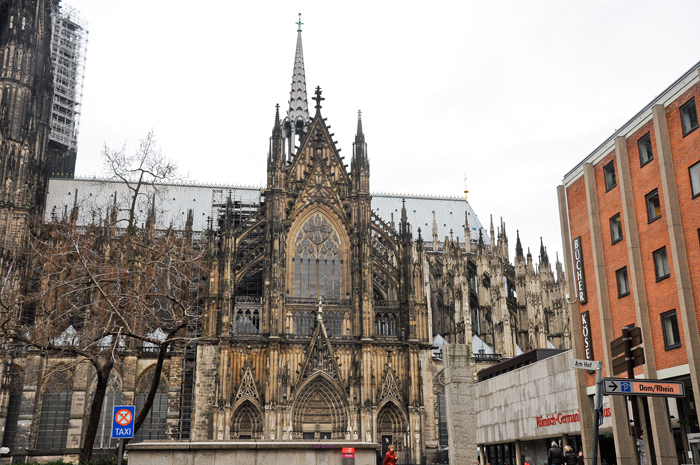
Kölner Dom – Cologne Cathedral

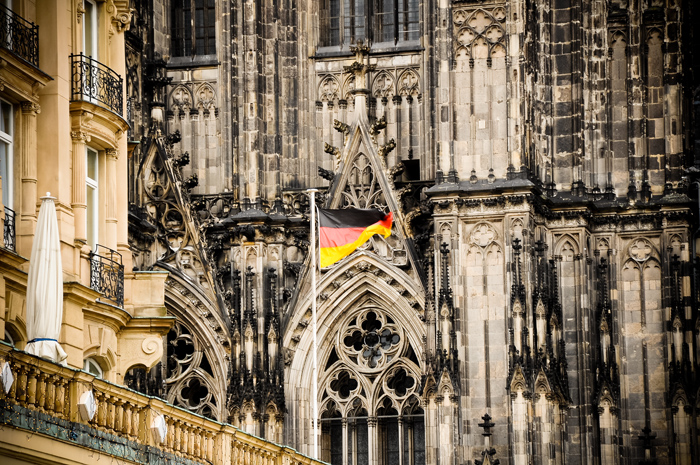
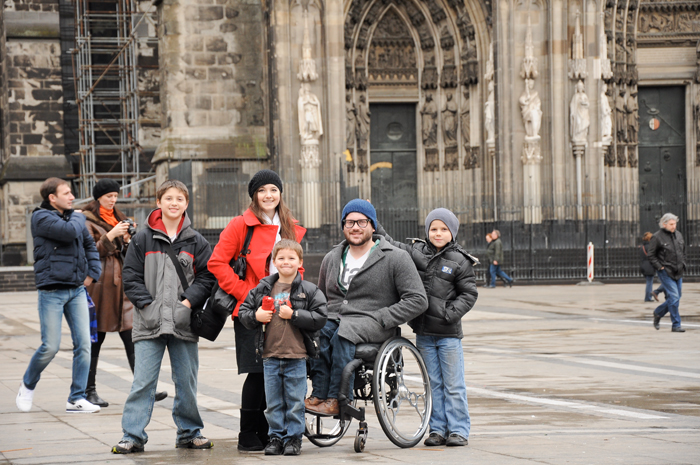
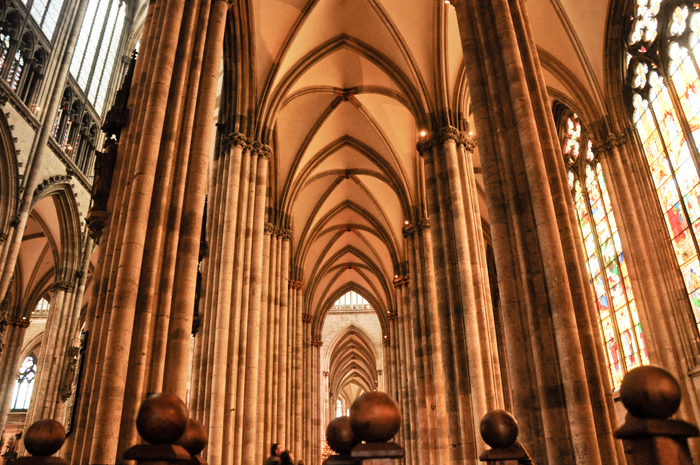
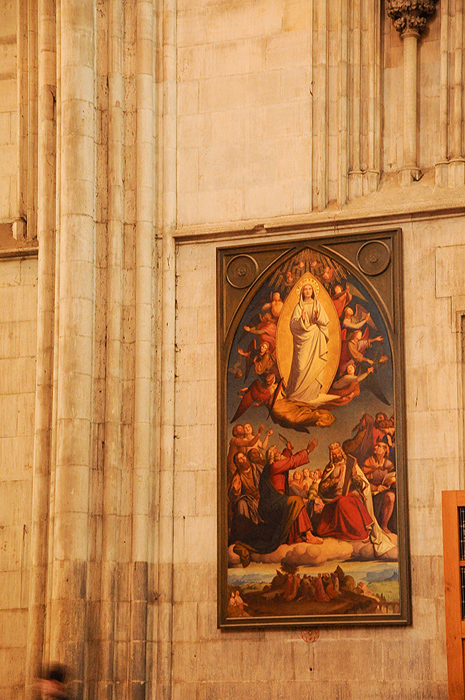
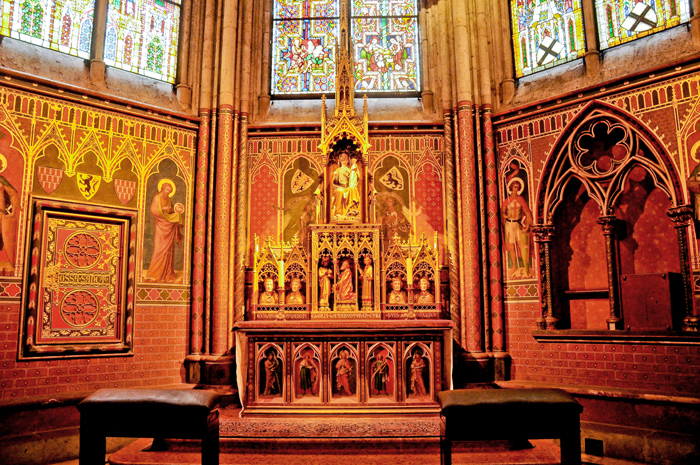
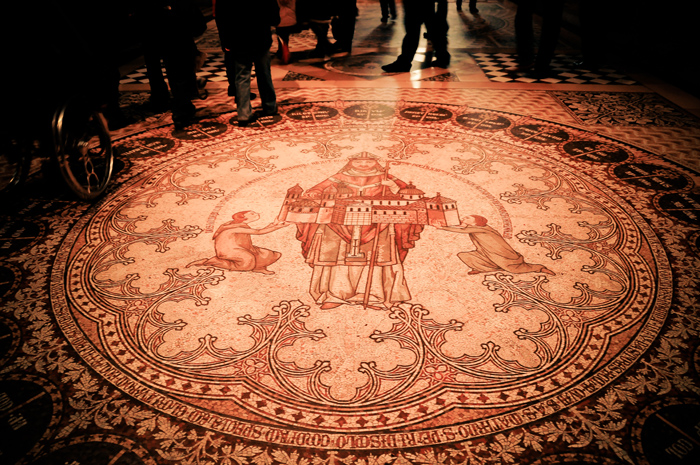
We knew from reading the history that the Cologne Cathedral was exceptional, being one of the largest cathedrals in the world.  It is hard to convey the awe you feel as you approach however.  It is truly immense.  You find yourself gazing up and up and up, the eye drawn irrestibly, which of course was the intent of gothic architecture.

 Cathedral 001

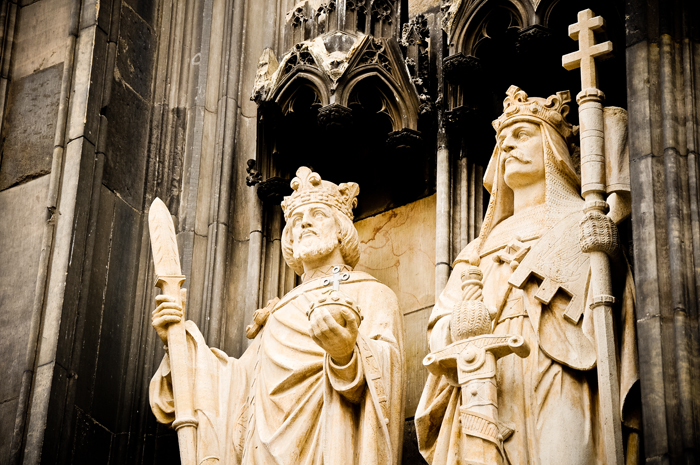
The facade is covered with intricate carving. 

Cathedral 3
Cathedral2
 Cathedral 4
Koln
Cathedral


 Koln

Cathedral
 Koln

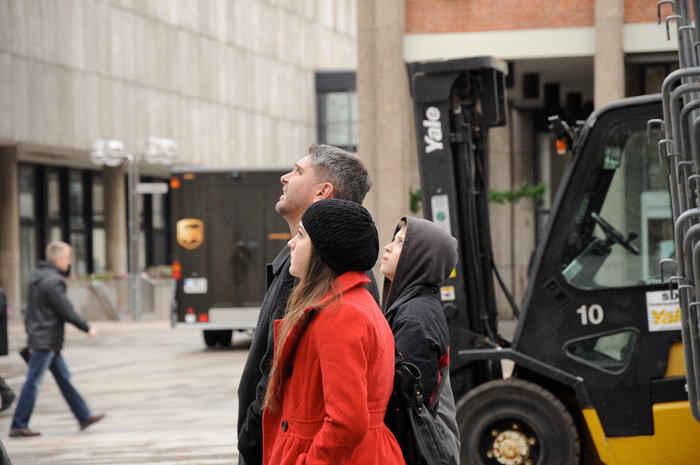
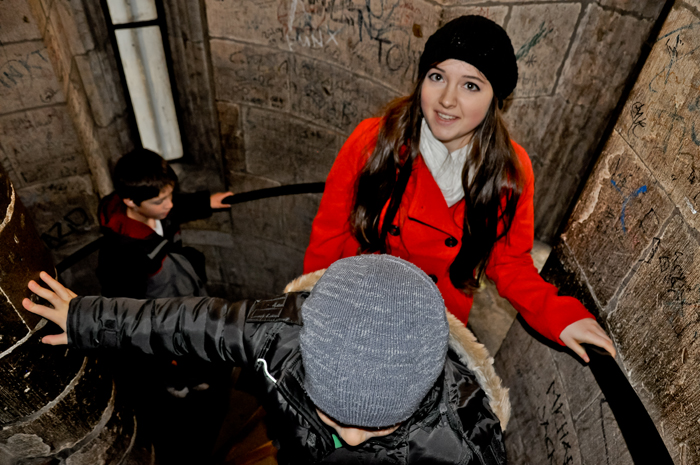
While Colin and I went looking through nooks and crannies of the interior, Allen and the kids trekked up the 500 foot spire to the bell tower lookout. 

Koln
Koln

Koln

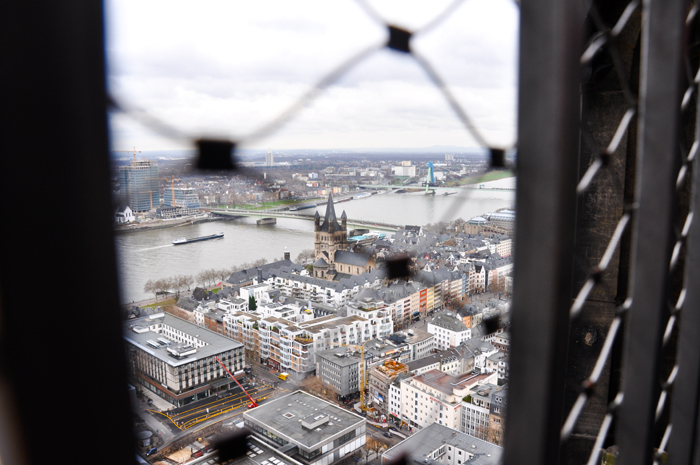
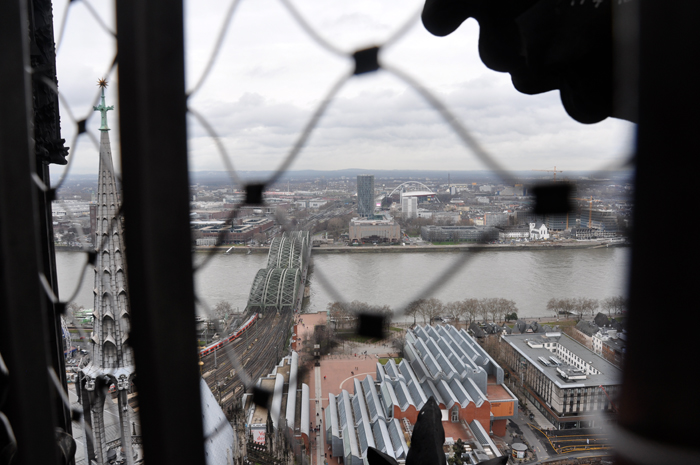
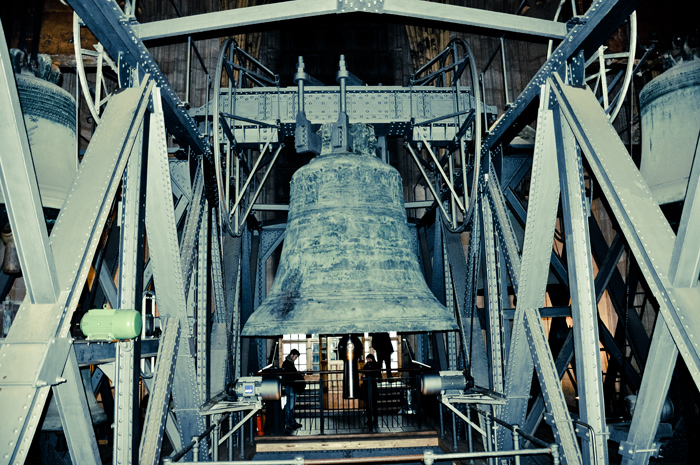
At the top you are rewarded a view of the Rhine and the city.  And you can check out the Petersglocke, the largest free swinging bell in the world.  They send you up with ear protection, should you arrive up there when they ring.

Koln

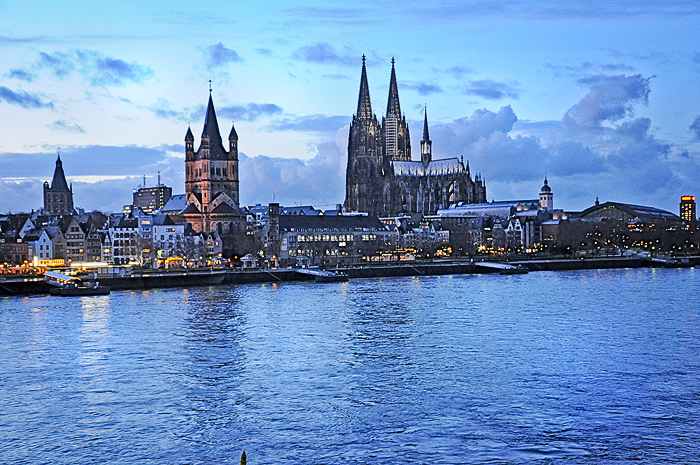
We spent far more time in the cathedral than expected and left at dusk.  I so wished I had my tripod but we still got a decent parting shot of city.  

cathedral


Surprise Party

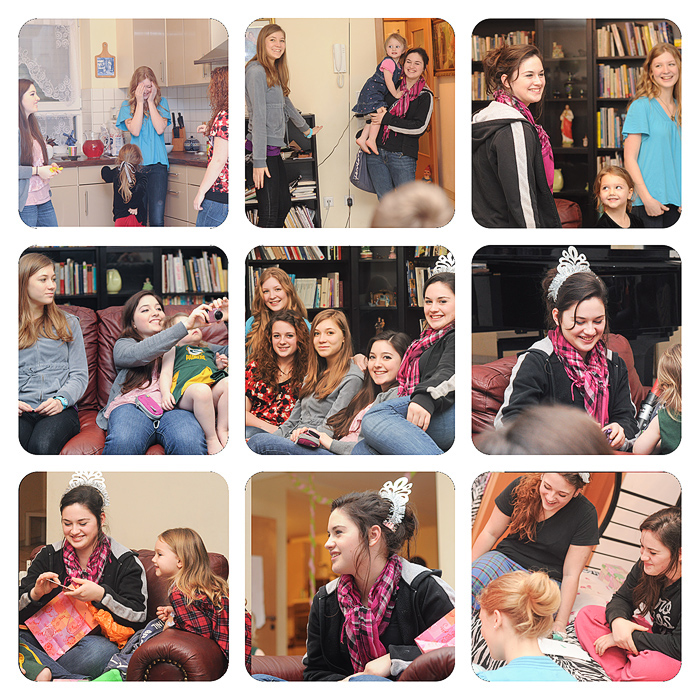
Moira's friends decided to throw a surprise party for her this year.  While she was out babysitting one afternooon, they gathered here with gifts and Audrey Hepburn movies.  Like birthday fairies they bustled aroud here hanging crepe paper streamers, decorating the table and making dinner for us all. 

A very happy day. 


M

bday
sleep
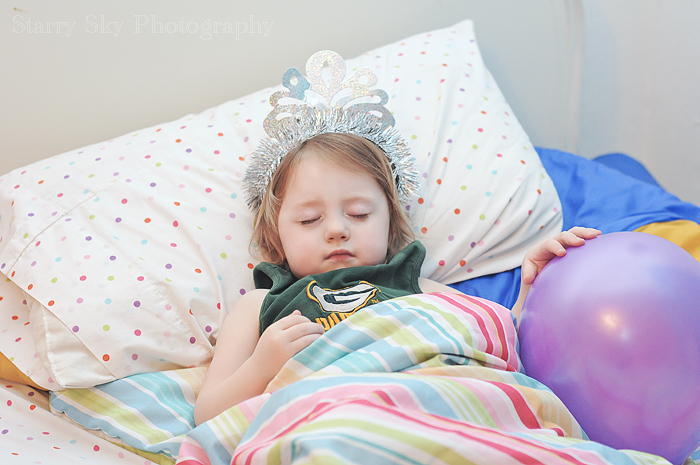
The little girls tried very hard to hang in there with their sisters.  This one had a very good time.

Weekend Photography Tips – scene modes

Auto is not your only option if you aren't yet comfortable setting your aperture, shutter speed, etc manually.  Your camera can make a lot of decisions for you, but it helps if you give it a few hints.  Enter: scene modes.
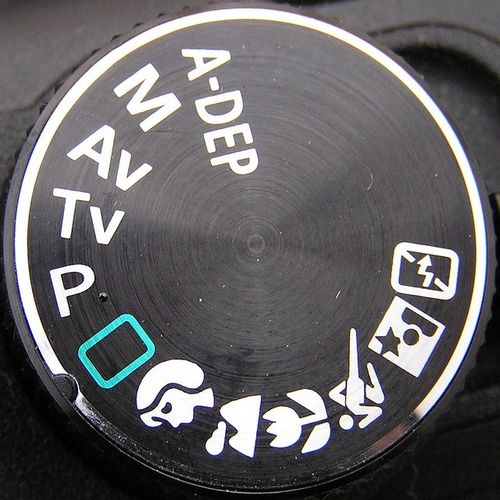
Camera dial
(image from Leo Reynolds)

Your camera may have a number of icons as above or it may just have the letters SCN as an option on the dial, which will pull up another menu on your screen listing all your scene mode choices. It may seem self-explanatory but let me just point out some situations you might want to choose one or the other. 

Portrait Mode

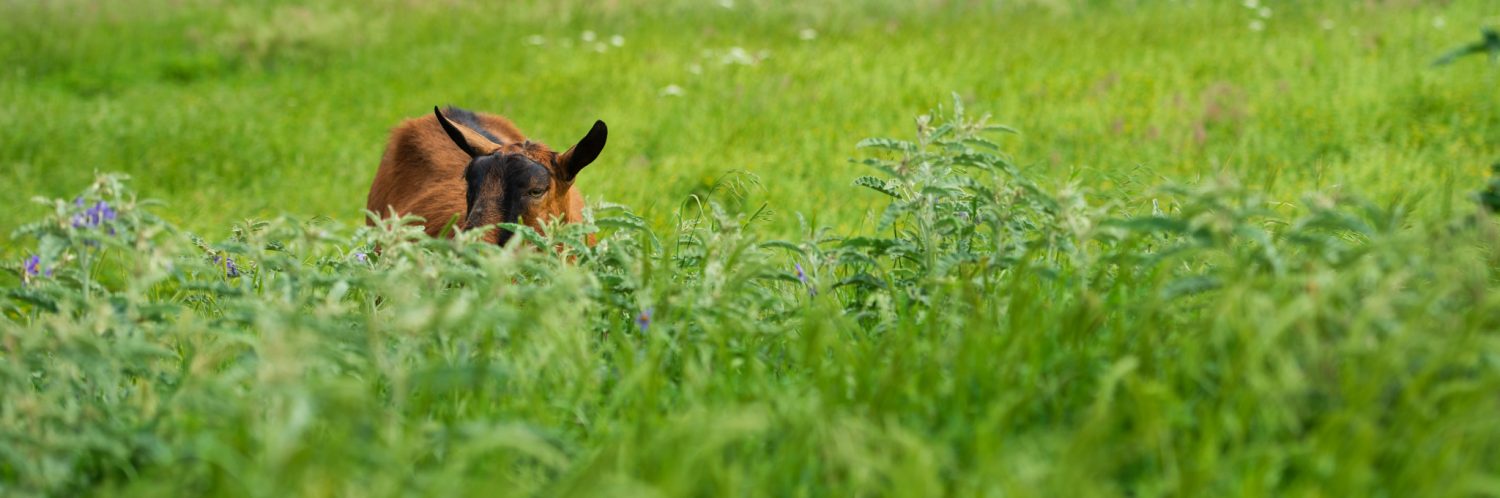
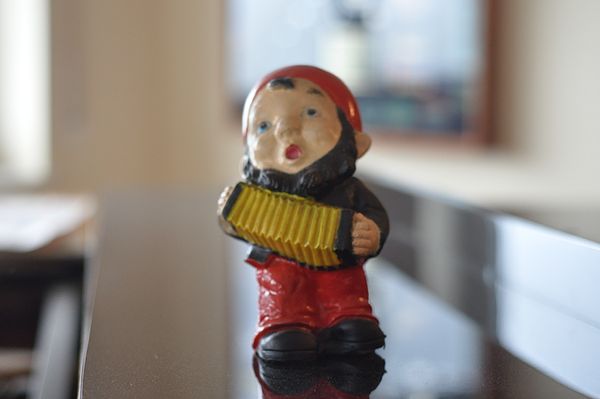
This one is usually noted by a person's head.  What happens inside the camera on portrait mode is that it will open up to the largest aperture available.  It is best for a single subject – or a cluster of people – moderately close to you.  The background will be out of focus, giving that nice, soft blur.  How much blur depends upon the maximum aperture of your camera/lens.  This picture was taken with a 50mm lens.  My daughter's compact camera has a much smaller maximum aperture so the blur would not be quite as marked with hers.

Portait mode will usually have a slightly less sharpening than other modes.  Unless you are shooting manually, your camera is recording jpeg images. It is deciding to sharpen them to different extents.  In portrait mode it is going to sharpen with a light hand so as not to emphasize fine lines and blemishes.

This mode isn't only for people however.  Any time you'd like to isolate your (stationary) subject and achieve an artsy effect you can try this option.   And although children ARE in fact people, this mode doesn't always work well for them.  More on that in a bit.
 portrait 1 web

above: portrait mode

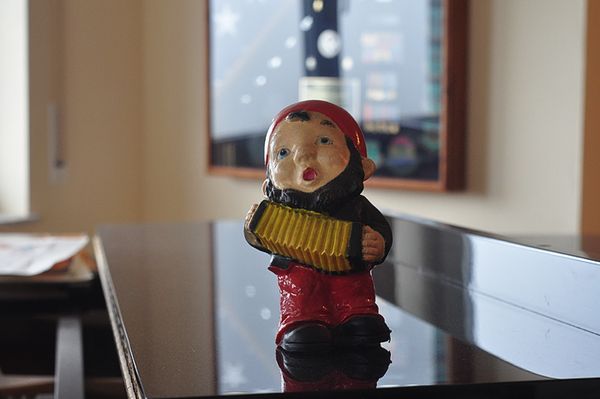
below: landscape mode
landscape
Landscape Mode

Likewise, landscape mode is not just for landscapes.  Landscape mode, usually indicated by a mountain peak icon, tells your camera to shoot at a wide angle bringing the entire scene into focus at once.  Wide angle means you be zoomed out getting as much of the scene into the viewer as possible.  Things close to you, as well as those things in the distance will be in fairly sharp focus.  

If you want to get a picture of your husband with a mountain range or a national monument off in the distance, this is a good mode to try.  If you choose portrait mode simply because you have a person in the picture, you are going to be disappointed when you get home and the White House behind them is all fuzzy. : ) 

Sports Mode

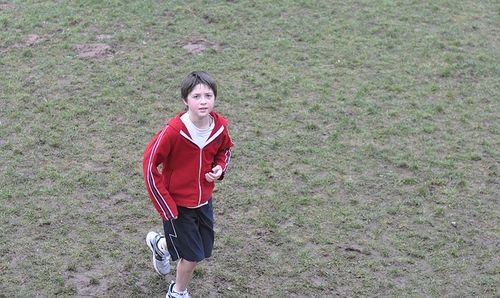
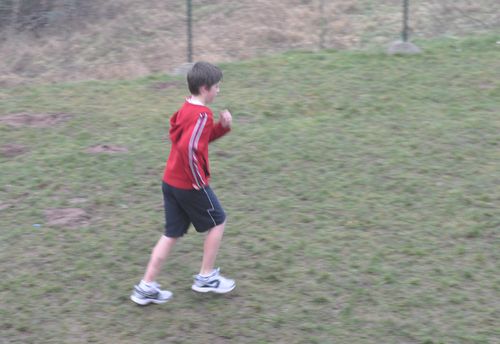
…also not just for sports and actually not ideal for some sports events.  You can find this option by looking for a runner.  What happens in sports mode is that your camera is programmed to a fast shutter speed to try to freeze the action in your scene. Because the shutter is only going to open for a split second, the camera is going to have less light reaching the sensor.  Therefore, it works best when there is a lot of light available (outdoors is best) or the flash is used.  

Although people are indeed moving at dance recitals, for instance, the dimmed lights of a theater may not be sufficient when coupled with that fast shutter speed.  If you cannot use flash then you may not get a good image on sports mode in that sort of situation. (for the record it is challenging to get good sharp images of stage performances even when shooting manually unless you have equipment specially suited for it) 

Your camera is also going to give you a shallow depth of field in sports mode – blurring the background some.  This mode prompts your camera's auto-focus to follow a moving subject, attempting to continually keep it in focus.  Because kids are usually in motion, you may well have better luck using this mode vs. portrait when shooting children outdoors.  

Don't be swayed by the names.
Jan 2012 sport mode 1
 above: auto

below: sports mode

Jan 2012 sports mode 2

Macro Mode

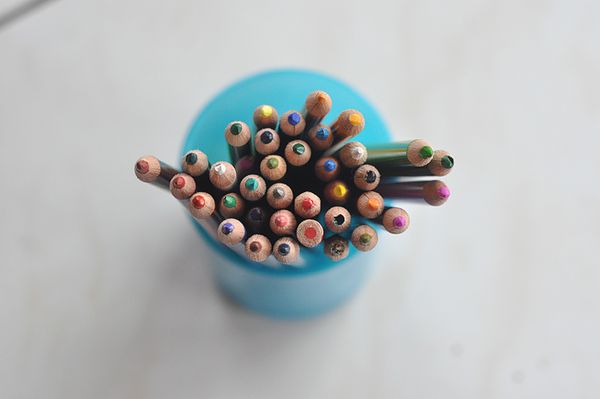
Like those superclose up images of everyday objects? They draw your attention to oft-overlooked details. Since they are usually stationary, and you want to isolate your subject, a portrait mode often works here too.  Because you are zoomed in to your subject, there is little room for error by way of camera shake. It is almost impossible not to jar the camera just a little when you press the shutter, so it's a good idea to use a tripod – even for your point and shoot camera.  It will help to get those crisp details you are aiming for. If you don't have a tripod, you can try setting your camera on a bean bag or stack of books and using the self timer or a remote release.  It really can make a difference.  
macro above: macro mode

Night Mode

Your camera probably has a night mode as well.  It may have two – one with a moon and one with a star.  The difference is whether the flash fires or how intense the flash will be.  Ideally it tells the camera to shoot with a slow shutter speed to preserve as many details in the low light scene as possible.  Because it is shooting at a slow speed you will again have better luck using a tripod so you reduce the risk of camera shake.  

Ultimately your best results come from experimentation.  That is the beauty of digital photography.  You can shoot to your heart's content for practice and then delete. 
Weekend Challenge:

 Set up a scene and shoot it in several modes to see which comes closest, under those conditions, to what you had in mind.  Use your playback/preview button to compare your images in the LED screen afterwards. This becomes even more helpful when you begin to shoot in manual.  You will study the settings used on your best pictures to learn why they turned out so well. Even in scene modes, your camera will usually record the icon of the mode used to take the picture so you have that future reference. If not, keep a notepad handy.