
We found ourselves with a bit of a curricular dilemma in recent years. The rationale behind Waldorf main lesson books was compelling to me. What was less appealing was constructing an entire curriculum from scratch and then figuring out which/how many lessons to notebook.. Actually it wasn't so much that it didn't appeal to me. In truth it appealed to me so much I knew how easily I get drawn into lesson plan creation and how little time that leaves me for actual teaching and follow up (and chores and hobbies and so on). There are choices to be made when dividing our time and we had to be realistic when we made them. At this stage in our family life, this was how best to allocate that time to assure there was plenty leftover for games and stories and crafting and praying and the countless delightful things that I wanted to fill their childhood.
Another problem was finding a suitable source for the initial information. There is no shortage of picture books and fiction books for various topics. My storage space and budget however, are definitely finite. To replicate the information found in one classic text required dozens of single topic titles. This was not easily reconciled with the space left on the shelves and tables. Additionally I had a deep desire to impart Christian content to my kids. Most books listed for topical studies were secular.
I have also considered the arguments Waldorf authors have shared for the merits of creating images from words. Purist Waldorf teachers (though admittedly I am not that!) tend to eschew glossy, photo rich books for those with rich text coupled with lots of discussion. The idea behind the main lesson books is not to study someone else's images, lovely as they may be, but to really assimilate the information and to share the pictures it planted in your own mind.
Ironically some of my old Catholic school books seemed to fit the bill perfectly. Unlike contemporary texts written by committees, these – as is the case with the Ambleside and Old Fashioned Education titles – were written by individual authors. They were often written in story form and addressed the student directly. They can be shy on illustration but are full of solid Christian content. For these reasons, they won out in the end.
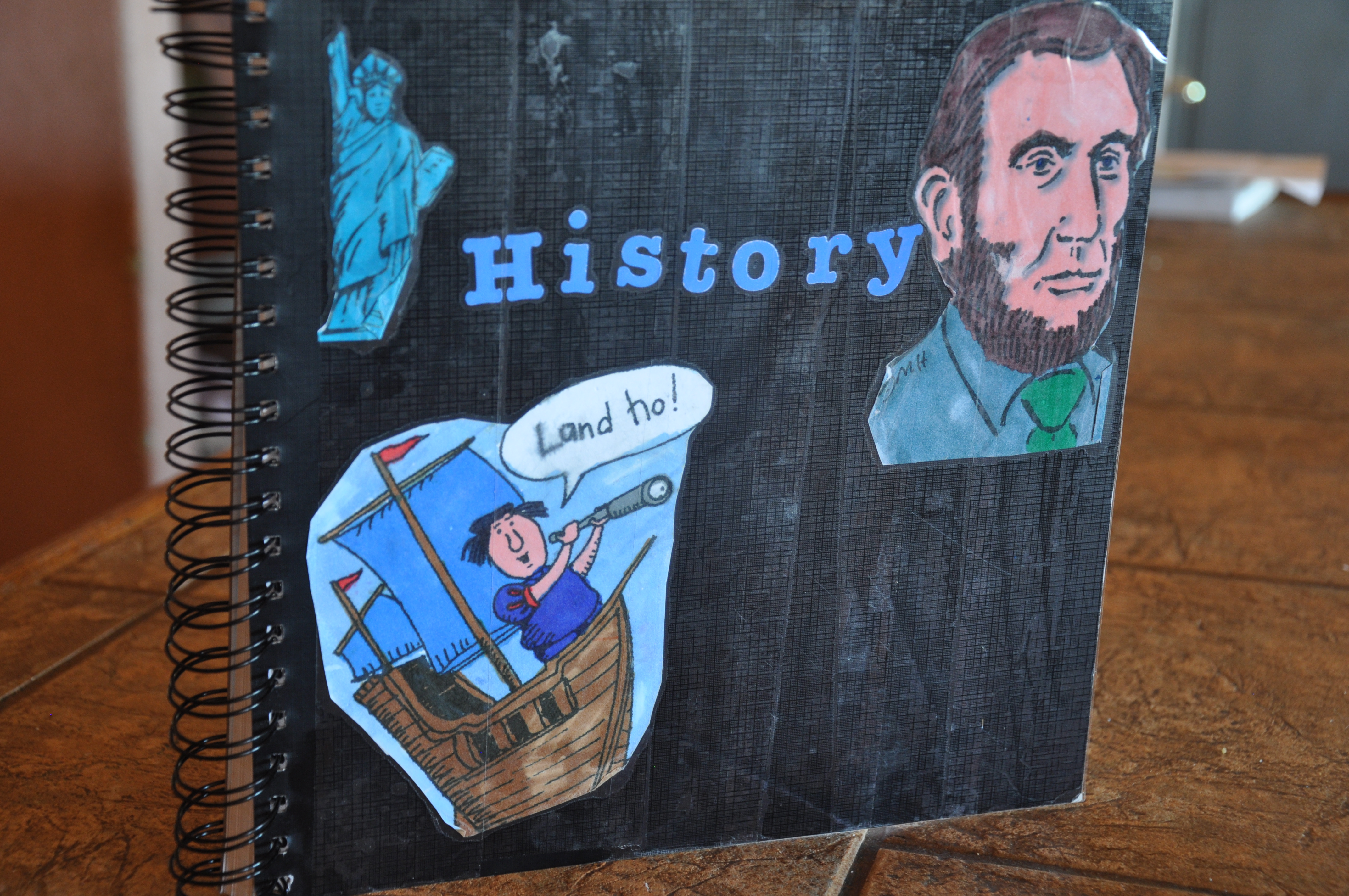
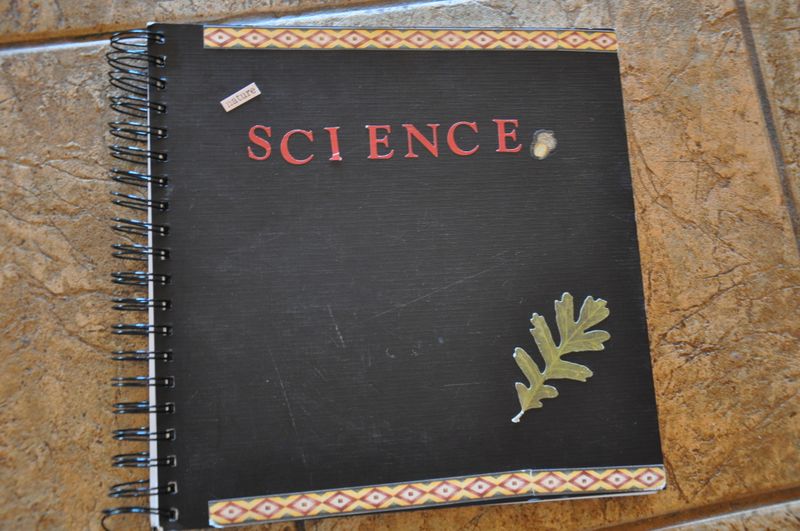
Here is what we did for our middle school level daughter. We took a 10 by 10 scrapbook album. ($6 at WM) She decorated the front for history. We flipped the book over and she made a science cover on the backside. She then began at the front making history pages and from the back to the center she made science pages. (an idea we got from Oak Meadow School) This solved the problem of loose pages and also of having to fill a large notebook.
She read the text selection, then answered the questions on a notebook page. She drew pictures to correspond to the text. Yes, sometimes she uses a text illustration or chart for a starting point. Other times she creates from imagination or from field books (in the case of science). Sometimes she will use the essay questions as a writing prompt. Other times she will just answer the comprehension questions right in the notebooks.
We are both happy with the results. She has learned a great deal with very little prep on my part. It has been exceptionally user friendly that regard. I have been able to focus on discussion and helping to make connections when we are at museums or reading chapter books. She has a beautiful notebook as a great keepsake. I will be sharing what we have done for other students in the coming days.
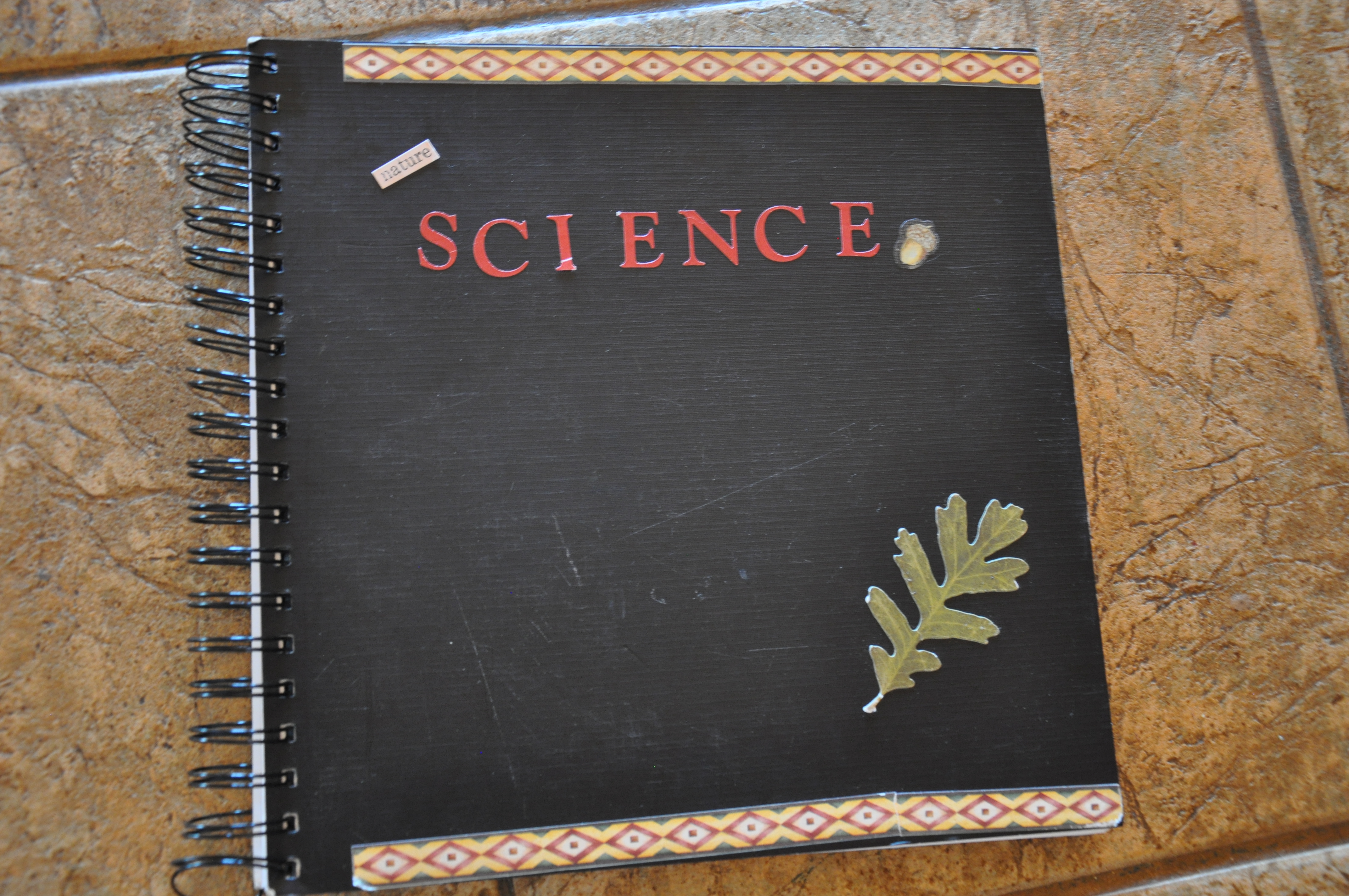
front cover (photographs badly with the lamination):
back cover:
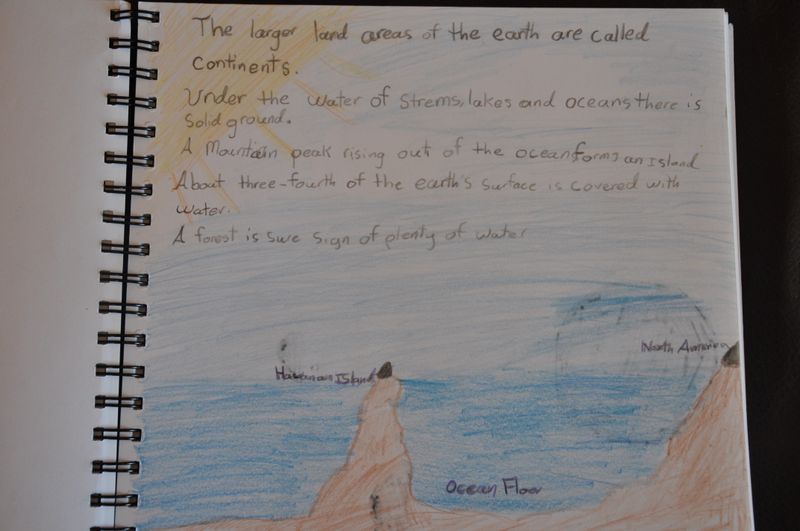
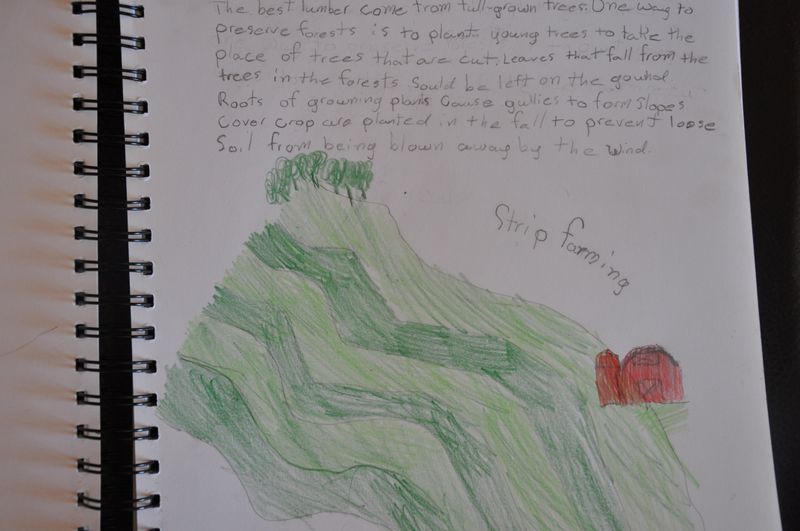

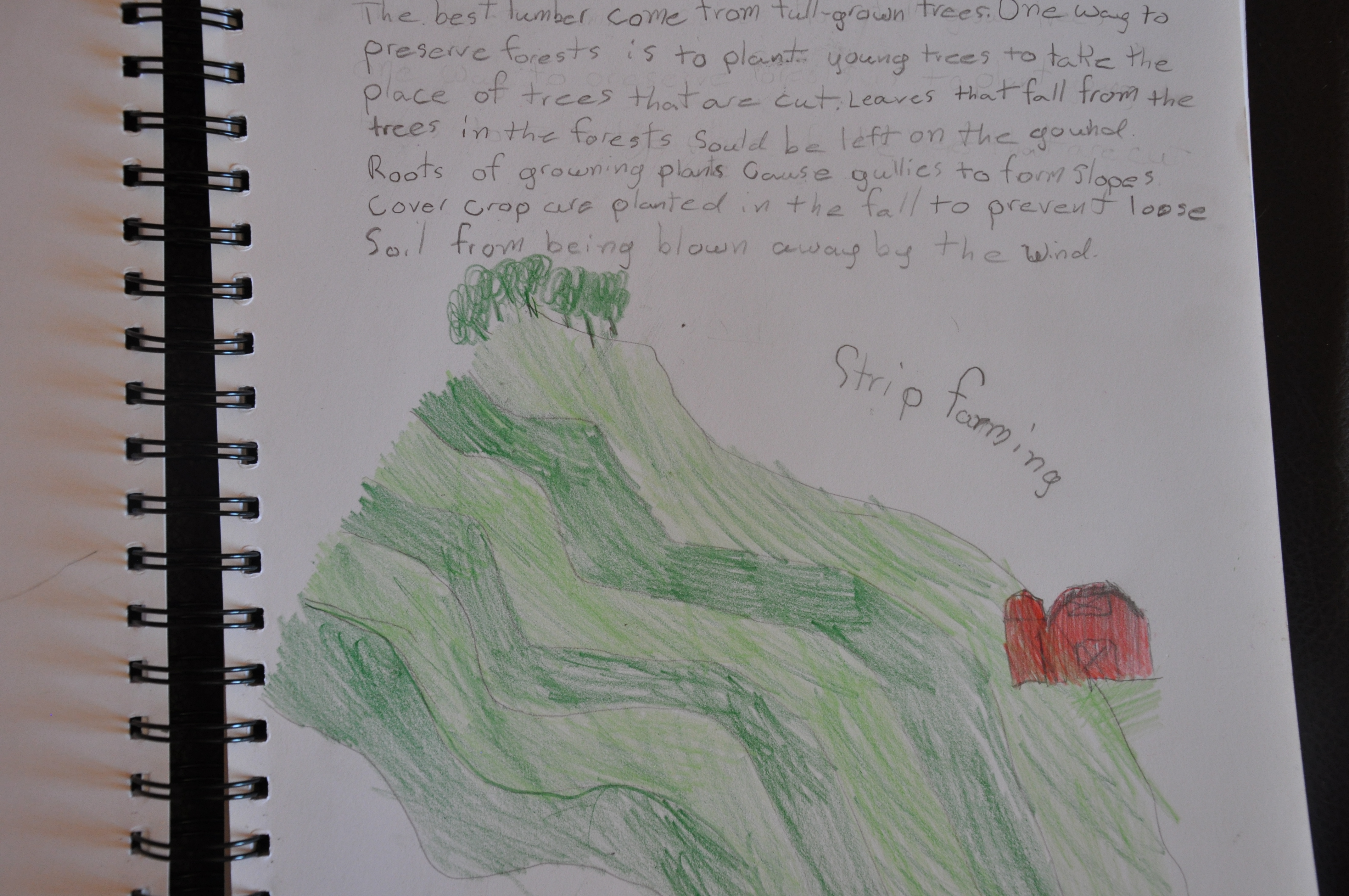
science pages:
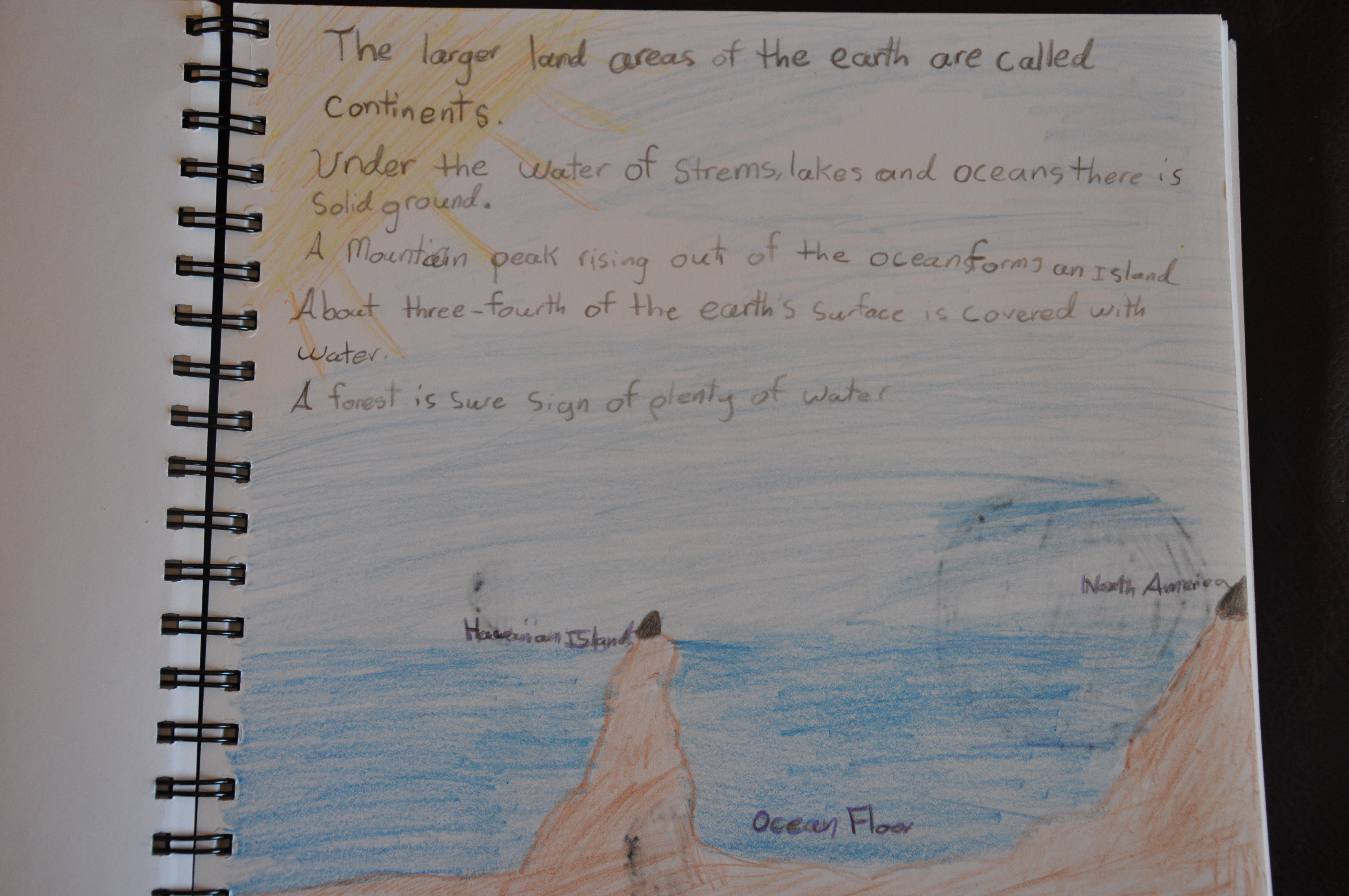
It is nice to illustrate right over your text and fill the whole page. The discoloration on the page above is from a moon reflection page she made on the other side. We discovered marker bleeds through. Test your pages before deciding if you can use both sides.
history page:
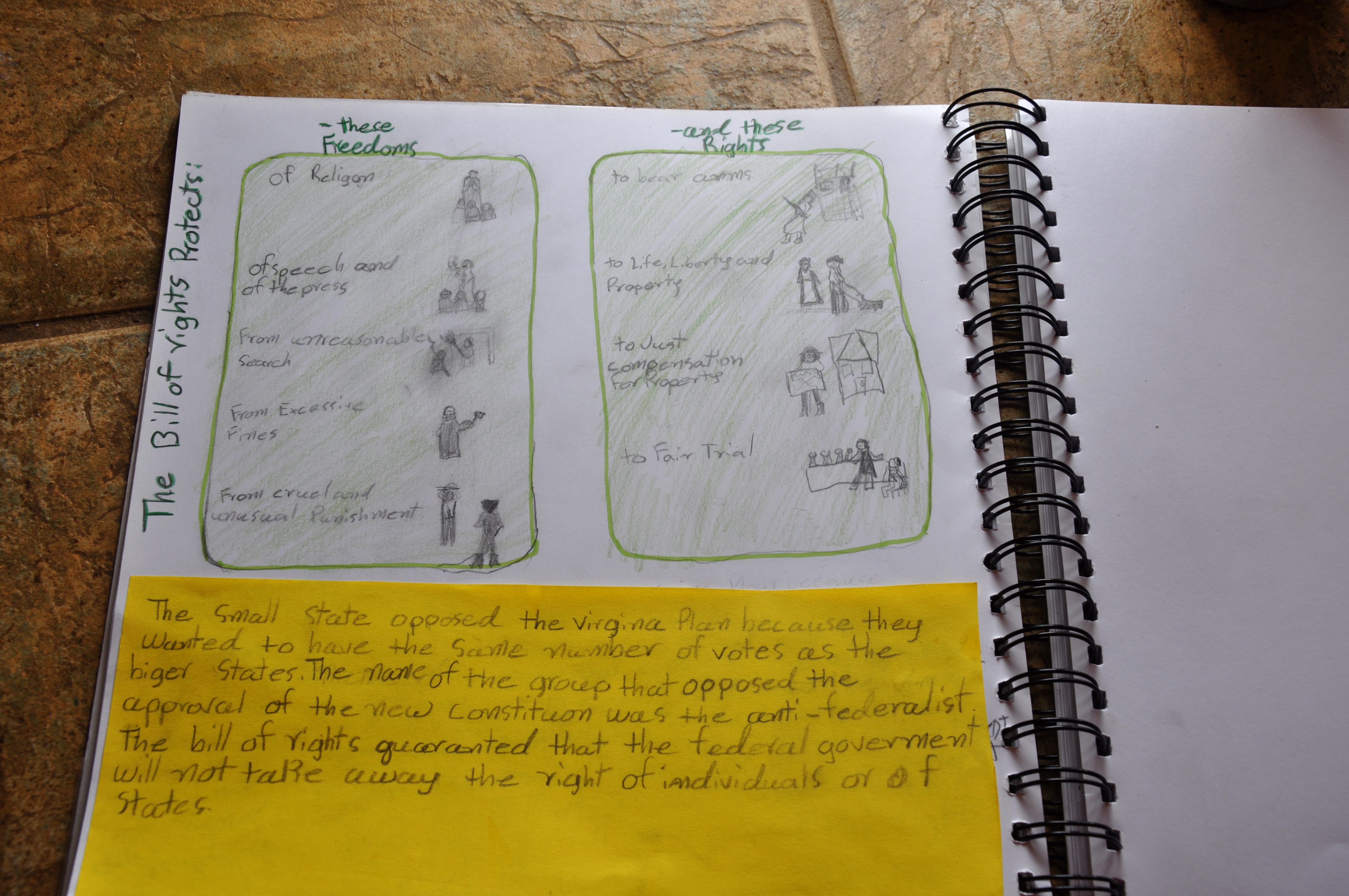
Charts and graphs make excellent additions to the notebook. They are great for review and retention!
 Starry Sky Journal
This is a great idea. I love how you preserved simplicity but also pulled out the creative elements.
We also used Waldorf for many things and I love the notebooks. What a treasure for them to have someday.
Cindy
I could KISS you! I tell you, this is just what I was trying to do but not quite making clear enough to my older dc…i showed them this picture and VOILA!
I am really really attracted to Catholic content in older books. These types of books really feed me. I feel like I am giving my children something so very rich and beautiful and it satisfies me in some unique way. I have my ds reading from an old bible reader that I found at a thrift store…to hear his sweet voice pronouncing the words is like heaven on earth. I have him illustrate those kind of words and it creates something for both the mind and heart IYKWIM.
Schoolwork is done with a full tin of colored pencils …and lots of pencil shavings too ;o) I don’t mind the mess if the result is children who enjoy being creative, learning, AND retaining because it MEANS something to them! It also never ceases to amaze me how they picture the information and what they choose to share.
I’m with Donna Marie — I could kiss you, too! :o)
I’ve been feeling drawn toward OLVS (solidly Catholic, simple, can add in the extra books we choose instead of feeling like I need to follow someone else’s syllabus, and inexpensive) for next year, and was at a loss as to how to make it less workbooky. This is perfect.
I’m so glad you’re blogging again. Thank you! :o)
I have awarded you with a lovely award. Please stop by my blog to find out what.
Thanks
Cindy D
Kim-
Welcome back (a little late) to blogging. I have been checking in and meaning to post a comment to say that I am glad you are back (but I certainly understand the break away and respect your decision to seek silence).
I really like the way you have combined textbooks with the Waldorf (and CM) approaches. Getting bogged down with one methodology is far too limiting. Thanks for the inspiration to think outside of the box.
You always provide inspiration here.