
Something on Michelle Duggar's blog caught my eye this week, her thoughts on discipline here. She voiced some convictions I have had forever such respecting a child's privacy and dignity even when they are in the wrong:
<<When we see them do a kind deed we praise them publicly. We always say, “You deserve praise.” You praise someone publicly, but if you’re going to have to correct someone, you correct them privately. You take them aside and talk to them privately so that you don’t humiliate them in front of people.>>
When my big kids were little one of them had some sort of run-in with a friend while we were playing at their house. I heard the friend's side. Then I took my little person aside to hear the other side. Both had valid complaints, though my child had responded poorly. I told him to apologize, cool down, and we would re-address when we were home. I heard the friend's mother tell her child to "..stop complaining because his mom isn't going to do anything about it anyway." : /
There was a lot of emphasis on correction in those days and on being seen catching wrongdoing. It was not considered good parenting to miss it. (it may not be that different today actually) But even early in the parenting game I had a hunch that correction and redirection should be about the child and not about the audience.
It was nice to see Michelle voice a better option:
<<…if I see the little ones not being kind to each other, I will take them aside and I will deal with them and talk to them and have them work this out amongst themselves and learn to communicate and be kind to each other. And then when I see them being sweet and doing what’s right, I make a big deal!
I think biting your tongue as a parent and saying, wait a minute, hold on. Let me look for something good. Surely there’s one thing good that they did! I’m going to find that one thing …and praise them for it. Even the tiniest little effort they made>>
As so often happens, I pulled How to Raise An Amazing Child off the shelf a few days later and found a similar sentiment. In the discipline section Seldin discusses teaching children to do the right thing versus focusing on mistakes by keeping simple house rules:
1) Treat everyone with respect.
2) If you use something, put it back correctly when you are done.
3) If you break or spill something, clean it up.
4) Tell the truth and don't be afraid to admit when you make a mistake.
These seem to be very good guidelines for grown ups too and he encourages same:
<<Model the same behaviors that you are trying to encourage in your child. Consciously try to catch your child doing something right – reinforce and acknowledge even small steps in the right direction.
Teach your child to do things correctly and emphasize the positive rather than using insults and anger. It's not always easy. >>
It's not always easy. I wish I could tell you I never lapse in these areas. I can't, especially when we are busy, preooccupied, or otherwise not feeling our best. But I can tell you I embrace that number four and try to admit my mistake and try again with number one. If I can't model perfection, and I can't, perhaps I can model effort.
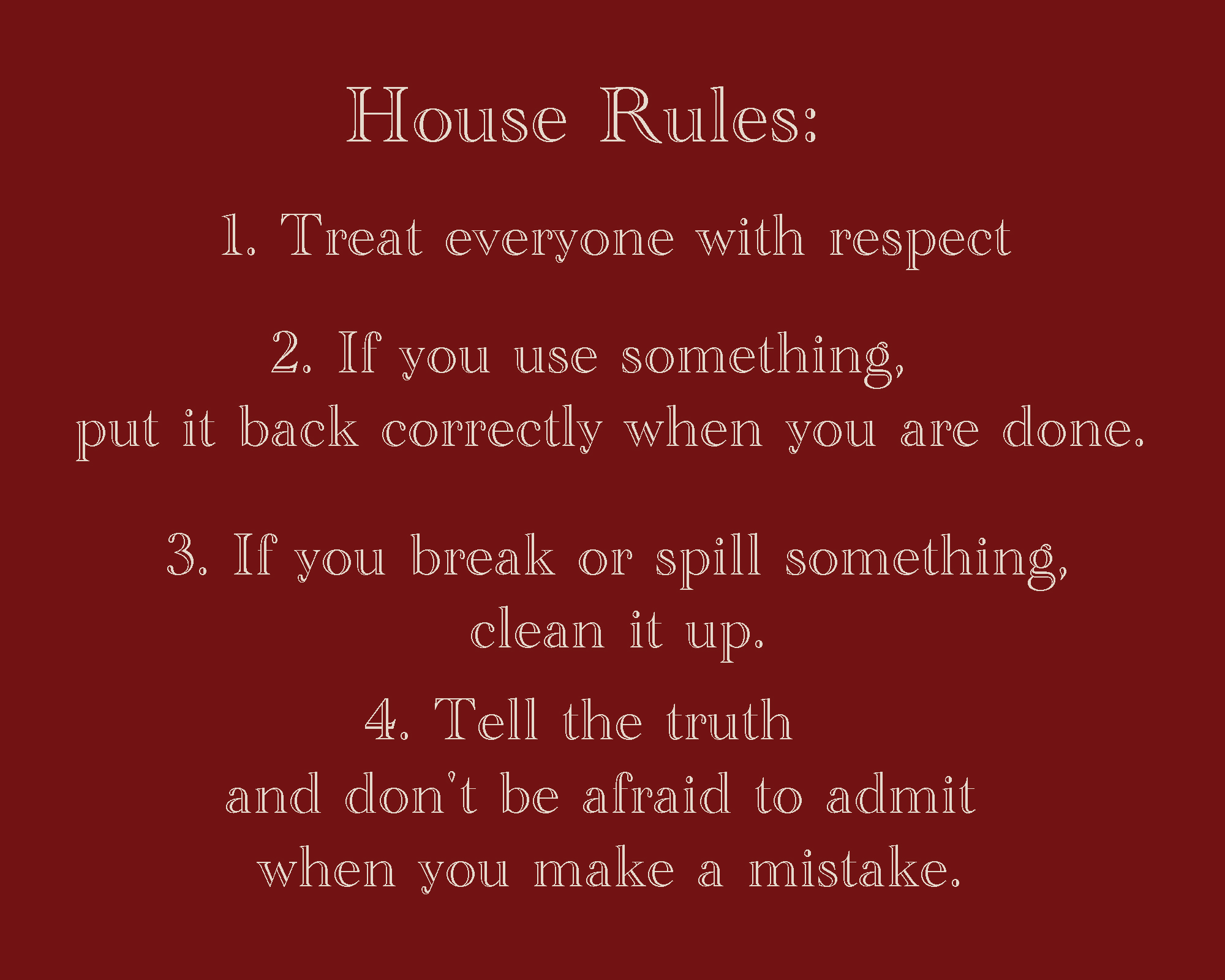
(If you want to download an 8×10 inch copy of those simple house rules for the Montessori home you can right click the image and save.)
 Starry Sky Journal
Both your post and Michelle Duggar’s were just what I needed to read this morning, Kim. Thank you! God is good!
(Of course He is. Now to go and share His goodness.)
I absolutely agree!!! Hope you are feeling better. God bless!
These “house rules” have been up in our kitchen since my boys were babies. So nice to see that they’re in your home too. x
This reminds me of Sally Clarkson’s message about sympathy. Forgive me if I butcher it as I neither have the book or a reliable memory, but in Season’s of a Mother’s Heart she writes about a situation where a child forgot to bring a coat on a walk one day and was cold. It’s so easy to be unsympathetic but children are still learning and sympathy can really go a long way. I think correction is the same. I cringe to think of the way I sometimes parented my older children compared to my younger ones (though the older ones assure me they’re OK). After all, I get angry and make mistakes and yet I certainly do not want to be humiliated by being publicly corrected. And I’m not a child, I really do know better. How much more so do our children need our sympathy even when they do wrong? And you’re so right, we can’t model perfection (well I can’t anyway) but we can model effort. What I really what to teach my children is to love and respect people even when they fail. People will always disappoint us but it’s how we respond that makes the difference. It’s taken me a while to learn that (I wasn’t raised that way to be sure) and I still forget it too often.
Via a bunny trail, I ended up here on your blog (looking through family closet posts and links!) Thank you for your thoughts on this and posting that link! This is truly something I had never given much thought. Bless you!