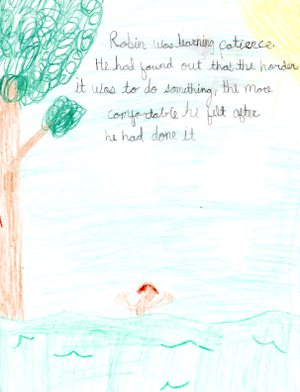
We have thoroughly enjoyed reading The Door in the Wall together these past weeks. I have selected some lines for the children to make into notebook pages as keepsakes, words which I hope resonate with them as they have with me. Yesterday’s page* is one example:
This sums up my feeling about education and life in general. It has made me reflect upon the growing sentiment in homeschool circles about unschooling and child-initiated learning. Having both babies and adult children has afforded me perspective about this that I could not have imagined when we began this journey. No longer is educational theory simply an abstract, intellectual pasttime. It is a reality. One that has consequences in young people’s lives.
Early on, my foremost goal was delight. I envisioned a family united in a common endeavor. In all the literature I came across it seemed to be assumed that the one way to ensure that cooperative spirit was to follow the children’s lead at all times and to avoid coercion like the plague. My military officer husband was always more than a bit skeptical. He had experienced tremendous success with a completely contrary method and remained unconvinced that left to one’s one devices the formation of that level of discipline was likely. He had a different understanding of what constituted true satisfaction and happiness. It wasn’t ease.
Over time we have watched families of all different ideologies move from early childhood through puberty and on to launching adults into the world. What I have seen of many who proclaim the virtues of non-coercive methods is ironically a subtle, often mutual, disrespect and lethargy as time goes on. This seems particularly so when the children involved were male. Men seem to have an innate sense of authority and order. They can detect when it is lacking and this seems to breed contempt, versus that overwhelming gratitude many moms hope for when they, in all sincerity, allow the children to call the shots. For those with more compliant children there was less contempt, yet many entered adult life lacking skills, organizational and otherwise, that would have greatly benefitted them well when faced with the challenges of marriage and career life.
The reality of SATs and the level of proficiency required to achieve personal goals has also factored into our methods. The truth is, you cannot make up many years of higher math in a semester or two no matter how motivated you may be. You may own your regret, to be sure (and there is some merit to that), but in the language subjects – math, music, language – there is no replacement for years of steady, consistent effort.
It is the rare child who is able to sense the need for such sustained effort. They have not lived long enough to experience (and witness in others) an abundance of rewards and consequences. They are, well, childish. That is why they got parents. This is not to say we have carte blanche to enforce their education by brutal means. Mercy and gentle guidance are hallmarks of our faith. It is possible to plant in our children’s hearts some seeds of understanding and to ensure their cooperation, although we may not have their complete comprehension until they are much, much older.
Literature is one tool we have used. We read together regularly and discuss the merits and pitfalls we see in the characters decisions. We cheer when we see our heroes overcome adversity through sheer strength of will. We sadly acknowledge the poor choices of others. We remind each other of these when our own determination waivers.
We agree with the discouraged student that they may never use their algebra formulas in ‘real life’. However, there will be countless occasions when they will need to solve difficult problems. They may never speak latin to another living soul. They may need to dissect an argument down to its core meanings however, for which the skills learned in their studies will serve them well.
The world may tell them to ‘Follow Your Bliss’. We promise them that it is more virtuous to learn to face distasteful tasks with good cheer, thus developing their own blissful nature in any circumstance in which they may find themselves. The academic skills they hone today may not translate literally but they will definitely be applied across the board into many real life situations for which there is no substitute for resolute determination. So, yes, there is a reason and they will, indeed, thank you later.
We have rejected the notion that our children will thrive without some outside motivation. In fact we, as well as many of our peers, have grown children who now say, “I wish you wouldn’t have let me quit ____. I wish you would have insisted I ____.” They realize now they did not have the inner fortitude to push on by themselves and would have liked to have relied upon the backbone of others when their own failed them. They have come to realize that there is only one sure route to satisfaction and that is the road traversed with no small amount of effort.
I would not say we have overwhelming regrets. We do have different perspective today. We have seen that sweat equity early on pays dividends to our children later. We recognize that nothing breeds success like success. There is no better motivator! We therefore have the confidence to unapologetically set up an outside framework, to insist upon certain standards of excellence, to shoot for predetermined levels of proficiency, and to assure them that the harder it is to do something, the more comfortable we feel after we have done it. We run this academic race as if to win – together.
*Brother Luke encouraged Robin, the paralyzed boy, to brave the elements and swim in the river daily as therapy. Later, when the castle is besieged Robin is able to slip out of the grounds, cross the icy river and propel himself on crutches to get help.