beads

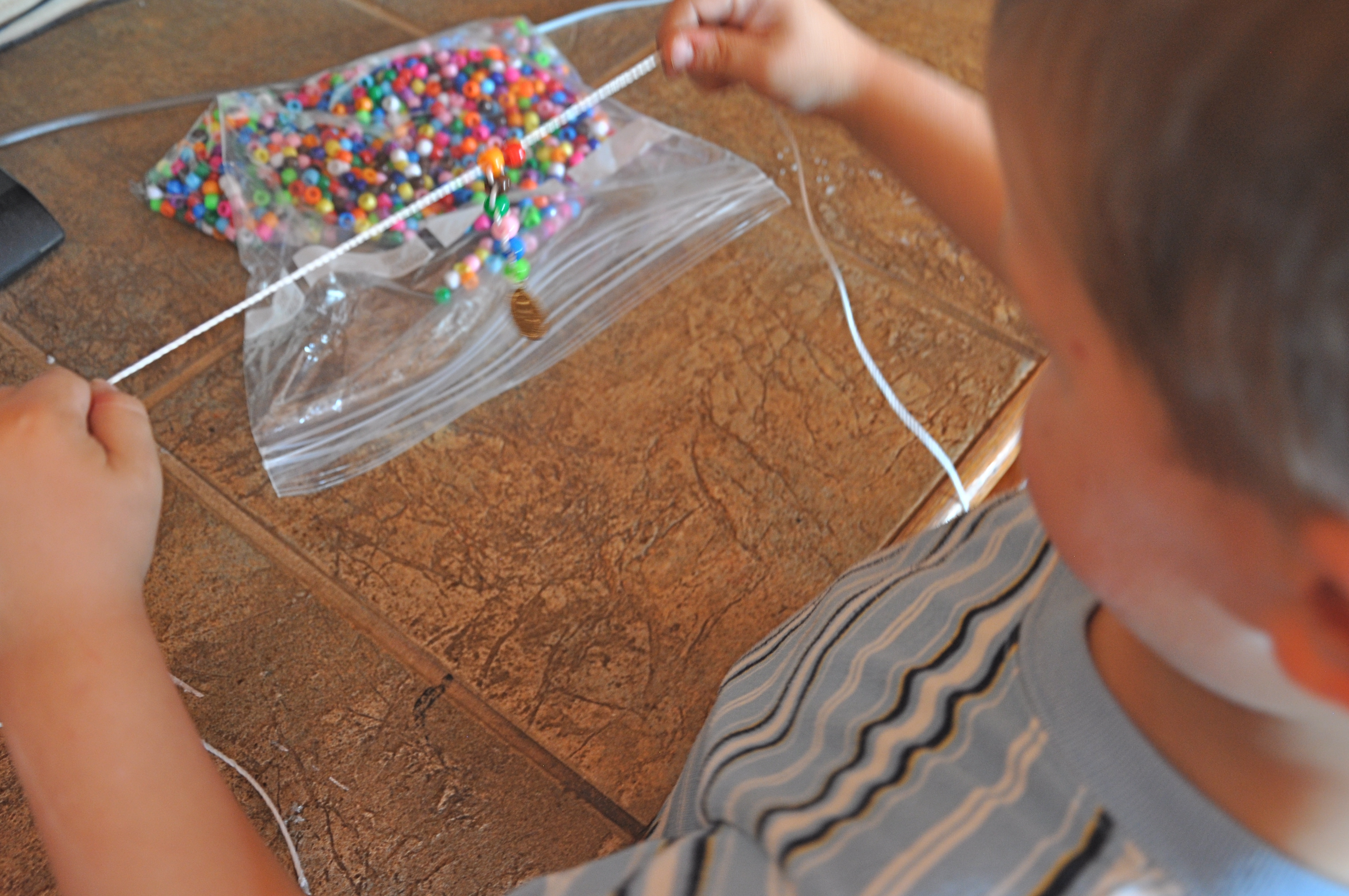
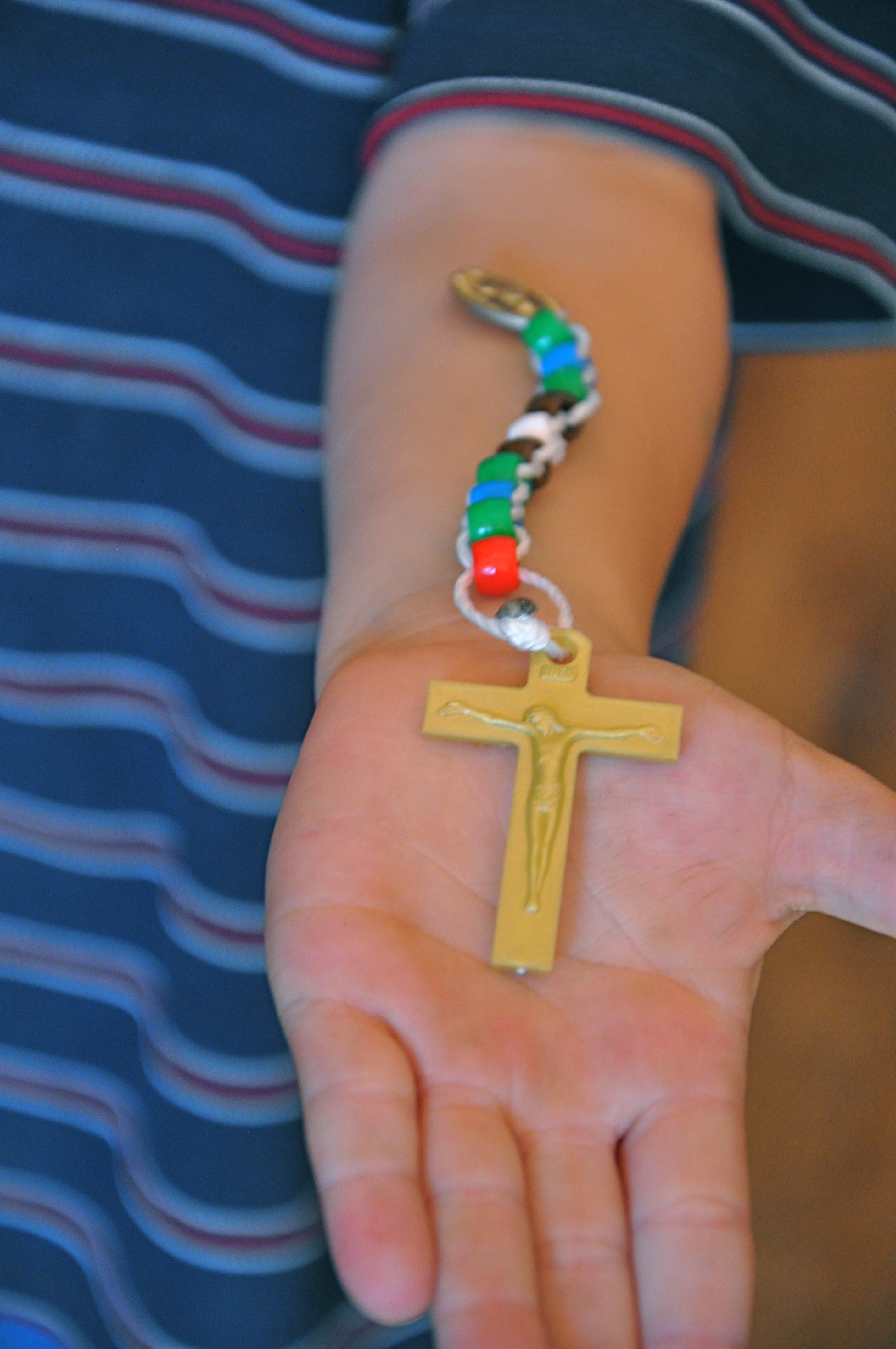
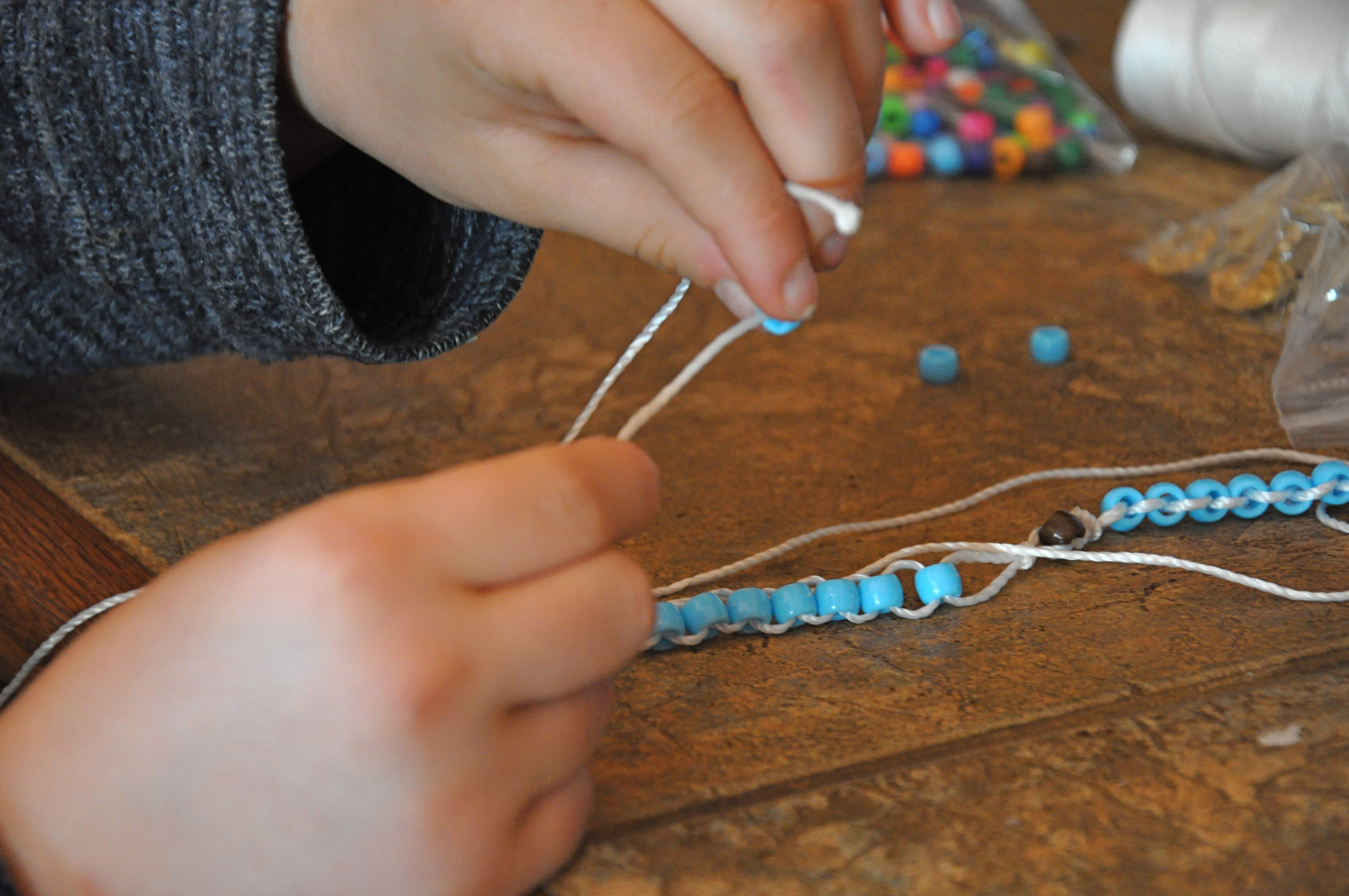
It shouldn't surprise me how things tend to come together but it always does.  Brendan and I read about St Therese's presents to Jesus' yesterday in the Treasure Box.  Then realized we had a slew of pony beads and fine twine which was the wrong size for the knot rosaries.  We made some sacrifice beads for him and for Kieran who just delighted in showing me he had already given God two presents today, which of course are gifts for Mama too let me tell you!

DSC_1176 

DSC_1182

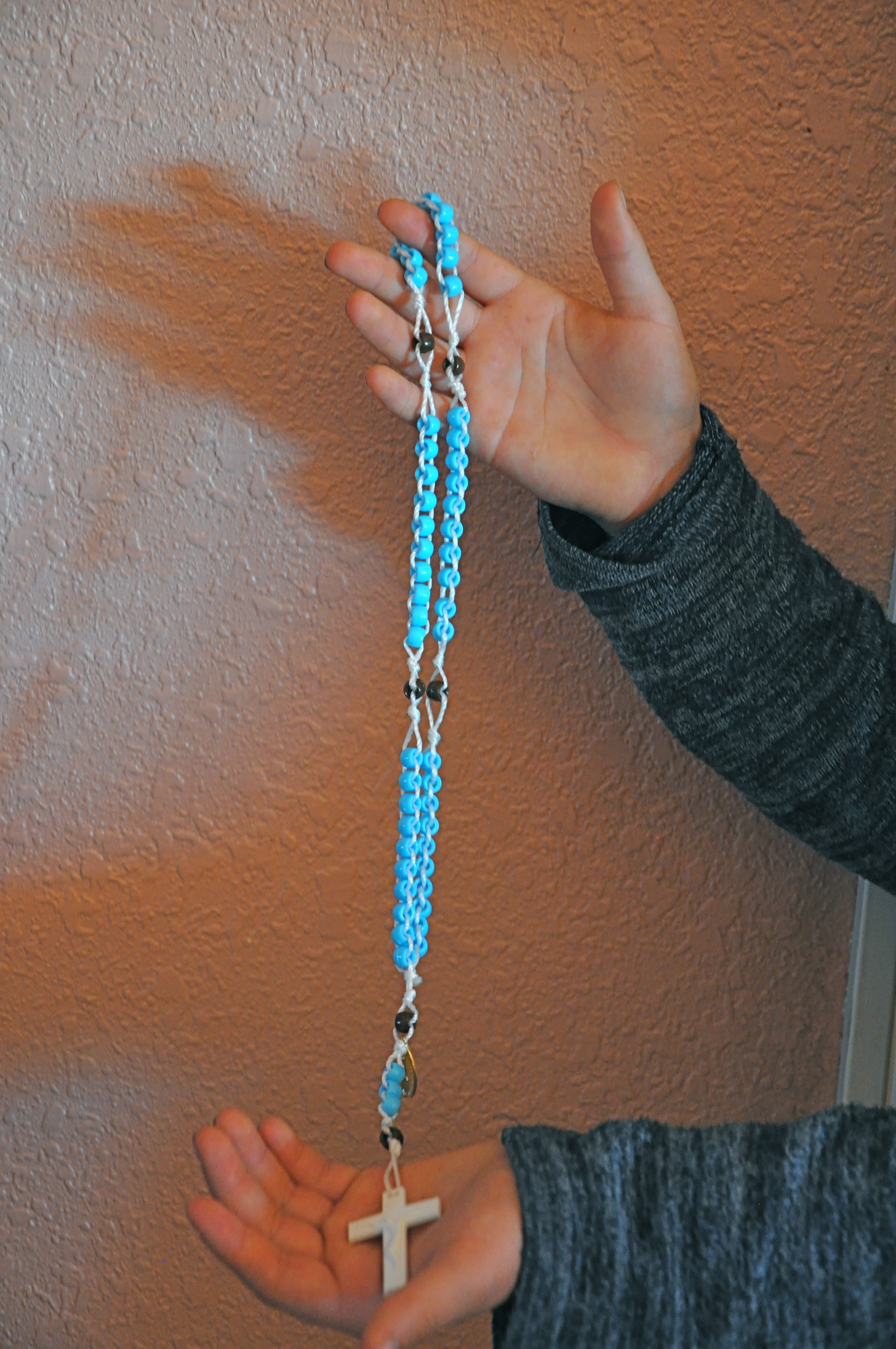
  Moira took our project a step further and finished an entire rosary before the afternoon was out. We are tweaking the system for Aidan to finish his today.  These are going much quicker than the knots which have been a little tricky for the kids to master. 

DSC_1184 

DSC_1185

Ask the Dad

A woman posed a question to me yesterday which got me thinking.  She wanted to know my stance on textbook learning.  I answered her question in comments (which apparently disallows paragraph formatting – yikes!) but felt another word was in order. So here goes. 

Do I have a 'stance'?  I guess so.  The stance would be there are lots of ways to succeed and very often,  maybe most often in my life anyway, it ends up being the way we had scarcely considered.  In my life, when I am seeking success in a given area my first instinct has been to seek out advice from those I admire.  I say that, but that translates into, "I seek out the advice of those I envy," or "I seek to emulate those who appear to have it all together," or any number of other motives which may or more likely may not bring me closer to success.  Those giants I sought tended to dwell on the internet or in print which makes for a few major problems. 

First, since they don't live next door they don't know me.  They don't know my kids.  Their well-intended advice may be completely inappropriate for our family in these circumstances. 

Second, the reverse holds true.  Because they are not next door I have no idea how much of the life they portray is accurate and honest. I don't know what their home looks like, how their children behave, what success they enjoy.  I can't ascertain whether their methods are contributing to or jeopardizing peace and balance.  The hard truth is, many times we don't see the whole picture and it is unwise to base major life decisions on such a foundation.

Most importantly however, they are not the ones God put in charge of this family. My family.  They were not given a vision for these children.  As impressive as their vision may be, I have no guarantee that it at all matches up to that which God intended for this bunch. There is one person who does however.  Their daddy. 

Over the yrs I immersed myself in homeschool books, internet gurus, and pretty much every other possible source of information one could lay hands upon.  I was well-versed in methodology and could tsk and sigh with the best of them at the poor folks who didn't know any better than to have "school at home" or who I assumed thought "inside the box."  Those of us who struggled with housework or fatigue were assured that burnout was normal and expectations had to be lowered.  I convinced myself that my husband had delegated education to me and that I had his blanket approval for pretty much whatever I planned. Surely he appreciated all my research and deferred to me in this area right? All this combined to keep me strolling along with the status quo for a lot of years. 

Lorrie Flem's Teach mailing shared advice to bring Dad into the homeschool.  Not by making him teach classes after work or whatnot but by truly basing our schools on HIS vision for his kids.  She insisted that if you ask, reeeeally ask sincerely, that you may be surprised to discover that yes, he has opinions.  He may have strong opinions which he has opted not to share in light of your apparent expertise. She also warned that you should prepare your homeschool to be shaken up if you ask such questions and intend to act upon them. 

I did that. She was right. : )   Friends of mine did the same. We discovered that despite all the convincing articles to the contrary, our husbands did want our kids to take tests and study and memorize.  They wanted them to be well-read for sure, but they also wanted them to possess skills necessary to succeed in traditional school settings.  They supported our lifestyle but they did not want our academic choices to dictate and define all of our life together.  

We adjusted.   We tried new things.  More accurately, we tried some OLD things that we were told would never work.  They worked.  And I would never have had this experience if my head was stuck in the screen instead of here in my family.  

My 'stance' is that my stance is irrelevant.  It really doesn't matter a bit in your family.  You don't know me and my opinion isn't worth beans to you.  If you are married and have children there is one person who does have an opinion – their Daddy.  Ask him.  Sincerely ask him and vow not to roll your eyes (even interiorly) at what he may tell you. Step out in faith if need be and be willing to follow his lead. Realize that if you have been out in front of this parade for any length of time he may not appear interested in leading it or may direct hesitantly.  That's ok too.   Your heavenly father and your children's earthly father can and will work it all out and get your family on a good steady path if you let them. 

It can be scary to let go of all the 'truths' you have clutched tightly.  But you come out in a good place.  There is a Christian song which always makes me smile because it describes so well the journey I have been on:

"I’m letting go
Of the life I planned for me
And my dreams
Losing control
Of my destiny
Feels like I’m falling and that’s what it’s like to believe
So 
I’m letting go

This is a giant leap of faith
Trusting and trying to embrace

The fear of the unknown
Beyond my comfort zone

Giving in to your gravity

Knowing You are holding me
I’m not afraid

Feels like I’m falling and that’s what it’s like to believe
Feels like I’m falling and this is the life for me"  

-Francesca Battistelli 

Making the most of coloring pages

Coloring pages figure rather prominently in our homeschool.  Admitting this to other homeschoolers is akin to announcing that xbox or Pokemon figures prominently into your homeschool. ; )  I mean, really, you color?  And that is supposed to be art?  Well, in a word, yes.  Here is how we make it so. 

First, there are so many incredible sources for coloring pages today, both in print and online. Beautiful, realistic images and line drawings of famous works of art abound.  There are portraits of almost any famous person you might study.  If you can't find what you need, there are tutorials for turning any image into a coloring page by using your photo software. 

Coloring pages are virtually free and require next to no prep on the teacher/mom's part. Crayons and pencils are not messy to use, clean up after, or store.  Yes, that is a big sell point for me.  When you have upwards of ten people in the house at any given time, including a nursing baby and teenagers driving in and out, messy art can be daunting and requires preplanning and a good chunk of time.  Not saying you shouldn't do messy things.  Just acknowledging that under these circumstances, you can do a whole lot more art if its less stressful for you. 

Consider the paper you are using to print your pages. Copy paper is fine for scribbling but it is a poor medium for art projects.  Card stock is much better and still cheap. For older students it is even better yet to experiment with different drawing papers.  If you have a paper trimmer you can have the child trim a pad of drawing weight paper to fit your printer.  

What are you coloring with?   I admit we use Crayola for most of our crayon work.  I still have a little person who snaps crayons in half periodically or drops them on the ground.  However Waldorf suppliers have lovely crayons that blend well.  Regular crayons (just avoid generic and thrift store crayons)  can make fantastic pictures however. This  tutorial gives some good pointers for making realistic crayon illustrations.  

Layer.  Use a light hand. Add shadows versus laying down flat planes of color. If you make the outsides of your shapes a bit darker it will add depth. Reviewing 3D techniques like those found in The Drawing Textbook will help shading line drawings more realistically. Encourage them to use the entire page and not just the center image. Color in the background.  The background does not need to be one color either. Start with a blue on one side for instance, and move into greens and then yellows as you move across the page. 

Berol Prismacolor pencils are outstanding for colored pencil work. A blender tool will astound you. It makes the illustration look much more professional.  Learning basic techniques like cross hatch etc will help add texture to the finished product. 

Colored pencil tutorials here and here

If you print your coloring page unto watercolor paper you have even more options. You can first color the page with watercolor pencils, then gently blend them with a wet paintbrush.  Or you can wet the paper first and then use the pencils.  Just be sure your printer ink doesn't run or you will have a mess. 

Moira got a large set of high quality markers for Christmas.  She has used them to create vivid pages. They work really well to color over prints like these. or these.

Printing onto vellum or parchment paper will give the effect of the stained glass window coloring pages Dover produces.   Vellum is not cheap however so it should be used by a responsible student.  We are going to pick some up for an idea we had this week.  Many of the large votive candles available in the grocery store come with no labels.  We are thinking of reducing and printing sacred images unto vellum and then wrapping the glass candles with that so the light will shine through the  translucent homemade labels. 

So please, don't feel guilty about coloring.  You can teach color theory, shading, art appreciation, and keep your wits about you.  Of course you will bring out the paint and clay at other times.  But when you can't, you can still make beautiful pictures together. 

More resources:

Rod and Staff Artpacs are dirt cheap and help teach coloring as an art in itself

Charlottes liturgical year coloring pages are so lovely

History pages here and here

fine art pages  and also here

‘Pleasant’ thoughts on homeschooling

Anna's response to questions about her daughter's course of study made me smile:


"My main philosophies of homeschooling are: Keep it simple. And less is more. We'll read the books, discuss them, follow up any ideas we want to with further research or reading. Clara will keep some notes with quick summaries of main ideas. I really don't see any need to fuss with the books any more than that. She reads, she understands, she recalls, she applies. If we can get to that point without any extra busy work, great!

If I could deliver one idea to homeschooling parents, it would be to relax. And have confidence! Well, that's two. Your way is probably the best way. Don't make it harder than it has to be."


Of course, that has long been our philosophy as well, especially for life skills.  Relax, have confidence.  Your way is probably the best way.  Don't make it harder than needs be.   

Reading for life

Rebecca recently shared her list of the essentials for a simple school year.  Included was "a plethora of good books on a variety of topics from which to choose, both fiction and non fiction, which can be from the library or your own family collection." While I spent a considerable amount of time agonizing over different programs, both purchased and mom-designed, it was this plethora of good books that stayed with our older boys.   A chance visit to one son's facebook page last week drove home just how significant some of those books have been. One son tagged his brothers to list the 15  books which will always stick with you.   Here are two of their unedited lists:


1. The Road – Cormac McCarthy
2. Anthem – Ayn Rand
3. Jonathan Strange and Mr. Norrell – Susanna Clarke
4. Lord Of The Rings – J.R.R Tolkien
5. The Chronicles Of Narnia – C.S. Lewis
6. To Kill A Mockingbird – Harper Lee
7. The Art Of Astonishment – Paul Harris
8. Ariel – Sylvia Plath
9. Angela's Ashes – Frank McCourt
10. The Dolorous Passion of Our Lord Jesus Christ – Anne Catherine Emmerich 
11. The Hobbit – J.R.R. Tolkien
12. The Screwtape Letters – C.S. Lewis
13. The Diary Of Anne Frank – Anne Frank
14. Frankenstein – Mary Shelley 
15. Inferno – Dante Alighieri


1. The Great Gatsby by F. Scott Fitzgerald
2. Angela's Ashes by Frank McCourt
3. Father Elijah by Michael D. O'Brien
4. Inferno by Dante 
5. The Art of War by Sun Tzu
6. The Giver by Lois Lowry
7. The Autobiography of Malcolm X told to Alex Haley
8. The Histories by Herodotus
9. The Lord of the Rings by JRR Tolkein
10. Fatherhood by Bill Cosby
11. The Bolivian Diary of Ernesto Che Guevara
12. Blue Rage, Black Redemption by Tookie Williams
13. I Can't Accept Not Trying: Michael Jordan on the Pursuit of Excellence
14. The Lombardi Rules by Vince Lombardi
15. The Seven Habits of Highly Effective People by Stephen Covey

None of these were really "assigned" in the sense that they did many school projects around them.  Many were on the list of things I wanted them to read.  The differences reflect both their different personalities as well as where we were and what things we were thinking and talking about when each boy was a teenager at home. Their siblings will likely have very different lists. 

Some of these titles are considered classics.  Some are deeply spiritual.  Some heighten social awareness.  Some are edgier than I would probably suggest to others.  All were influential.  Together they likely amount to a substantial portfolio of lit study spanning ancient to modern eras and most genres and they do not contain the sum total of their reading at that. 

It was a good exercise, for them and for me.  They say life is what happens while we are making plans.  In homeschooling, I would say reading is what happens when we are writing plans. : )   And that is a very good thing.  

Taming the Homeschool Overload – free today

I didn't plan to post again today since we are in home improvement overdrive. However when I saw the Homeschool Freebie of the Day was titled Taming the Homeschool Information Overload I stopped to read, since this is a topic near and dear to my heart.  After offering audible cheers to the screen I thought I would link here in case anyone missed it.  This is a must read for homeschoolers.  


In this day and age we are bombarded with resources vying for our wallets and attention.  For many of us it is easy enough to resist the pricey items.  It is far more challenging to pass up FREE however. This article reminds us of the very real cost of FREE however in terms of time, distraction, and disorganization. They warn,


"You see, there IS a very real price for the multitude of  "free" homeschool 

resources you can find on the internet. It is the cost of your time, mental energy and 

focus.  YOU ARE PAYING MORE DEARLY FOR THAT RESOURCE THAN YOU REALIZE. "


It is tempting to amass materials and methodology information but far more challenging to really incorporate them.  In fact if you look critically you may well discover there is no possible way to incorporate all you have amassed in a coherent manner. For that reason they advise,


"Don't be caught in an “Information Hoarding” mentality 

Information Overload can sometimes be a sign of laziness. Lots of us tend to be 

information  custodians instead of users. It is a lot easier to just sit down and keep 

feeding yourself information without thinking of how to implement it. 

If you sense you are just spending your time accumulating but not applying, give 

yourself permission to let things pass you by. "


The other especially important advice,


"Stay Away From “Pretty, Shiny Things” that sidetrack you from your current 

homeschool plans. 

If you take the time to develop a “game plan” for your homeschool year, 

and can stick to your plan and avoid the “pretty shiny objects” that are constantly 

coming at you, you’ll get further along than you ever thought possible. "


When you have made a plan, selected time-tested ideas and materials, then just run with it. There are new things available every day.  As Jessica Hulcy once said, 


"If there are creative ideas, they will be replaced. If there are great curricula, they will be superseded. If there are effective techniques, they will be improved." 


That is no reflection on what you own and use today because in the end methods and materials are simply tools which will be more or less effective in your hands based on your focus and your attitude. Therefore,


"Focus on your plan, buy only those products which help you do it better, faster, 

cheaper, or easier and you’ll prevent information overload."


Stay the course, keep it simple, start with the core work, and then do no more than you can do with great tenderness.  As to all the wonderful things you may be missing?  Let them go.  Put on your blinders, smile at those beautiful children in front of you and marvel at a freshly wiped table and dishes drying on the rack.   Leave the resources on the computer, walk away from the catalogs, and get outside for some real life.  It passes by faster than you can know. 


Morning by Morning

400000000000000034106_s4
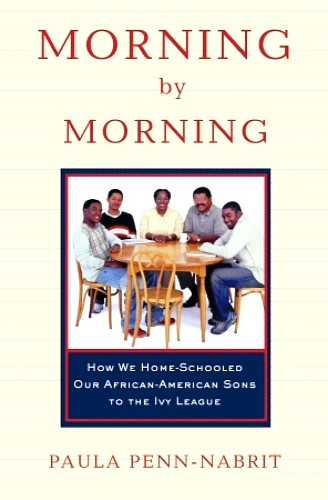
One delightful consequence of less time online has been the opportunity to get through a good number of books this year.  I have read very few homeschooling books in recent years but Paula Penn-Nabrit has written a page-turner in Morning by Morning.  Rather than a series of directions it is a memoir of her family's journey from private school, to homeschool, to college, and beyond.  The combination of compelling issues and dry humor made it a quick read, however I have been turning over and over several of the passages in my mind. 
I turned down the corners of page after page.  Unlike many homeschool advice books this one is very clear about the possibilities and about parameters – what you can do, what you can expect, and what is beyond your ability to control.  Although she does share in detail how they approached different subjects and activities the emphasis on personal responsibility is clear.  She realized that curriculum was simply a means to an end, and no curriculum can compensate for lack of vision and purpose. You might enjoy a few excerpts:
With regard to developing personal responsibility:

Probably the healthiest aspect of our homeschooling adventure was our sons' early understanding of the need to take holistic responsibility for their own joy, their own happiness, their own education, and their own lives. They had a foundation for a life of self-examination and fulfillment.  They knew joy comes from knowing God, happiness comes from getting things right in relationships with family and friends, intellectual growth is a choice, and a life well lived is a process of committed work. Most importantly they knew that they were responsible for it all.  
On being present:
But being present, fully present, in the moment requires quiet time. If I jump up in the morning, hit the ground running, and continue at that pace until I collapse into a fitful sleep of exhaustion at night, I cannot possibly be present in the moment. That's why we see so many people who apparently haven't been present, not only in the moment, but in the day, the week, the month, or the year. Sometimes the decision to be conscious or unconscious is less the result of a decision and more the result of habit and momentum.  
On puberty:
Puberty is hard enough to experience, but what I learned as a parent is that it's not any easier to observe. Puberty is all about change, and change in any form, is rarely a painless process.  
On guarantees (or the lack thereof):
You can spend tons of time and money creating the ideal environment, and your kid can still reach late adolescence and make a series of ridiculous and irresponsible decisions.   Regrettably it happens. Remember the story of the Prodigal Son?  He grows up and decides to break his father's heart and become an idiot for a few years. But after a while, he "came to himself."  That story is a confirmation of the scriptural admonition and promise, "Train up a child in the way that he should go: and when he is old he will not depart from it."  Notice the compelling silence bracketing the space between childhood and old age. A lot can happen in those intervening years. 

But at least you will have the consolation of knowing you left no stone unturned in your quest for parental excellence. And if your kid grows up and opts to become a bum you will have the admittedly minor pleasure of being able to look him squarely in the eye and say, "You know better."
In regards to that parental excellence, here are the 'rules', whether or not your child is learning primarily at home:

It is your job to know how your child is doing in school, every day,  Its your job to make sure your kid's homework is done, correctly and neatly, every day (and if it isn't, it's your job to make your kid do it over.) It's your job to make sure your kid knows how to behave in school and it's your job to know when that behavior is not up to par and to apply the appropriate discipline.  It's your job to know whether or not your child is progressing and developing the appropriate academic skills in a timely manner; and if it's not happening, it is your job to find out why. 

It's your job to know who your kid's friends are and it's your job to know what kind of people your kid's hanging out with and where they are hanging out.  It is your job to wait up until they get home and make sure they're clean and sober.  It is your job to be the adult… and challenge your kid  when you think your kid is messing up. 

It is your job to be at every sporting event, every choir concert, and every play your kids in involved in, whether your kid wants you to be there or not. 

It is your job to know your kid's teachers – all of them.  Make sure you know what courses your child is taking, has taken, and is planning to take. It's your job to know when the SAT and ACT are happening, and it's your job to know how your kid did.

It's your job to make sure your kids know that their potential is limitless and that anyone who tells them otherwise is a liar.  It's your job to make sure your kids know they're responsible for uncovering their potential and working to develop it, not to do so is a sin before God.

It is not your job to be your kid's best friend and it's not your job to try to make your kid like you, and it's not your job to intrude. Parenting is a very big job with lifelong consequences, and you have a relatively short window of opportunity in which to accomplish work that will shape future generations. 

No matter how you decide to proceed, trust yourself to do a good job. 

The gist?  Love your kids.  Be fully present for and with them. &#0160
;Provide ample opportunity for them to develop their gifts, expend their energy and explore their world. Love them enough to expect excellence – academic and personal.  Take your job seriously. Encourage them to take theirs seriously.  Then trust that….
"He who began a good work in you will be faithful to complete it." (Philippians 1:6) 
The Virtue of Silence for the teacher

At first glance it may seem contrary to speak about silence as a virtue for the teacher.  Several times this past week I have run across articles insisting this very thing however.  The first was in an essay by Brother Agathon,  The Twelve Virtues of a Good Teacher.  Reflecting upon St. Benedict's counsel to avoid letting our words come rushing out, but rather to speak true and weighty words, he says:

Silence is a virtue which leads the teacher to avoid talking when he must not speak and to 
speak when he should not be silent. 

 This virtue, therefore, includes two functions.  It teaches the art of being silent, and that 
of speaking opportunely.  Thus, it causes one to avoid two opposite defects which it condemns: 
taciturnity and loquacity. 

…experience shows that the teachers who talk a lot are hardly listened to, and 
that little account is taken of what they say.  But if they speak rarely and to the point, the 
students pay attention to what they are told, like it, remember it, and profit by it."

Many years later Charlotte Mason gave similar advice to the home-teaching mother:

"The Mother must refrain from too much Talk.––Does so wide a programme alarm the mother? Does she with dismay see herself talking through the whole of those five or six hours, and, even at that, not getting through a tithe of the teaching laid out for her? On the contrary, the less she says the better; and as for the quantity of educational work to be got through, it is the fable of the anxious pendulum over again: it is true there are countless 'ticks' to be ticked, but there will be always be a second of time to tick in, and no more than a single tick is to be delivered in any given second.

…The mother's real difficulty will be to keep herself from much talk with the children, and to hinder them from occupying themselves with her. There are few things sweeter and more precious to the child than playful prattle with her mother; but one thing is better––the communing with the larger Mother, in order to which the child and she should be left to themselves. This is, truly, a delightful thing to watch: the mother reads her book or knits her sock, checking all attempts to make talk; the child stares up into a tree, or down into a flower––doing nothing, thinking of nothing; or leads a bird's life among the branches, or capers about in aimless ecstasy;––quite foolish, irrational doings, but, all the time a fashioning is going on: Nature is doing her part…" (quoted here)


This same sentiment leads Kolbe Academy to say:

Insistence upon self~activity should be directed toward forming in the student the habit of independent study and reading directed toward interest in scholarly pursuits. 

Instead of alienating the student from the teacher silence and self-activity instead contribute to "a cooperative effort" between the two. 

Our goal is not to abandon the child but to allow him the joy of discovery born from ruminating on a subject. We should discuss, yes, but not lecture. As Jessica Hulcy of Konos has said, every homeschool mother needs two things – a gag and a set of handcuffs, not for the children but for herself.  It is tempting when teaching to view oneself as the font of all wisdom.  More is caught than taught however and our students benefit more when we introduce them to facts and ideas and then step aside to let that wisdom work its magic than when we talk them to death. We must weigh our words and be certain they are likely to contribute to understanding rather than muddy the waters with chatter. 


“Talking comes by nature, silence by wisdom."

Sweet-pea-blooms